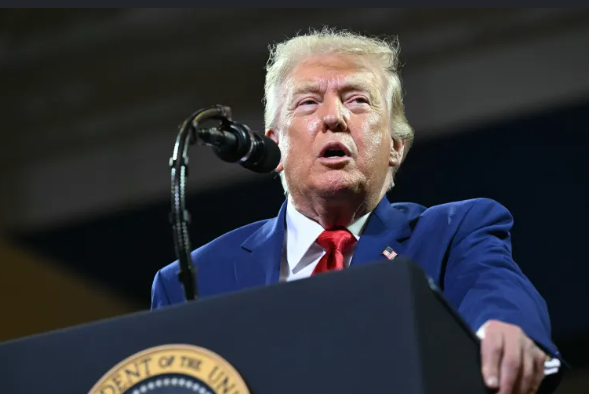
US President Donald Trump said Washington had secured majority control of more than 65 billion barrels of Venezuela’s proven oil reserves through a partnership with private companies, but provided few details about the arrangement.
Venezuelan interim leader Delcy Rodriguez welcomed the deal, saying it would increase oil production, attract investment and boost government revenues.
The agreement marks a major expansion of the US role in Venezuela’s oil sector as Washington seeks to revive production and secure additional crude supplies for American refineries.
Venezuela has the world’s largest proven oil reserves but produces only around 1.25 million barrels per day, well below its potential after years of underinvestment, mismanagement and sanctions.
Trump said the deal was reached under the direction of Secretary of State Marco Rubio and Secretary of War Pete Hegseth, in cooperation with Rodriguez and private businesses. He did not identify the oilfields or companies involved, nor explain how US control over the reserves would work.
US officials have been negotiating an arrangement that could give American companies long-term access to Venezuelan oilfields. Venezuelan authorities are expected to sign agreements next week granting exploration and production rights to several companies, particularly US firms.
Rubio described the agreement as beneficial to both countries, saying it would provide the United States with stable, low-cost oil while supporting lower fuel prices. He said Venezuela could receive nearly $100 billion in private investment and see thousands of jobs created.
Rodriguez said the plan would develop 17 strategic oilfields and generate an estimated $209 billion in tax revenue for Venezuela.
However, analysts said the deal’s legal and financial framework remained unclear and would need to be examined before its potential impact could be assessed. They also questioned whether increased Venezuelan oil production could reduce US gasoline prices quickly, given the infrastructure required to produce, transport and refine the country’s heavy crude.
Experts said political uncertainty, weak electricity infrastructure, limited export capacity and government control over the oil sector could continue to discourage investment.
Washington has been seeking greater access to Venezuelan crude since Maduro was removed from power, while encouraging US companies to invest in the country’s energy industry. The administration is also facing pressure to contain fuel prices ahead of November’s midterm elections.
Venezuela nationalised its oil industry in the 1970s, placing state-run PDVSA at its centre. Under former president Hugo Chavez, government control over the sector increased, while several foreign-operated projects were later expropriated.
Oil production subsequently declined sharply during Nicolas Maduro’s rule.