
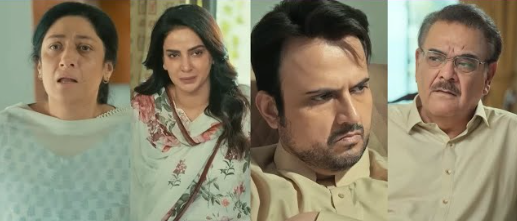
Pakistani dramas are increasingly portraying characters whose behaviour reflects different forms of narcissism, offering viewers a lens through which to recognise manipulation, control and emotional abuse in real life.
While the term “narcissist” is often used casually for selfish people, clinical narcissism involves deeper patterns such as grandiosity, a lack of empathy, entitlement and a strong need for attention, admiration or control. These traits can appear in both overt and covert forms.
Among the more visible examples is Mubashira Jaffer (Ayeza Khan) from Main, whose arrogance, manipulation and retaliation when challenged reflect traits associated with overt narcissism. Farasat Ali (Naumaan Ijaz) from Sharpasand represents a more destructive form, using calculated manipulation and cruelty to control others.
Covert narcissism is portrayed through Nabeel (Mirza Gohar Rasheed) in Goonj, whose subtle psychological manipulation and gaslighting leave his target questioning her own perceptions. Meanwhile, Raza Haseeb (Usman Mukhtar) from Pamaal depicts a controlling partner who begins with excessive affection and attention before gradually undermining his wife’s confidence and independence.
Despite their differences, such characters share common patterns, including fragile self-esteem masked by superiority, limited empathy and a persistent need for validation or control. The article notes that these behaviours can leave victims doubting themselves, losing confidence and constantly trying to meet impossible expectations.
Experts suggest that meaningful change in pathological narcissism is possible but difficult and generally requires long-term professional therapy, with change ultimately depending on the individual’s willingness to address the behaviour.
For those affected by narcissistic relationships, recovery involves recognising unhealthy patterns, grieving the relationship they believed they had, rebuilding their sense of self and establishing firm boundaries.
Through these storylines, Pakistani dramas not only create compelling villains but also encourage viewers to look beyond the screen and recognise behaviours that may be affecting their own lives.