Pakistan’s victory in Trinidad has restored some confidence ahead of their three-Test series against England, but significant concerns remain over their red-ball cricket.
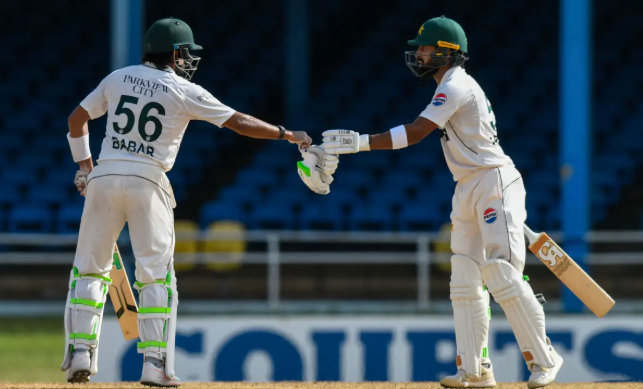
The win was Pakistan’s first away Test victory since July 2023 and ended a run of eight successive overseas defeats. After losing the opening Test in the Caribbean, Pakistan adapted to spin-friendly conditions in Trinidad, bowling the West Indies out for 117 before chasing 75 with eight wickets in hand.
Abdullah Shafique played a key role, scoring an unbeaten 160 — Pakistan’s first 150-plus Test score in the West Indies since 1977. His performance followed a productive domestic season and highlighted the value of the country’s first-class system.
The bowling attack also benefited from domestic performers. Sajid Khan, recalled for the second Test, claimed eight wickets, while debutant left-arm spinner Ali Usman and Mohammad Ali made important contributions. Their performances showed Pakistan’s ability to adapt their attack according to conditions rather than relying solely on reputation.
However, the middle order remains a major weakness. Salman Ali Agha has managed only two half-centuries in his last 14 Test innings, while Mohammad Rizwan has scored just one half-century in his last 10. Pakistan have also continued to suffer batting collapses, including a 120 all-out in the second innings of the first Test in the Caribbean.
The challenge will be tougher in England, where Pakistan will face Headingley, Lord’s and Edgbaston from August 19. The Dukes ball, seaming conditions and England’s aggressive approach will test Pakistan’s batting and ability to withstand pressure.
The Trinidad victory has provided belief and demonstrated that Pakistan have the talent to compete. But unless the middle order can convert starts into partnerships and substantial totals, the win may prove to be a brief turnaround rather than the start of a sustained revival.