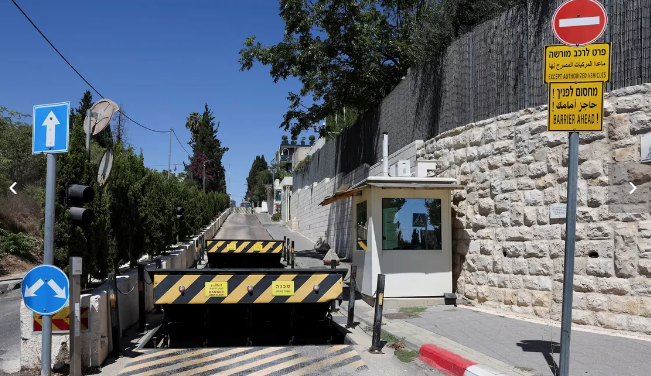
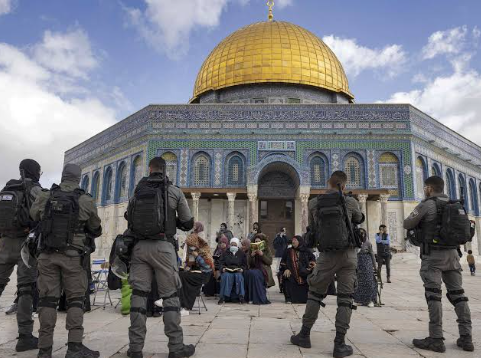
Israeli settlers entered the Al-Aqsa Mosque compound in occupied East Jerusalem on Monday under heavy police protection, while Palestinian businesses in the Old City were ordered to close during the Jewish Sukkot holiday.
Videos circulated on social media showed groups of settlers performing religious rituals, prayers and singing inside the compound, particularly in its eastern section. Palestinian officials said the incursions have increased during the Jewish holiday period.
On Sunday, around 1,500 settlers entered the Al-Aqsa compound, according to Palestinian authorities, with groups performing prayers and religious rituals near the Cotton Merchants’ Gate. Israeli National Security Minister Itamar Ben-Gvir was also reported to have entered the site.
The latest developments have drawn condemnation from Palestinian officials. Palestinian presidential spokesman Nabil Abu Rudeineh described the actions as a provocation and warned that continued tensions around the holy site could increase regional religious tensions.
Al-Aqsa Mosque is one of Islam’s holiest sites. The compound is also revered by Jews, who refer to it as the Temple Mount and associate the area with the ancient Jewish temples.
The latest incursions coincided with restrictions on Palestinian businesses and residents in the Cotton Merchants’ Market, a commercial area leading to Al-Aqsa Mosque.
According to the Association for Civil Rights in Israel, dozens of Palestinian shop, café and restaurant owners were instructed to close their businesses during parts of the Sukkot holiday to facilitate Jewish prayers.
The association said around 200 Palestinian residents living along the prayer route were also ordered to remain inside their homes while prayers were taking place.
Shopkeepers said the measure was broader than previous closures, which had generally been limited to specific hours.
The Cotton Merchants’ Market contains dozens of businesses, including shops, cafés and restaurants. According to the association, police informed traders about the planned closures by phone before visiting businesses in person.
The association said traders were not provided with written orders explaining the restrictions. It argued that authorities could instead adjust prayer routes or hours while maintaining security around the area.
The latest restrictions come amid increased security measures around Al-Aqsa Mosque and Jerusalem’s Old City during the Jewish holiday season. Palestinian authorities have reported repeated incursions into the compound during recent Jewish holidays.
The Jerusalem Governorate said restrictions on movement and access to the compound had been intensified during the holiday period, while Palestinian officials have raised concerns over changes to the existing arrangements governing the holy site.
The status of East Jerusalem remains one of the central disputes in the Israeli-Palestinian conflict. Palestinians claim the eastern part of the city as the capital of a future state, while Israel regards Jerusalem as its capital.