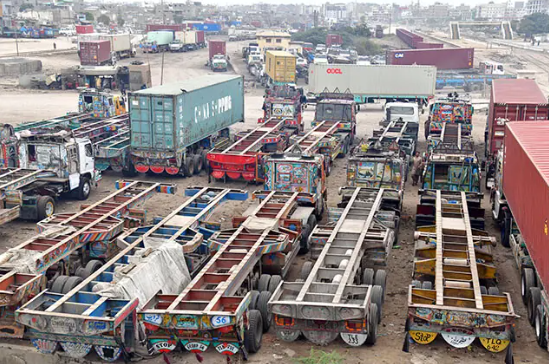
Negotiations between the government and striking goods and oil transporters continued until late Monday night but failed to break the deadlock, with both sides sticking to their positions. Another round of talks is scheduled for Tuesday.
The strike began on Friday night, when oil tankers, edible-oil tankers, trailers and goods trucks stopped operating ahead of the planned nationwide protest.
Transporters have put forward three major demands. They are seeking an increase in the permissible weight for 10-wheeler vehicles from 27.5 to 35 tonnes, along with reduced toll charges. They have also called for monthly, instead of daily, revisions in diesel prices and changes to customs duties and income tax policies.
The government negotiating team, led by Communications Minister Aleem Khan and Petroleum Minister Ali Pervaiz Malik, includes officials from the FBR, ministries, ports and shipping authorities, federal departments and provincial transport departments.
Representatives of the All Pakistan Goods Transport Ittehad said the transporters would not end the strike without an agreement on their demands.
A government official said daily fuel price adjustments were introduced because of volatility in international markets, but added that authorities were considering reducing toll rates for heavy vehicles and revising axle-load limits.
Meanwhile, business groups have warned that the continued disruption could affect industrial production, supply chains, exports and fuel availability.
The Karachi Chamber of Commerce and Industry urged the government and transporters to resolve the dispute through negotiations and offered to mediate. The Pakistan Textile Council also warned that the strike could disrupt textile and apparel supply chains and export shipments, urging Prime Minister Shehbaz Sharif to intervene for an early settlement.