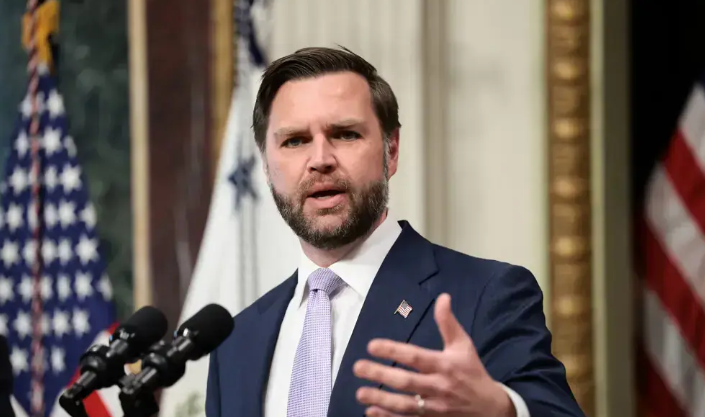
US Vice President JD Vance has said any agreement to end the conflict with Iran would require Tehran to make concrete reductions to its uranium enrichment capacity, rather than simply provide assurances about limiting its nuclear programme.
Vance, who has previously been critical of US involvement in foreign conflicts, has played a prominent role in efforts to negotiate an end to the war. He also helped broker a provisional peace agreement in June, but the arrangement quickly collapsed.
The conflict has disrupted global energy markets and emerged as a political challenge for President Donald Trump and Republicans ahead of the November midterm elections.
Speaking after a campaign visit to Alaska, Vance said Iran would need to take meaningful steps to demonstrate that it does not intend to develop nuclear weapons.
He questioned why Tehran would require uranium enriched to 60 per cent if its nuclear programme was solely peaceful, arguing that a reduction in enrichment capacity would provide a stronger indication of its intentions.
Iran and the United States have exchanged proposals in recent weeks aimed at ending the conflict and reopening the Strait of Hormuz, a crucial route for global energy shipments.
Trump has rejected Iran’s latest proposal and warned that military operations could escalate after the midterm elections.
Vance said Washington remained willing to reach an agreement but expected tangible concessions from Tehran.
“We’re not going to trade words for actions,” he said.
Vance said Washington also remained uncertain about who ultimately holds decision-making authority in Tehran.
He said US officials had been in contact with Iranian President Masoud Pezeshkian and Foreign Minister Abbas Araghchi, but questioned how much influence they have within Iran’s political structure following the US-Israeli strikes that killed Supreme Leader Ayatollah Ali Khamenei at the beginning of the conflict.
Vance said one of the issues Washington had identified was uncertainty over how decisions are made within Iran.
Trump separately said his biggest concern was that it remained unclear who was running Iran.
Iranian Foreign Ministry spokesperson Esmaeil Baqaei rejected the claim, saying US officials were aware of their Iranian counterparts and understood the country’s decision-making structure. He argued that the main problem was contradictory statements and mixed messaging from US officials.
Vance said he had spoken directly with military commanders to assess conditions on the battlefield. He dismissed concerns about shortages of critical ammunition and said Iranian forces remained capable of periodically targeting commercial vessels in the Strait of Hormuz but were largely unable to halt energy exports through the waterway.
Vance declined to confirm whether he was personally leading the peace negotiations, despite being widely viewed as one of the White House’s key negotiators.
He said the US administration remained involved in the process, while ultimately the president was directing the negotiations.
The conflict and its estimated $3 billion monthly cost have become prominent issues on the US campaign trail. Rising energy prices have placed Trump and Republicans under pressure in competitive states expected to play a role in determining control of Congress.
Vance has defended the administration’s handling of the conflict and urged voters not to allow the issue to influence their support for Republican candidates in the upcoming elections.
During his Alaska visit, Vance campaigned for Republican Senator Dan Sullivan, who is facing a close re-election contest against Democratic challenger Mary Peltola.
Although Trump won Alaska by 13 percentage points in the 2024 presidential election, rising living costs have made the state more politically competitive.
Before his interview, Vance focused much of his campaign speech on affordability, particularly energy costs. Alaska’s remote location contributes to higher prices for consumer goods, while energy production remains a major part of the state’s economy.
Vance is also regarded as a leading potential Republican candidate to succeed Trump as president. However, he said he had not yet decided whether to seek the presidency in 2028.