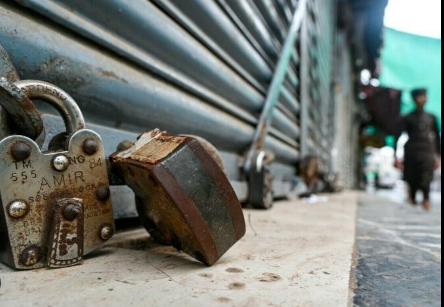
Jamaat-i-Islami (JI) chief Hafiz Naeemur Rehman has announced a nationwide shutter-down and wheel-jam strike against the petroleum levy, saying the party would intensify its protest movement.
Addressing party workers at a protest sit-in, Rehman said the strike would be held a week after 12th Rabiul Awwal. He claimed the JI’s campaign against the petroleum levy, expensive electricity agreements and rising prices of essential commodities was gaining public support.
He said the government had recognised the impact of the protests and reduced the price of diesel, but demanded an immediate end to frequent increases in petroleum prices.
Rehman said the issue could only be resolved by abolishing the petroleum levy, arguing that the additional charge had become unaffordable for ordinary citizens.
He claimed the JI had organised sit-ins at 510 locations across the country against rising petroleum and electricity prices, which he attributed to conditions imposed by the International Monetary Fund.
The JI chief also criticised the government’s taxation policy, saying the Federal Board of Revenue had collected Rs100 billion more than its target but continued to impose additional taxes on the public instead of reducing government expenditure.
Rehman also criticised independent power producer (IPP) agreements, alleging that consumers were being charged for electricity that was not generated. He demanded an end to what he called unfair concessions to IPPs and urged the government to review the agreements.
He called on workers and supporters of other political parties to join the JI’s campaign against the petroleum levy and IPP agreements, saying the party would approach the wider public for further mobilisation.
Rehman said the JI would not engage in negotiations merely to provide the government with “face-saving” and called for immediate acceptance of the party’s demands.
He also criticised the outsourcing of government schools and basic health units in Punjab, saying the policy had affected public services. He linked declining agricultural growth with rising poverty in the province.
Holding the Pakistan Democratic Movement responsible for the country’s economic difficulties, the JI chief said the existing system required major reforms.
He maintained that the use of force could not resolve public grievances and called for maintaining law and order through consultation with all stakeholders.