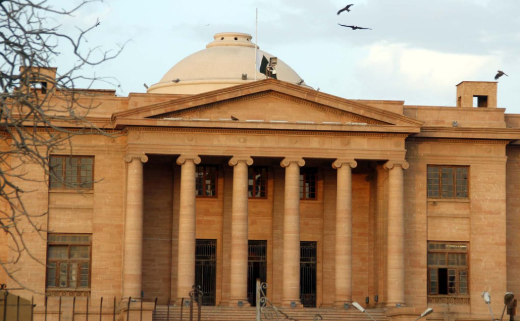
The Sindh High Court (SHC) has directed the federal government to appoint a regular chairman of the National Industrial Relations Commission (NIRC) in accordance with the law and prescribed qualifications.
A two-member constitutional bench headed by Justice Adnan-ul-Karim Memon observed that while the federal government has the authority to make the appointment, it cannot bypass the legal requirements by assigning an otherwise unqualified NIRC member to perform the chairman’s duties as a temporary arrangement.
The court noted that the position of chairman was an express part of the commission’s statutory structure and was not merely an administrative arrangement.
The bench was hearing a petition filed last month challenging the notification appointing NIRC member Sardar Tahir Sabir as acting chairman. The petitioner had argued that the law did not provide for the appointment of an acting or interim chairman and that Mr Sabir’s appointment on May 18 was unlawful as he was neither the senior-most member nor qualified for the position under the relevant rules.
The petitioner had also asked the court to direct the federal authorities to appoint a permanent chairman strictly in accordance with the law and applicable regulations.
An assistant attorney general opposed the petition’s maintainability, arguing that the appointment fell within the federal government’s powers and that the acting chairman had only been assigned the chairman’s functions until a permanent appointment was made.
In its order, the bench pointed out that the Appointment of Chairman and Members (Qualification) Rules, 2022 require the NIRC chairman to be a former judge of the Supreme Court or a high court. In contrast, members of the commission are required to be retired district judges.
The court therefore emphasised that the law clearly distinguishes between the offices of chairman and members.
The bench observed that the federal government’s power to appoint the chairman must be exercised within the limits set by the parent law and rules framed under it, directing the competent authority to deal with the matter in accordance with law and government policy.
The court further noted that the notification assigning Mr Sabir the chairman’s functions as a stopgap measure could not be regarded as an appointment to the statutory office of chairman because he did not meet the prescribed qualification.
It added that merely describing the arrangement as temporary could not confer on an NIRC member powers that the law specifically vests in the chairman.
However, the bench clarified that any vacancy or defect in the composition of the commission or a bench would not, by itself, invalidate its proceedings, decisions or awards.
With the consent of the parties and without examining the merits of the petition, the court disposed of the case and directed the federal government to appoint a regular NIRC chairman, possessing the qualifications prescribed under the 2022 rules, within a reasonable period.