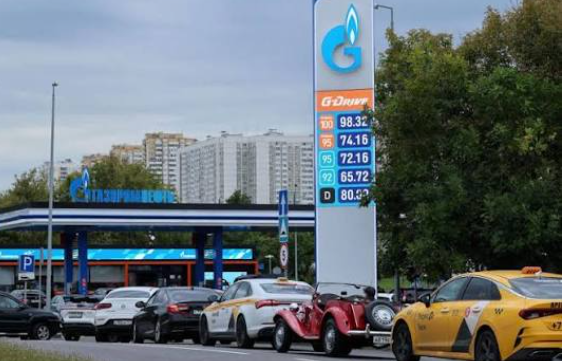
Brent crude futures rose $2.01, or 2.05 per cent, to $99.93 a barrel by 1:02pm PKT, after touching an intraday high of $100.19. US West Texas Intermediate (WTI) crude also gained $1.49, or 1.60pc, to $94.52 a barrel.
Brent prices have climbed about 25pc since early last month as prospects of a lasting resolution to the six-month-old US-Iran conflict have weakened.
Since the war began on February 28, Brent has surged as high as $126.41 a barrel, a level reached on April 30.
The latest escalation came after Houthi attacks on Saudi energy facilities this week set several oil installations ablaze, raising concerns that the conflict could widen further.
The attacks have also heightened risks to crude shipments through the Red Sea, which has served as an important alternative route to the Strait of Hormuz. Oil flows through the strategic waterway have remained severely restricted since the start of the Iran conflict.
Capital Economics senior climate and commodities economist Hamad Hussain said markets appeared to be pricing in a prolonged Middle East conflict and the possibility that the latest military escalation could disrupt regional oil supplies.
He said a key concern was whether recent attacks on oil tankers would reduce ship-to-ship transfers in the Gulf of Oman, which have helped supply global markets and contain prices.
Several major banks, including Goldman Sachs, Bank of America and HSBC, have raised their crude oil price forecasts in recent days.
According to Rystad Energy Chief Economist Claudio Galimberti, between 8 million and 9 million barrels per day (bpd) passed through the Strait of Hormuz in the week before fighting resumed on August 30 twice the volume recorded a week earlier. However, flows have since dropped to below 2m bpd.
Jeffrey Currie, co-chairman at Abaxx Markets, said the recent increase in energy prices should not be viewed as a temporary development, arguing that geopolitical risks were creating a longer-term “security premium” in oil prices.
Although non-Opec producers, including the United States, Canada and Guyana, have increased production, the International Energy Agency (IEA) said last month that global oil supply was expected to decline by 4.3m bpd, or around 4pc, this year.