KARACHI: On a flat surface at Islamabad’s Diamond Cricket Ground, where Pakistan Television had earlier plundered 400 runs, a familiar right-armer steamed in from the end of the second over of the second innings.
At the other end stood one of Pakistan’s prolific domestic batters, Ali Zaryab. The left-hander, facing his 10th delivery, could only fend a rising ball to the wicket-keeper.
Seven balls later, another seasoned southpaw, Umar Siddiq, was confronted with something altogether different. A delivery pitched around middle and off, straightened sharply and uprooted his off stump, leaving the batter staring back at the wreckage in disbelief.
The pacer then lured Waqar Ahmed, a 47-match first-class campaigner, into driving outside off before the experienced Rohail Nazir and the less-seasoned Mohammad Salman also succumbed to him.
The fast bowler was familiar. The colour of the ball in his hands, however, was not.
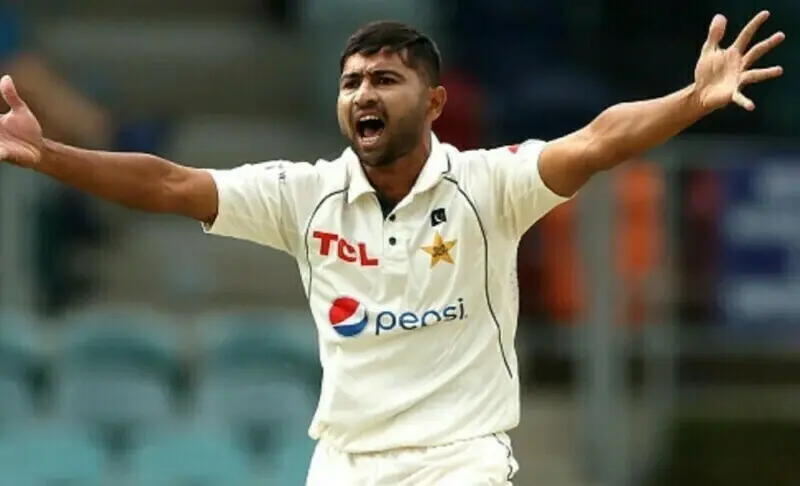
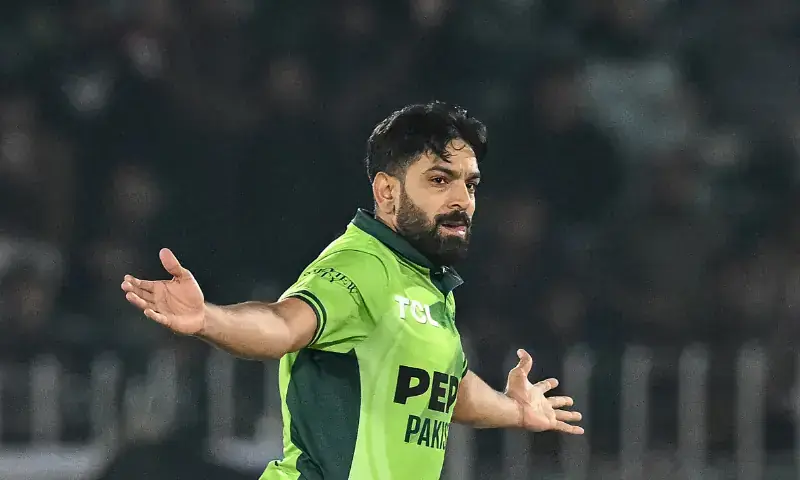
This was Haris Rauf, Pakistan’s white-ball specialist, with the red Kookaburra and offering a glimpse of what he could bring to the longer format.
Since making his Pakistan debut in 2020, the President’s Trophy Grade-I match against Oil and Gas Development Company was only Haris’ 14th first-class appearance. He finished with five wickets as PTV enforced the follow-on, although the match eventually ended in a draw. It is a relatively small sample from which to judge Haris’ red-ball credentials, but he now has 47 first-class wickets at an average of 27.04.
For Mohammad Wasim, his coach at PTV and former Pakistan chief selector, the performance was enough to strengthen Haris’ case for a return to the national Test side.
“He bowled well, he bowled fast, he bowled according to the plans and aggression was evident, movement was evident,” Wasim told Dawn on Monday night. “And as red-ball cricket requires, there was consistency in his bowling. It wasn’t like one ball was pitched here and the other there.”
Pace, once regarded as one of Pakistan’s greatest strengths, is an area in which the national Test side has struggled in recent years.
During the the sight of debutant Razaullah bowling at around 90mph offered a reminder of the kind of raw pace Pakistan have lacked as Shaheen Shah Afridi and Naseem Shah have battled injuries and inconsistent form.
Pakistan’s struggles have extended beyond their bowling, but the lack of a consistent pace attack has been one of the concerns as they have lost seven of their nine Tests in the ongoing World Test Championship cycle, leaving them at the . Pakistan’s remaining assignments in the cycle include two-Test home series against Sri Lanka in November this year and New Zealand in March next year.
Wasim believes Haris should be considered for the Sri Lanka series.
“I think it’s a good sign for Pakistan, who are struggling with pace options,” he said. “I think Haris is the solution and, in my opinion, he should be picked for the next series, regardless of what sort of conditions are at play, because he has pace and aggression, which is lacking in our national team currently.
“I keep talking to him and he says that he is looking forward to the next Test series.”
Haris played his only Test against England in Rawalpindi in 2022, taking one wicket in a match dominated by the bat. He was subsequently called up for Pakistan’s three-Test tour of Australia in December 2023 but withdrew before the series, citing workload and fitness concerns.
The episode drew criticism from the PCB, fans and former cricketers and contributed to the perception that Haris was reluctant to play Test cricket.
Wasim, however, dismissed that narrative. He was the chief selector who handed Haris his Test cap.
“I think the speculation in the media that Haris doesn’t prefer playing red-ball cricket is not a fact,” said the former Pakistan player. “When once an issue regarding him came up, I think the complete picture wasn’t presented.
“Because when I picked him for his only Test as a selector, I ensured he came through the complete process, making him play domestic red-ball cricket and making him hit the required mileage before giving him the Test cap. And when he was called up later, I think he wasn’t ready at that time.”
Haris’ international career has largely been built around white-ball cricket. He has taken 107 wickets in ODIs and 133 in T20 Internationals, while his Test career remains confined to a single appearance.
At 32, he is at an age when fast bowlers begin to manage their workloads more carefully, but Wasim says Haris remains keen to establish himself in Test cricket.
“The notion that some of our players don’t want to play Test cricket, at least doesn’t apply to Haris, I can guarantee that,” Wasim said. “He loves Test cricket. He wants to make his name in the format.”