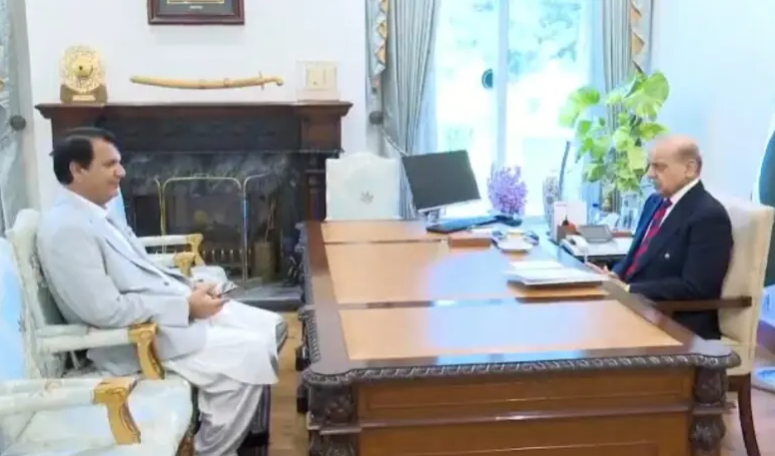
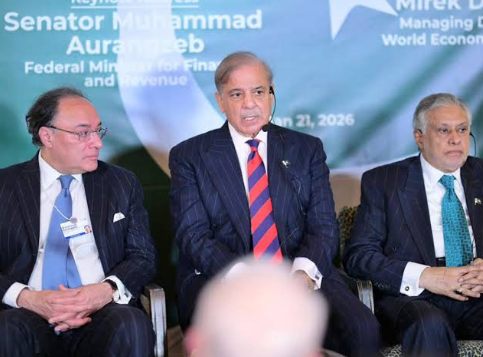
Prime Minister Shehbaz Sharif has said Pakistan’s economy has stabilised and is moving towards growth, while inviting US-based businesses to explore investment opportunities in the country.
Addressing delegations from the US-Pakistan Business Council and the Business Council for International Understanding (BCIU) on the sidelines of the 81st United Nations General Assembly in New York, the prime minister highlighted what he described as major structural reforms, including the digitisation of the economy, reforms at the Federal Board of Revenue and expansion of e-governance.
Shehbaz said regional tensions, including the Gulf crisis, had created challenges for Pakistan at an unfavourable time. He stressed that regional peace was essential for promoting trade, business and investment.
The prime minister identified agriculture, mining and minerals, information technology, artificial intelligence, energy security, ports and shipping, and privatisation as key areas for potential cooperation with US businesses.
Shehbaz said Pakistan could improve agricultural productivity by adopting modern machinery and technology, including harvesting equipment, to increase production, improve efficiency and reduce costs.
He also highlighted Pakistan’s mineral resources and said the mining sector offered significant opportunities for investment.
The prime minister said the country’s young population was an important asset for the IT and AI sectors. He added that the government was focusing on vocational and skills training to equip young people with market-oriented skills.
Shehbaz also pointed to energy security as an area of potential cooperation, saying Pakistan could provide secure facilities for energy reserves, including oil and gas.
The prime minister said privatisation was another area being opened to private-sector investment. He said Pakistan International Airlines (PIA) was undergoing privatisation and expressed confidence that its new Pakistani owners would improve the airline’s performance.
He added that a bank had also been privatised, while privatisation processes for power distribution companies were underway.
Shehbaz said the government’s role should be to facilitate businesses and act as a catalyst for private-sector growth rather than compete with the private sector.
During his visit to New York, Prime Minister Shehbaz Sharif also met United Nations Secretary-General António Guterres and discussed major regional and international developments, including the situation in the Middle East.
Shehbaz stressed the importance of dialogue and diplomacy in addressing regional tensions and reaffirmed Pakistan’s commitment to multilateralism and the role of the United Nations in promoting peace and development.
The two leaders also discussed the situation in Afghanistan and concerns over terrorism emanating from Afghan territory. Shehbaz reiterated Pakistan’s support for the Palestinian people’s right to self-determination and statehood.
The prime minister also raised concerns over Islamophobia and called for international efforts to address the issue.
Shehbaz also met Prince Rahim al-Hussaini Aga Khan V in New York and praised the long-standing contribution of the Ismaili community and the Aga Khan Development Network to Pakistan’s socio-economic development.
The two sides discussed cooperation in areas including healthcare, agriculture, rural development, climate resilience, education and youth empowerment. Shehbaz also invited Prince Rahim to visit Pakistan to further strengthen bilateral cooperation.
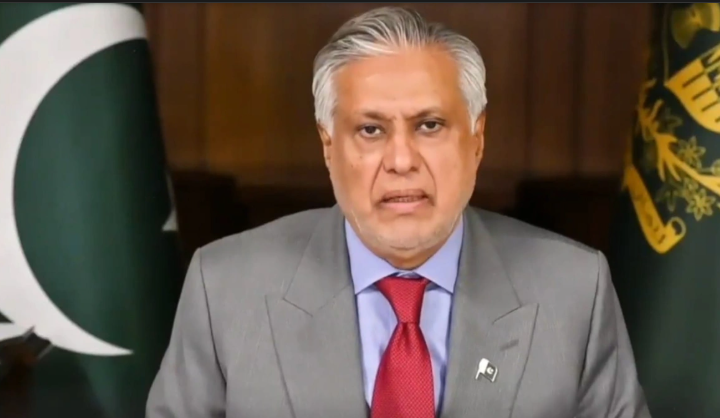
Deputy Prime Minister and Foreign Minister Ishaq Dar held separate meetings with Bahrain’s Foreign Minister Abdullatif bin Rashid Al Zayani and Singapore’s Foreign Minister Vivian Balakrishnan on the sidelines of the UN General Assembly.
Dar and Al Zayani discussed bilateral relations and preparations for the upcoming session of the Joint Ministerial Commission, along with regional and international developments.
Dar also held talks with Balakrishnan on strengthening bilateral cooperation and reviewed developments of mutual interest. Both sides agreed that continued engagement and high-level exchanges could help expand cooperation between Pakistan and Singapore.