Pakistan has strongly raised concerns over the situation in Jammu and Kashmir and minority rights in India at the United Nations Human Rights Council in Geneva.
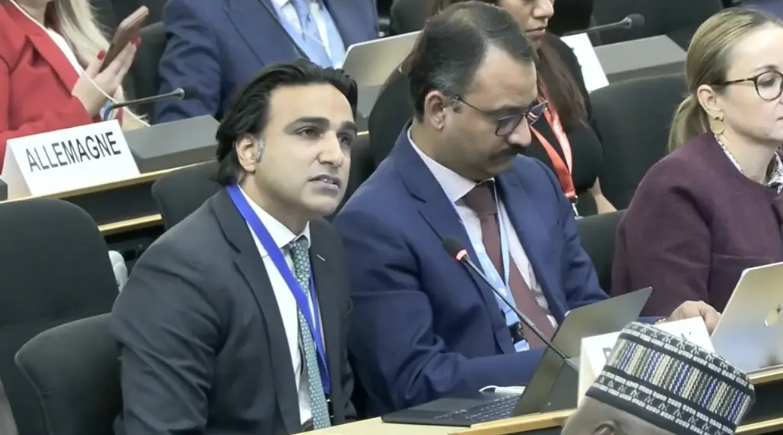
Exercising Pakistan’s right of reply to India, First Secretary Adeel M. Khokhar accused New Delhi of diverting attention from what he described as uncomfortable facts by repeatedly bringing Pakistan into the discussion.
Khokhar said Jammu and Kashmir remained a disputed territory and maintained that its status could not be changed through unilateral measures or repeated claims. He also said the issue should be addressed in accordance with relevant United Nations Security Council resolutions.
He criticised India for not holding a UN-supervised free and impartial plebiscite in Jammu and Kashmir, arguing that the people of the region should have a role in determining their future.
The Pakistani representative also raised allegations of extrajudicial killings, arbitrary detentions and torture in the region, referring to reports issued by the UN human rights office.
Khokhar further questioned the continued application of the Armed Forces Special Powers Act, arguing that its legal protections for security personnel could contribute to a lack of accountability.
He also criticised changes introduced in Indian-administered Jammu and Kashmir after August 5, 2019, including amendments to domicile and land laws as well as constituency delimitation. Pakistan alleged that the issuance of domicile certificates to non-Kashmiris could affect the demographic composition of the region.
Turning to minority rights, Khokhar raised concerns over the demolition of Muslim places of worship and referred to the Citizenship Amendment Act 2019, which he said created a religion-based route to citizenship that excludes Muslims.
He also criticised the political representation of Muslims within the ruling Bharatiya Janata Party, pointing to what he described as limited Muslim representation among the party’s parliamentary candidates and elected members.
Pakistan has also recently responded to statements made by India at the UN General Assembly. Counsellor Saima Saleem accused India of using disinformation and alleged that New Delhi had used terrorism as a tool of state policy.
She referred to cases involving Kulbhushan Jadhav and Nikhil Gupta while making the allegations.
Meanwhile, following recent remarks by the US ambassador to India, Washington reportedly reaffirmed that its position on the Kashmir dispute remains unchanged and that it continues to regard the region as disputed.