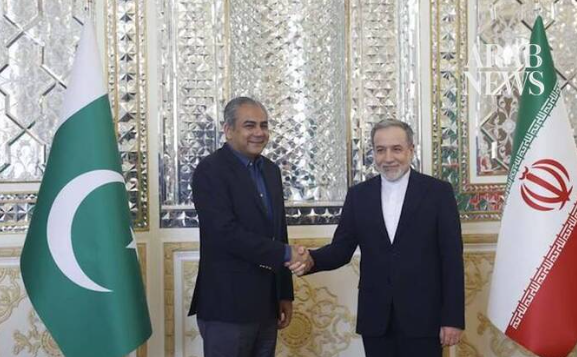
ISLAMABAD: Interior Minister Mohsin Naqvi met Iranian Foreign Minister Abbas Araghchi and President Masoud Pezeshkian in Tehran on Tuesday as Pakistan sought to revive its stalled mediation efforts between Iran and the United States.
Naqvi’s visit focused on following up on the Islamabad Memorandum of Understanding (MoU), which has remained largely inactive as Oman has taken the lead in talks over navigation through the Strait of Hormuz.
Diplomatic sources said recent progress in Iran-Oman discussions could provide an opportunity for Pakistan to revive the broader mediation process that emerged from the June agreement.
The visit came as Defence Minister Khawaja Asif said the US and Iran appeared close to reaching “some sort of an arrangement”, with signs pointing towards a possible peace deal.
Pakistan has also invited Araghchi and Iranian parliament speaker Bagher Ghalibaf to visit Islamabad, though Tehran said their visit would take place at an “appropriate time”.
During his meeting with President Pezeshkian, Naqvi described Pakistan-Iran ties as “strong, long-standing and unbreakable” and reaffirmed Islamabad’s commitment to strengthening bilateral relations. Pezeshkian said closer ties between the two countries would serve their interests and contribute to regional stability.
The future of the Strait of Hormuz remains a major obstacle to implementing the Islamabad MoU. Iran and Oman have been discussing arrangements for safe passage through the strategic waterway, including a possible new shipping route.
Tehran has maintained that any agreement with Oman would represent only a technical first step and would not amount to a full reopening of the strait. Iran insists that the waterway can only fully reopen once the United States addresses what it describes as violations of the Islamabad MoU.
According to diplomatic sources, Tehran is seeking concrete and verifiable assurances from Washington before restoring the wider mediation process.
Meanwhile, US President Donald Trump criticised Iranian negotiators as “devious” and “dishonest”, accusing them of changing their positions after reaching understandings. He also warned that Washington could continue applying economic pressure on Iran, saying its economy was in serious difficulty.