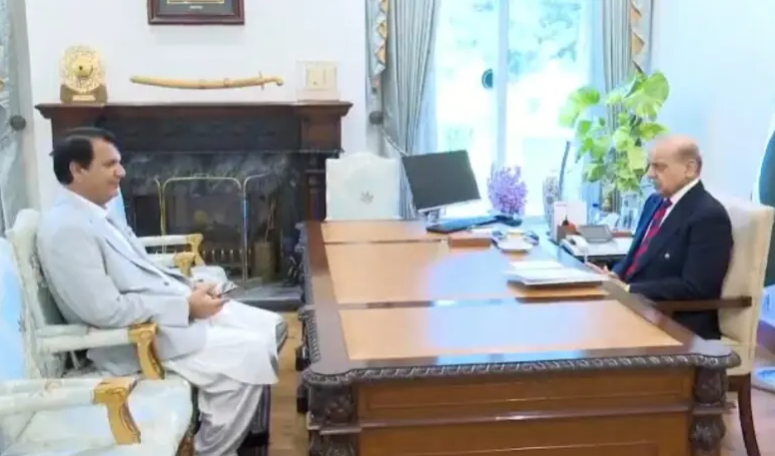
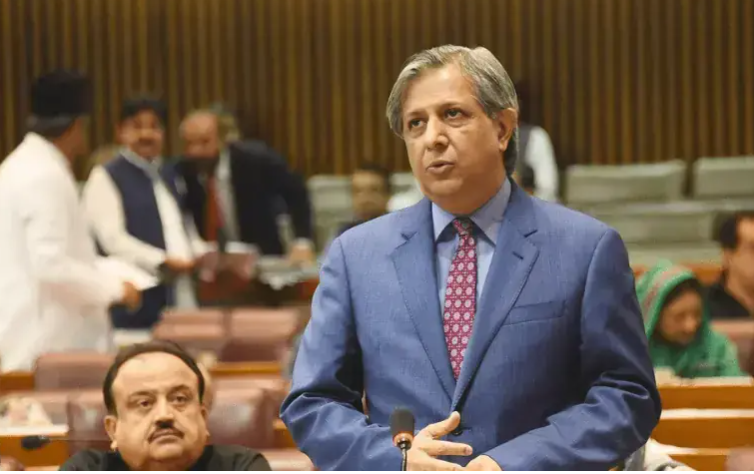
Federal Minister for Law, Justice and Human Rights Azam Nazeer Tarar has raised India’s suspension of the Indus Waters Treaty during a meeting with British Minister of State for the Middle East and North Africa, Afghanistan and Pakistan Stephen Doughty.
Doughty called on Tarar, with the British High Commissioner and other members of the delegation also attending the meeting.
The two sides discussed issues of mutual interest, human rights, protection of women and children, human trafficking, prevention of child marriage, the Indus Waters Treaty and regional peace and security.
Tarar said Pakistan’s economy and food security were closely linked to its water resources, noting that the country was predominantly agricultural and that Punjab served as its main food-producing region.
He stressed that protecting water resources was essential for the country’s economic stability, food security and public welfare.
The law minister said India’s decision to suspend the Indus Waters Treaty went beyond the mechanisms provided under the agreement. He called for water-related disputes to be addressed in line with international law and the existing treaty framework.
Doughty acknowledged the significance of water-related matters and emphasised the importance of continued cooperation and engagement. He said water and climate change were closely connected to agriculture, human security and disaster preparedness.
The meeting also covered measures to combat child sexual exploitation, human trafficking and forced marriages, as well as efforts to protect women and children from exploitation.
Tarar briefed the British delegation on Pakistan’s legal and administrative measures, including legislation aimed at preventing child marriage, under which the minimum marriageable age has been set at 18.
He said work was also underway to connect the marriage registration system with the national database to improve age verification and facilitate timely action against violations.
The minister further outlined measures related to immigration, airport screening and pre-visa clearance aimed at strengthening efforts to prevent human trafficking and related crimes.
He said authorities were working to centralise and automate access to criminal records and other relevant information to facilitate faster information-sharing with partner countries under mutual arrangements.
Both sides agreed to continue cooperation and engagement on human rights, protection of women and children, prevention of human trafficking and other areas of mutual interest.