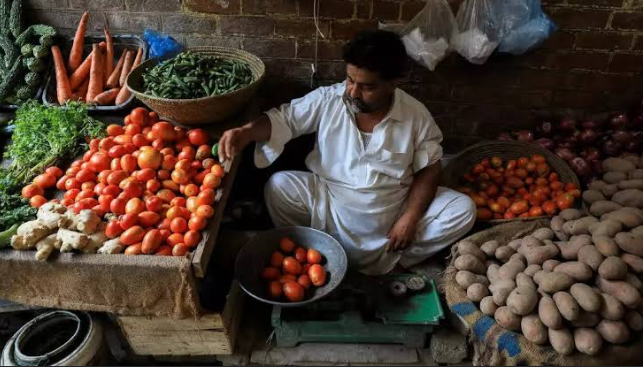
The State Bank of Pakistan (SBP) has said food prices could rise more than expected, potentially becoming a global issue.
In its biannual Monetary Policy Report issued on Monday, the central bank said the recent regional conflict had placed greater pressure on food prices in countries such as Pakistan.
The SBP noted that higher oil and gas prices had increased fertiliser costs, adding to the burden on the agriculture sector and pushing up prices of agricultural commodities.
“Prices of agricultural commodities may also remain elevated,” the report said, citing higher gas prices and the risk of El Niño during the first half of FY27 as factors that could drive global food inflation beyond expectations.
Pakistan’s agriculture sector is already under pressure from water shortages, an outdated irrigation system, high input costs and unpredictable weather. Expensive fertiliser, electricity and seeds have particularly affected small-scale farmers.
The report said disruptions to gas supplies from Qatar, which accounts for around 19pc of global LNG exports, following the Middle East crisis had contributed to a sharp increase in fertiliser prices and, consequently, agricultural commodity prices.
The renewed escalation in regional tensions in July also pushed up energy prices, while expectations of a stronger El Niño further added to concerns over global food supplies.
The SBP said developments in global commodity prices since the January Monetary Policy Committee meeting had resulted in a greater-than-expected deterioration in Pakistan’s terms of trade.
Pakistan’s food exports declined by 25pc in FY26 to $4.744 billion from $6.330bn a year earlier. Rice exports recorded the largest drop, falling 31pc to $2.045bn from $2.954bn.
The central bank also warned that weaker global growth prospects, particularly in energy-importing economies facing reduced real incomes due to higher energy costs, had increased uncertainty over the global economic outlook.
It said rising commodity prices could have significant implications for inflation in both advanced and emerging economies.