
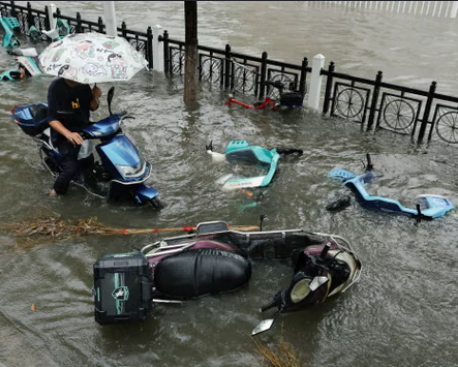
China faced widespread disruption on Wednesday as Typhoon Dolphin brought heavy rainfall to Beijing and other parts of the country, raising fears of flooding and further extreme weather.
Beijing issued its second-highest rainstorm alert, suspending 250 bus routes and closing 150 tourist attractions, while 10 subway lines reduced operating speeds, state media reported.
Heavy downpours flooded roads across the capital, leaving cars and buses partially submerged. Changping district recorded the highest hourly rainfall in the city, with 90.7 millimetres falling within an hour after 9am.
Although Dolphin weakened after making landfall in Zhejiang province on Sunday, its remnants continued to carry tropical moisture inland, increasing the risk of flooding. Parts of Zhejiang, Henan and Hubei also recorded unusually heavy rainfall, with several areas breaking August rainfall records.
Authorities warned that northern and central regions could face further rain as the storm’s remnants move inland.
The extreme weather comes as scientists increasingly link more frequent and intense storms and rainfall to climate change. Chinese meteorologists are also turning to artificial intelligence-based forecasting models to improve preparations for extreme weather events, which cause billions of dollars in annual economic losses through disruptions to industries and damage to crops.