
Parts of Britain and France were under extreme heat warnings on Monday, with temperatures forecast to reach the mid-30s Celsius, while unusually high temperatures were expected across several other European countries in the coming days.
Switzerland, Austria and Hungary were among the countries preparing for another spell of intense heat, despite being less accustomed to such temperatures. Europe’s weather warning system MeteoAlarm said scorching conditions were already affecting large parts of Italy and Croatia’s coastal regions.
Europe, the world’s fastest-warming continent due to human-driven climate change, is facing another period of severe heat, raising concerns over drought, wildfires and pressure on infrastructure.
The UK’s Met Office warned that the country was entering its fifth significant hot spell of the summer, with temperatures expected to climb into the mid-30s Celsius across parts of the country.
“Yet another spell of extremely hot weather is set to spread north across much of the UK,” the Met Office said on Sunday, forecasting temperatures in the mid-30s in some areas.
The heat has intensified drought conditions, with half of England and all of Wales officially experiencing drought. Around 23 million people are currently subject to hosepipe restrictions, while additional areas of England could be declared to be in drought.
Little or no rainfall is expected in affected areas this week.
In France, the national weather service Meteo-France forecast temperatures of up to 35°C in the southeast on Monday, warning that the heat would spread during the week.
“The intense heat will affect almost the entire country between Wednesday and Friday,” the agency said.
Meteo-France also warned that climate change was making future summers increasingly hotter than those experienced in the past.
Both France and Britain have recorded thousands of excess deaths during heatwaves earlier this year.
Greece reported a new wildfire near Athens on Monday, prompting authorities to deploy hundreds of firefighters and emergency vehicles.
More than 10,000 hectares of pine forest have already been destroyed by a separate blaze that began northwest of the capital 10 days ago.
France and Spain have also experienced major wildfires this summer, with severe drought leaving vegetation extremely dry and increasing the risk of fires.
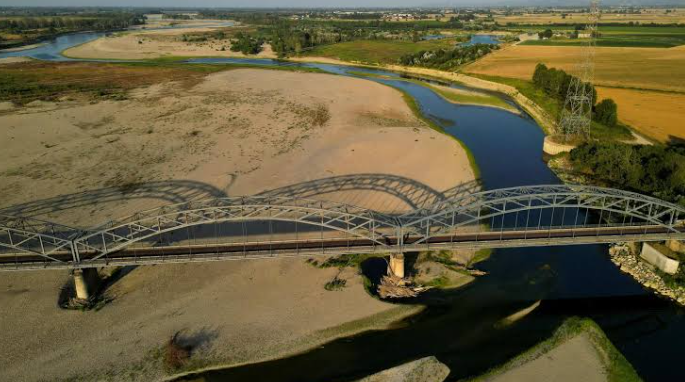
The combination of heat and drought has also pushed water levels in several European rivers to record lows. In Germany, industry groups warned that the Rhine could fall to levels that would make parts of the river impassable for vessels.
Cargo ships are still operating on the Rhine, a key trade route through Germany’s industrial heartland, but are carrying smaller loads at increased costs.
In Poland, officials said the Vistula River reached its lowest recorded level in Warsaw on Monday, matching a record set only days earlier.
Low water levels in the Danube have also forced Hungary and Romania to shut down nuclear power plants that depend on the river for cooling since late July.
Nearly 120 million Europeans live in areas where July 2026 was the hottest month on record, according to an AFP analysis of national weather agencies and Copernicus climate data.
The records were mainly recorded in southern Britain, western France, and northern and eastern Spain.
At least 12,000 excess deaths were recorded across nine European countries during a heatwave in June, according to an AFP analysis of national statistics. The figure could increase as additional data becomes available.
Despite the extreme weather, a solar eclipse on Wednesday is expected to draw skygazers across parts of Europe.
The European Space Agency’s observatory in Teruel, Spain, will host activities ahead of the event. The eclipse is expected to begin at 7:33pm CEST (10:33pm PKT), with totality occurring at 8:23pm.
Temperatures in Teruel exceeded 30°C on Monday, while the eclipse’s path will pass over areas of Spain that were affected by devastating wildfires last month.