
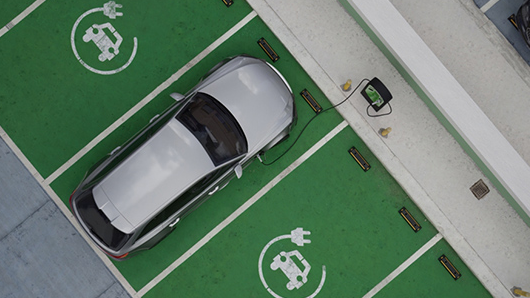
KARACHI: Pakistan’s transition towards electric vehicles (EVs) remains slow amid inadequate charging infrastructure, despite government efforts to reduce the country’s fuel import bill and promote cleaner transport.
The government is considering several measures to cut fuel imports, including the modernisation of oil refineries at an estimated cost of $6 billion. Previous efforts to reduce petrol imports by promoting compressed natural gas (CNG) in the transport sector largely failed due to gas shortages.
Prime Minister Shehbaz Sharif has set a target of shifting 30 per cent of vehicles to electric power within five years, which the government estimates could save around $4.5bn annually in fuel imports. However, progress towards the target has remained limited due to insufficient infrastructure and a shortage of charging stations.
Oil marketing companies (OMCs) have continued to expand their conventional fuel retail networks, but investment in EV charging infrastructure remains limited.
Rising petrol and diesel prices following the Middle East crisis that began on Feb 28 have nevertheless encouraged some consumers to consider electrified vehicles, including hybrid electric vehicles (HEVs), range-extended electric vehicles (REEVs) and battery-powered EVs.
Financial results of major OMCs show continued expansion of fuel retail outlets, with relatively limited development of EV charging facilities.
Wafi Energy Pakistan Ltd (WEPL), in its half-year results for the period ended June 30, reported adding 38 Shell retail sites and 18 Select stores, while establishing two EV charging facilities and upgrading eight existing sites.
The company also inaugurated a 7.4-million-litre motor gasoline storage tank at its Tarru Jabba terminal in Nowshera to strengthen storage capacity and supply reliability. It plans to further expand its Shell retail network in northern Pakistan.
Pakistan State Oil (PSO), in its nine-month FY26 report, said it had installed nine EV charging stations along the Karachi-Peshawar corridor. The company said in its first-half FY26 report that its nationwide retail network had reached 3,638 outlets after adding 107 outlets during FY25.
Attock Petroleum Ltd (APL) commissioned 33 new outlets during the nine months ending March 31, taking its total network to 811. The company is also expanding EV charging facilities and on-grid solar installations at selected outlets and terminals, while developing DC fast-charging infrastructure in collaboration with Hubco Green and Huawei.
Industry stakeholders believe petrol demand will remain strong as around 60-65pc of two-wheelers continue to run on petrol, while local assembly of motorcycles is increasing despite higher prices.
Pakistan assembled 2.416 million two-wheelers in FY26, compared with 1.692m in FY25.
“EVs will penetrate slowly and may replace petrol in the next five to six years,” a refinery official said, adding that the impact of EV adoption on four-wheeler fuel demand remained limited so far.
An oil industry executive said Pakistan imports around 70pc of its annual petrol requirement, equivalent to about 5.5m tonnes, while domestic production stands at approximately 2.5m tonnes.
He said EV charging infrastructure in many countries was commonly installed near shopping centres and residential areas, with a significant number of owners also charging vehicles at home. In Pakistan, however, the government has been encouraging OMCs to install charging facilities at existing fuel stations.
The executive noted that EV charging generally takes longer than conventional refuelling, while fast-charging stations require high-capacity transformers and involve higher electricity consumption and costs.
“Hybrid vehicles are a better option than pure battery vehicles under current circumstances,” he said.
Pakistan still has around 4.5m petrol-powered vehicles on its roads, including many older models, highlighting the continued dependence on conventional fuels.
Meanwhile, industry officials stressed the need to upgrade the country’s ageing refineries to improve competitiveness and strengthen energy security.
Refinery modernisation could increase annual domestic petrol and diesel production by around one million tonnes and reduce reliance on imports.
All five refineries have informed Petroleum Minister Ali Pervaiz Malik that they are prepared to sign modernisation agreements aimed at enabling domestic production of Euro-5-compliant fuels.
The proposed upgrades are expected to help reduce petrol and diesel import costs, improve fuel quality and efficiency, strengthen domestic supply and support the country’s energy security objectives.
The agreement between the government and refineries is expected to be signed next month.
Previous governments had also promoted CNG as an alternative fuel to reduce petrol imports. However, the initiative failed to achieve its full potential due to persistent gas shortages, resulting in losses for CNG station investors and vehicle owners who had invested in costly cylinders and conversion kits.