
Pakistan’s food economy is facing mounting challenges as rising production costs, weak market management and low agricultural productivity continue to hurt farmers while increasing the country’s reliance on food imports.
The wheat market remains a major source of concern for growers. The government’s decision to scale back large-scale procurement has left farmers increasingly dependent on private buyers, even as the costs of fertiliser, electricity, diesel, machinery and labour have risen sharply. Farmers say the prices offered for their produce often fail to cover production costs.
The difficulties are not limited to wheat. Cotton, sugarcane, potatoes and other major crops have also been affected by poor yields, adverse weather, pest attacks, market gluts, delayed payments and policy uncertainty. High irrigation and input costs have further reduced profitability, particularly for small and medium-sized farmers.
The crisis has also affected Pakistan’s external trade. According to the Pakistan Bureau of Statistics, food imports rose 11.66 per cent to $9.15 billion in FY26 from $8.2bn a year earlier, while food exports fell 29.49pc to $5.02bn from $7.12bn. As a result, the food trade deficit widened from around $1.08bn in FY25 to $4.13bn in FY26.
Palm oil accounted for more than 41pc of the food import bill, costing the country $3.8bn during FY26. Import volumes rose 8.36pc to 3.48 million tonnes. Despite the potential of crops such as canola, sunflower and mustard to reduce reliance on imported edible oil, domestic oilseed production has not been developed on a commercial scale.
Sugar imports also surged, increasing from 3,508 tonnes in FY25 to 309,545 tonnes in FY26. The value of imports rose almost fivefold to $175 million, highlighting weaknesses in domestic supply management, crop forecasting and government intervention.
At the same time, Pakistan’s food exports have come under pressure. Rice export earnings, a major source of agricultural revenue, dropped 31pc to $2.29bn in FY26 from $3.35bn in the previous year. Exporters faced increased international competition following India’s return to global rice markets after easing its export restrictions.
There were some positive developments, with meat exports rising 7.1pc to $530m and fish and fish preparations increasing by around 3.6pc to $482.08m. However, these gains were offset by a 55.72pc decline in vegetable exports, while fruit exports remained largely unchanged.
The broader problem is structural, as Pakistan largely depends on surplus-driven agricultural exports rather than producing crops specifically for international markets. Rising energy and fertiliser costs have further weakened the competitiveness of local producers, while currency depreciation offers limited relief because many agricultural inputs are imported.
Low crop yields, outdated farming methods, inadequate seed technology and limited mechanisation have also constrained the sector. Significant post-harvest losses add to the problem. An Asian Development Bank report released in December 2024 estimated that post-harvest losses in Pakistan range between 20pc and 40pc, depending on the crop.
Low productivity creates a cycle in which farmers earn insufficient returns to invest in improved seeds, machinery, irrigation and storage. This keeps yields low, restricts domestic supplies and increases dependence on imports.
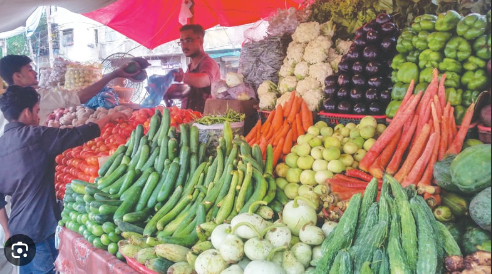
Meanwhile, consumers continue to face high food prices, with inefficient supply chains involving middlemen, transporters, wholesalers, processors and retailers further widening the gap between farm-gate and retail prices.
Experts argue that periodic imports, administrative price controls and temporary subsidies alone cannot resolve the problem. Instead, agriculture needs long-term reforms aimed at improving productivity and competitiveness.
Key measures include promoting commercial oilseed farming, introducing high-yield and climate-resilient seeds, improving irrigation efficiency, expanding mechanisation and strengthening agricultural research and extension services.
Modern storage and cold-chain facilities are also needed to reduce post-harvest losses, while export policies should encourage agro-processing, quality certification, compliance with international food safety standards and value-added products rather than relying mainly on exports of unprocessed commodities.