
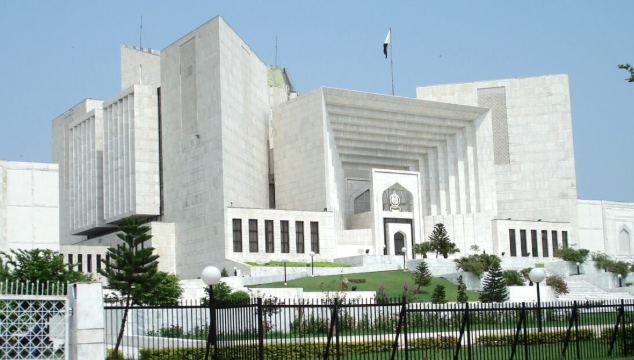
Justice Jamal Khan Mandokhail has emphasised the government’s constitutional responsibility to formulate policies aimed at improving people’s economic and social welfare and reducing the cost of doing business and consumer prices.
“It is the constitutional obligation of the government, as provided in Article 38 of the Constitution, to promote the economic and social well-being of the people,” Justice Mandokhail observed.
He was heading a two-member Supreme Court bench, also comprising Justice Salahuddin Panwhar, which heard an appeal involving the Competition Commission of Pakistan (CCP) and the Competition Appellate Tribunal’s April 24, 2025 decisions against the Pakistan Vanaspati Manufacturers Association (PVMA).
The court upheld the finding that PVMA had violated competition law by collectively determining the prices of ghee and cooking oil under Section 4 of the Competition Act, 2010. However, it reduced the penalty imposed on the association from Rs50 million to Rs30m.
PVMA represents manufacturers involved in the production and sale of ghee and cooking oil and advocates for the interests of its members before government departments and other public institutions.
The case originated from developments between 2007 and 2009, when the federal government, amid inflation and concerns over prices of essential commodities, asked the industry to pass on the benefits of declining international palm oil prices to consumers.
Following communications between the government and PVMA, manufacturers reduced the prices of ghee and cooking oil.
However, the CCP issued a show-cause notice to PVMA on May 27, 2011, alleging that the association had played a key role in negotiating and fixing prices on behalf of its members in violation of competition law.
The CCP also accused the association of arrangements with transporters to determine freight rates and discriminatory treatment of manufacturing units and commercial importers.
The Supreme Court held that although the government had consulted PVMA over price reductions without involving the CCP, the subsequent collective determination of prices by manufacturers constituted a violation of competition law.
Justice Mandokhail stressed that competing businesses must independently determine prices according to their own commercial considerations. He said collective price-setting, whether carried out directly by competitors or through trade associations, undermined competition by replacing independent decisions with a common price.
The judgment also highlighted the CCP’s responsibility to promote competition through awareness and preventive measures, rather than relying solely on penalties after violations occur.
It said competition advocacy could encourage positive behavioural changes among manufacturers, suppliers and consumers, while enforcement was only one component of the commission’s mandate.
The court observed that penalties remained an important enforcement tool but should generally be used as a last resort when efforts to promote compliance and a culture of competition had failed.
However, the judgment clarified that the CCP was not required to exhaust its advisory or advocacy functions before initiating proceedings. Where clear evidence of a violation existed, the commission was required to exercise its enforcement powers in accordance with the law.