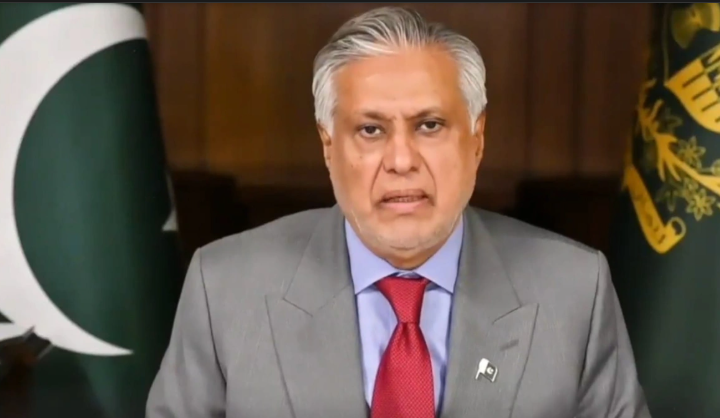
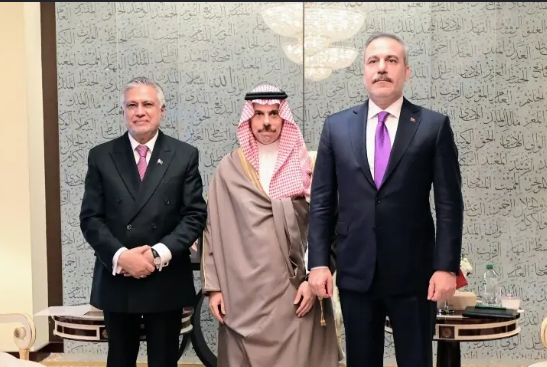
Deputy Prime Minister and Foreign Minister Ishaq Dar has reviewed progress on institutionalising the Makkah Joint Defence Agreement with his Saudi and Turkish counterparts on the sidelines of the United Nations General Assembly in New York.
Dar met Saudi Foreign Minister Prince Faisal bin Farhan and Turkish Foreign Minister Hakan Fidan to discuss implementation of the agreement and regional and international security developments.
The Makkah Joint Defence Agreement was signed by Pakistan, Saudi Arabia and Türkiye on August 7, 2026. Under the pact, an armed attack against any one of the three countries is to be regarded as an attack against all, in line with the right of individual and collective self-defence under Article 51 of the UN Charter.
The three countries held the inaugural meeting of the Strategic Political and Defence Committee in Istanbul on August 31. They agreed to establish a secretariat in Saudi Arabia, initially headed by a Pakistani secretary general for three years, while also working to strengthen defence cooperation, military capabilities and joint defence-industry initiatives.
The three sides also discussed the prevailing security situation in the region and reaffirmed their commitment to regional peace, stability, de-escalation and the peaceful resolution of conflicts.
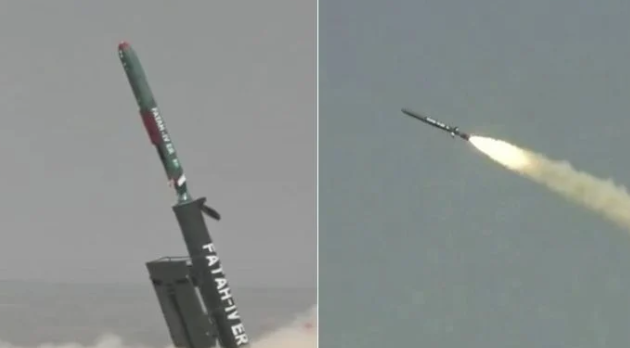
The agreement has gained added significance amid renewed Houthi attacks targeting Saudi Arabia and shipping routes in the region. Türkiye has said it is prepared to provide military and technical support to Saudi Arabia under the defence pact if required.
Saudi Arabia has also discussed arrangements for an urgent meeting of the three countries’ military chiefs in response to the attacks, according to Saudi officials.
Pakistan has reiterated its commitment to Saudi Arabia’s security while maintaining that the Makkah agreement is defensive in nature and aimed at strengthening regional peace and stability. The Pakistani Foreign Office has said the pact is not directed against any country.
The three countries have also emphasised respect for international law, state sovereignty, non-interference in internal affairs and the security and freedom of maritime navigation.