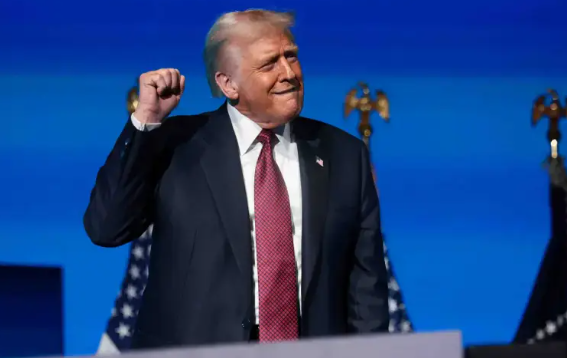
US President Donald Trump sought to reinforce his position on the international stage this week through a high-profile address at the United Nations General Assembly and a summit with Chinese President Xi Jinping in Washington.
However, analysts have pointed to several unresolved foreign policy challenges facing the Trump administration, including the ongoing conflict with Iran, tensions with allies, the war in Ukraine and growing competition with China over artificial intelligence and technology.
Trump used his UN address to defend his administration’s foreign policy and warned Iran of further consequences if Tehran did not agree to a deal. The conflict has remained a major issue during his second term, while diplomatic efforts have yet to produce a broader settlement.
Trump’s meeting with Xi Jinping was dominated by discussions on trade, artificial intelligence, Taiwan and the Iran conflict. The summit produced an extension of the existing US-China trade truce, but no major breakthrough was announced on several of the most contentious issues.
Taiwan remained a sensitive issue in the discussions. Chinese officials have continued to urge Washington to oppose Taiwan independence, while the United States maintains unofficial relations with Taipei and provides it with defensive support.
The meeting also reflected the importance of China’s role in global supply chains, particularly its position in critical minerals and rare earth materials used in technology and manufacturing.
The conflict with Iran continued to overshadow Trump’s diplomatic engagements. The war has created wider regional and economic repercussions and remains one of the most difficult foreign policy issues confronting his administration.
Trump has defended US military action against Iran and has continued to call for an agreement that would address concerns over Tehran’s nuclear programme. Iranian officials have maintained that their nuclear activities are peaceful.
The conflict has also complicated Washington’s relations with several allies, while efforts to secure broader international support for US policy have faced resistance.
Trump’s diplomatic efforts have also included attempts to address Russia’s war in Ukraine. However, efforts to secure even limited agreements have faced difficulties, according to analysts.
European and other US partners have continued to pursue their own positions on the conflicts in the Middle East and Ukraine, highlighting the challenges Washington faces in building consensus around its foreign policy priorities.
Analysts have also pointed to the upcoming US midterm elections as an important political factor for the administration, with control of Congress at stake.
The Trump-Xi summit also highlighted the broader strategic competition between the United States and China.
Trade, technology, artificial intelligence and Taiwan remain major areas of disagreement, while both sides have shown interest in maintaining communication and avoiding further escalation. US and Chinese officials have also agreed to continue discussions on AI safety and emergency communication mechanisms.
The latest diplomatic engagements therefore leave several major international issues unresolved, despite efforts by the Trump administration to demonstrate progress on the global stage.