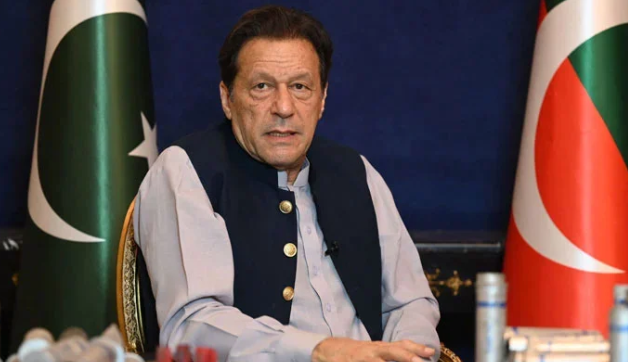
Negotiations between the opposition alliance comprising Pakistan Tehreek-i-Insaf (PTI) and Tehreek-i-Tahafuz-i-Ayin-i-Pakistan (TTAP) and the government-PPP team ended in a deadlock after hours of discussions.
The federal government blamed the PTI for the failure of talks, while the opposition rejected the allegations and held the government responsible for the breakdown.
In a statement, PTI expressed disappointment over the lack of progress despite what it described as serious efforts to address political instability, access to party founder Imran Khan, his medical treatment and the deteriorating security situation in Khyber Pakhtunkhwa (KP).
The PTI said the main point of disagreement was its demand for immediate access to Imran Khan, arguing that party leaders needed to consult him on important political and national matters.
According to the party, the government agreed to restore meetings between Imran Khan, his family and lawyers from Tuesday but did not accept demands related to his medical examination and treatment.
PTI said it had offered to set aside its other demands if the government agreed to provide immediate access to Imran Khan. However, the government allegedly refused to include the demand in the proposed agreement.
The party welcomed the restoration of family and legal meetings but maintained that such meetings could not replace a proper medical examination and necessary treatment.
PTI also argued that its leadership, like other political parties, should be able to consult its chairman on important policy and political matters.
Imran Khan has been incarcerated since August 2023 and is currently serving a 14-year sentence in the £190 million Al-Qadir Trust corruption case at Adiala Jail in Rawalpindi.
Despite an Islamabad High Court order allowing him to meet family members, lawyers and associates twice a week, his meetings with visitors have remained restricted for several months.
The PTI has repeatedly raised concerns about his health and demanded appropriate medical treatment.
The party said its negotiating team had sought immediate access to Imran, his transfer to Shifa International Hospital in Islamabad and the formation of a medical board that would include his personal physician.
The security situation in Khyber Pakhtunkhwa was another major issue discussed during the negotiations.
PTI said it supported strong action against terrorism but insisted that counterterrorism policies should also take into account the safety of civilians and the concerns of local communities.
According to the party, the federal government sought unconditional support from the KP government for its counterterrorism operations and proposed emergency measures in the merged districts and adjoining areas within 72 hours.
PTI maintained that terrorism must be tackled through a strategy combining decisive action against militants with measures to protect civilians from casualties, displacement and property losses.
The opposition proposed a meeting between authorised representatives of the federal and provincial governments within 72 hours to formulate a mutually agreed counterterrorism strategy.
It also called for consultations with political parties represented in the KP Assembly, elected representatives, tribal elders and other stakeholders.
PTI rejected claims that KP Chief Minister Sohail Afridi was deliberately obstructing the talks, arguing that direct access to Imran Khan would have allowed the chief minister to consult him over security and counterterrorism matters.
The party also demanded clarification from the government over why immediate access to Imran Khan was not accepted, why his medical treatment-related demands were rejected and why wider consultations on the KP security situation were not agreed upon.
PTI reiterated that it remained willing to engage in political dialogue and constitutional processes to address issues including Imran Khan’s health, restoration of democracy, supremacy of the Constitution, political stability and terrorism.
Separately, Opposition Chief Whip Malik Aamir Dogar said negotiations had collapsed over three major issues: meetings with Imran Khan, his medical treatment and KP’s counterterrorism policy.
Dogar said the opposition had made it clear that only Imran Khan could decide whether the proposed long march should be called off, making a meeting with him essential.
He said that when the government refused, the opposition proposed a meeting between Senate Opposition Leader Allama Raja Nasir Abbas and Imran Khan, but that request was also rejected.
Regarding Imran’s health, Dogar said the opposition wanted his personal doctors to be included in his treatment to address concerns surrounding his medical condition.
The third major issue was the demand for consultation on KP’s security policy. According to Dogar, the opposition opposed unilateral decisions and called for all relevant stakeholders to be taken into confidence.
PTI Secretary General Salman Akram Raja said the primary reason for the failure of negotiations was the federal government’s insistence on taking unilateral counterterrorism measures in KP.
He said the opposition wanted anti-terrorism operations to be carried out through an agreement between the federal and provincial governments and after consultation with political parties represented in the KP Assembly.
Raja said the opposition had no tolerance for terrorism and remained committed to eliminating militancy, but opposed civilian casualties and displacement caused by counterterrorism operations.
He stressed that successful counterterrorism policies required support from local communities and effective intelligence from the ground.
He also called for the recommendations of a previous peace jirga involving political and tribal representatives from KP to be considered.
Information Minister Attaullah Tarar rejected PTI’s position and accused the KP government of failing to take adequate measures against terrorism.
Tarar questioned why the provincial government had not taken effective action against militants, convened the provincial apex committee or publicly condemned attacks allegedly linked to the Afghan Taliban.
He also questioned the implementation of the National Action Plan, measures against illegal activities and undocumented Afghan immigrants, and efforts to strengthen the police and Counter-Terrorism Department.
The minister accused PTI of using calls for consultations and jirgas as a delaying tactic and alleged that the party’s policies were indirectly benefiting militant groups.
Tarar further criticised the KP government’s governance and counterterrorism record, claiming that significant funds had been allocated to the province for security and counterterrorism but that spending on police capacity-building remained inadequate.
He alleged that the KP government had failed to establish sufficient forensic facilities, strengthen the Counter-Terrorism Department, install Safe City surveillance systems and properly secure police checkpoints.
Earlier, Interior Minister Mohsin Naqvi said the negotiations had collapsed after KP Chief Minister Sohail Afridi proceeded with the PTI’s long march towards Islamabad.
Naqvi described the opposition negotiating team as reasonable but held Afridi responsible for the failure of the talks.
He also warned that Afridi could be held responsible if the march resulted in loss of life and said those supporting actions in violation of court orders could face legal consequences.