
Article
The Choice is Yours!!!
By: Ragheeb Khawaja
Since the elections of 1970, politics in Pakistan has revolved around two types which are politics of rhetoric or politics of development. After Ayub’s long martial law and the disastrous parliamentary politics of 1950’s and 60’s, the election of 1970 for provincial and federal governments was the first election of Pakistan in twenty three years .It is from here that the battle between rhetoric and development began and since then, it has been fought ten times in the past 54 years among various political actors. To understand how this battle has played out in the various elections held in this country we must first understand what these two types of politics really is. We must also understand that both are not mutually exclusive but rather a representation of what the supporters of any one actor are rallying around. It must also be understood that whichever strategy triumphs, it reflects what the citizens of a country believe are their core concerns and in tuen is reflected by the elected representatives accordingly.
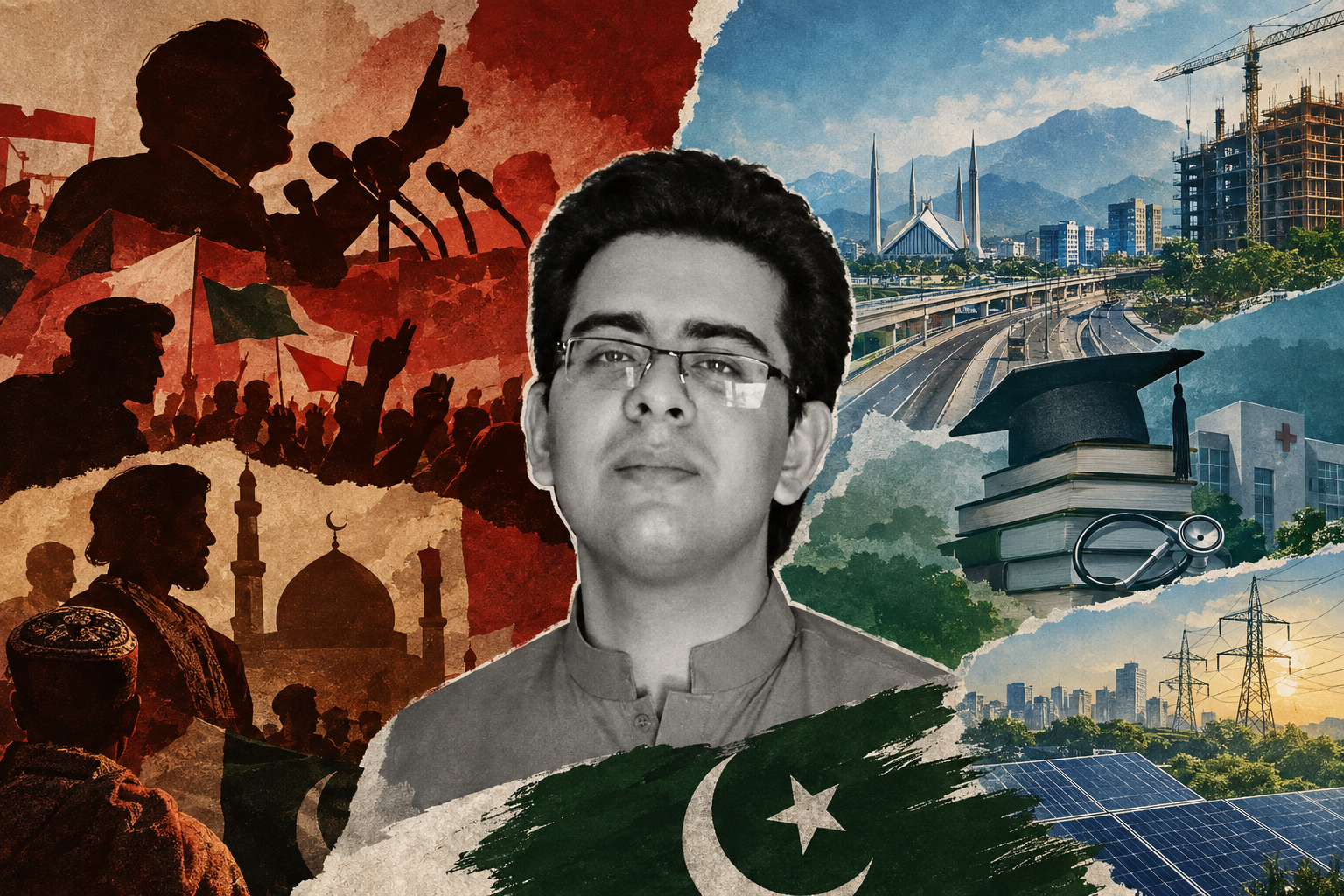
Politics of rhetoric is primarily done by focusing on issues of ethnicity/caste, religion and/or on the virtue or capability of certain individuals or groups with a focus on highlighting how a particular political actor, be it an individual or a party, best covers all three parameters compared to their opponent. It can also focus on nostalgia for a supposed bygone era of greatness that a political agent may claim to be capable of bringing back if elected into power. It also focuses on emphasizing, sometimes even more then the former, the inability of the other party to fulfill the requirements based on the earlier three parameters as a reason for why the electorate should vote for it. In simple terms it can evolve into a race to the bottom since both sides rather than focusing on their manifesto or past performance get involved into a mudslinging contest to show which one is worse than the other. It also emphasis grand promises of a welfare state without giving concrete plans as to how such a state will be achieved after gaining power such as financial plans, administrative setups and so on and so forth. The focus in such politics completely negates issues of healthcare, education, infrastructure, energy, security and law, which are the core issues of the populace even if they don’t agree with it themselves. Politics of development on the other hand is completely reliant on past performance in the metrics of healthcare, education, infrastructure etc. and is reliant on each political actor detailing their prior performance as well as giving detailed plans as to how those targets will be completed in their tenure.
In Pakistan this has manifested itself prominently in almost all elections. In 1970 it emerged in the form of ethnicity when Mr. Bhutto stirred the populace of West Pakistan by deriding the population of East Pakistan who were Bengalis. His campaign also focused on the populist but ultimately unachievable slogan of “Roti, Kapra aur Makan” which as far as campaigning goes was a wildly successful slogan still remembered to this day. On the other hand, Sheikh Mujib-ur-Rehman talked about his six points which were constitutional reforms aimed at bringing much greater autonomy and fiscal space for growth in East Pakistan though there was a great deal of ethnicity based politics of rhetoric in them as well since the amount of autonomy sought had far reaching implications for the federation and portrayed West Pakistan as a burden on the Bengali population of the East which was being marginalized. Similar patterns were witnessed in the 1977 elections، when focus was on the religion card against Bhutto as an entire movement by the Pakistan National Alliance was launched decrying Bhutto’s un-Islamic lifestyle and government. In the 1988 and 1990 elections, similar rhetoric of character assassination was used against Ms. Benazir Bhutto by Mr. Nawaz Sharif led alliance in which her character was called into question as well as whether a women prime minister was religiously allowed or not. Ms. Benazir on the other hand relied on the sympathy for execution of her late father at the hands of a military dictatorship as well as his populist social slogans to campaign and gain votes. She succeeded in 1988 but lost in 1990 to Mr. Nawaz Sharif. From 1993 onwards, however the politics of development started to play a greater role with Mr. Nawaz Sharif slowly shifting from rhetoric to development in a break from Pakistan’s election tradition. In the 1993 and 97 elections, though similar tactics were used by him, his ability to transform Pakistan and more specifically Punjab with various industrial and infrastructure projects started to feature heavily in campaigns. In the elections that followed after another long military dictatorship in 2008, 2013 and 2018, they remained a core component of his campaigns and in any future elections contested by him will remain so as well. Pakistan People Party (PPP) and Pakistan Tehreek-Insaf(PTI) the two main contenders in this timeline meanwhile have continued to rely on politics of rhetoric which yielded success in 2008 due to the assassination of Ms. Benazir Bhutto which generated sympathy votes for the PPP but has since then largely remained ineffective. For PTI it has been a consistent strategy since inception with “Islamic touch”, “ Pathan vote”, the corruption of all except them and charisma and personality of Imran Khan as the supposed savior of Pakistan and restorer of some lost glory, all coming into play.
As the 2024 elections draw closer once more both these strategies will clash and it is up to the voters to decide where there priorities lie. For Pakistan to progress the voters must ask for plans and projects for their social uplift rather than vote on the basis of mere rhetoric. They must break the shackles of ethnicity, religion and empty grand promises and instead ask for past performance and future plans for the betterment of the country. In this lies hope, if any, for this country getting back on track.