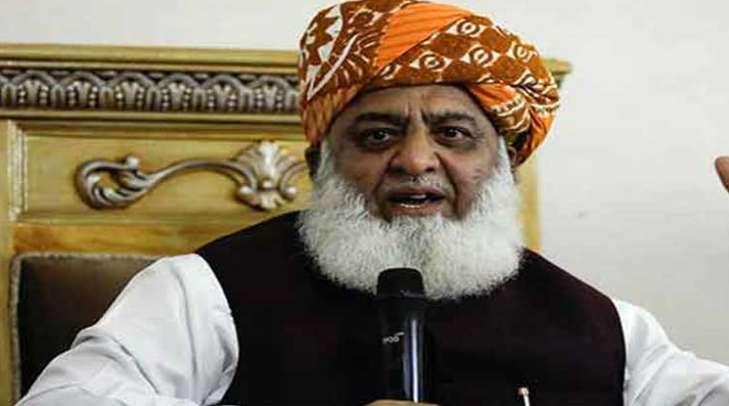
Maulana Fazlur Rehman’s ability to bring the government and Pakistan Tehreek-e-Insaf (PTI) to the negotiating table remains uncertain, with questions emerging over the political leverage he can exercise despite his long experience in Pakistani politics.
The Jamiat Ulema-i-Islam-Fazl (JUI-F) currently holds 10 seats in the National Assembly, 18 in the Khyber Pakhtunkhwa Assembly and 12 in the Balochistan Assembly. The party sits on the opposition benches in both KP and Balochistan, while its seven senators continue to give it a presence in the upper house.
This parliamentary position has prompted some observers to question whether Fazl has sufficient influence over the provincial governments to pressure either the ruling coalition or PTI into negotiations.
Prime Minister Shehbaz Sharif’s Adviser on Political Affairs, Rana Sanaullah, has already dismissed the prospect of the JUI-F chief bringing down political tensions, saying Fazl had not assured the government that he could bring both sides to the negotiating table.
Parliamentary Affairs Minister Tariq Fazal Chaudhry has also suggested that divisions within PTI over Fazl’s proposed intervention could undermine his efforts.
However, PTI’s Khyber Pakhtunkhwa president, Junaid Akbar, said on Thursday that the party had authorised the JUI-F chief to mediate. He added, however, that Fazl had not yet conveyed any government proposal to PTI.
Some political observers believe both sides are seeking a face-saving way out of the current standoff. PTI may be reluctant to take its protest march into Islamabad, while the government may wish to avoid another violent confrontation in the federal capital.
Ahmed Bilal Mehboob, president of the Pakistan Institute of Legislative Development and Transparency (Pildat), believes Fazl could play a significant role in bringing the two sides together because of his extensive political experience and relationships.
He said both parties appeared to be looking for a face-saving solution amid the fragile political environment and could eventually return to negotiations.
PTI leaders have demanded a meeting with the party’s incarcerated founder, Imran Khan, while the government has called on the opposition to end its long march, which is continuing in Khyber Pakhtunkhwa.
Mehboob believes Fazl could help identify a compromise acceptable to both sides.
JUI-F spokesperson Aslam Ghauri said the party chief was acting as a “facilitator, not a mediator”.
He explained that a mediator would have authority from the parties involved to make decisions based on their demands, whereas Fazl’s immediate objective was to facilitate contact and encourage both sides to resume dialogue.
“Our priority is to bring both sides to the table for the resumption of talks,” Ghauri said.
He also said the JUI-F had urged the government to convene an all-parties conference at Parliament House to discuss political and security issues.
According to Ghauri, renewed dialogue could benefit both sides, particularly PTI, given the political challenges facing its government in Khyber Pakhtunkhwa.
He raised questions about the decisions to impose Section 144 in Abbottabad and place containers on roads in Peshawar to obstruct the PTI march, asking who had directed the measures.
Although media reports suggested that Prime Minister Shehbaz Sharif might consult Fazl soon, Ghauri said the JUI-F had not received any indication of such a meeting from the Prime Minister’s Office.
PTI leader Shaukat Yousufzai recently claimed during a television programme that Fazl had already played a role in changing the date of the party’s long march from September 27 to October 4. However, PTI leader Asad Qaiser subsequently rejected that claim.
Fazl’s Political Influence Remains Significant
Although Fazl may no longer command the parliamentary strength he once did, his political history and ability to engage with different parties continue to make him an influential figure.
He previously led the Pakistan Democratic Movement (PDM), an opposition alliance that removed Imran Khan’s PTI government from power in 2022.
In 2019, Fazl also led a large protest movement to Islamabad, where demonstrators remained encamped for nearly two weeks while demanding Imran Khan’s resignation.
His support was also important during negotiations over the 26th Constitutional Amendment. JUI-F’s eight votes, alongside six votes from independent and PTI-backed members, helped secure the amendment’s passage in the National Assembly. The party’s five senators also played a significant role in the upper house.
However, subsequent parliamentary developments suggested a decline in Fazl’s legislative leverage.
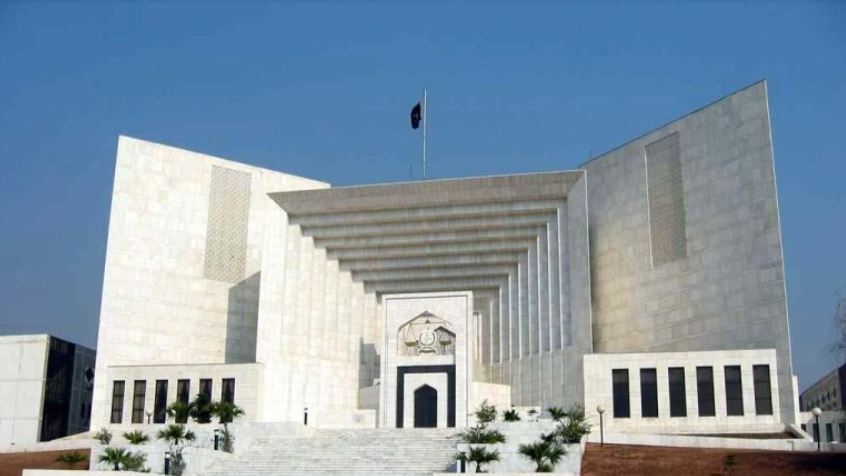
Following the Supreme Court’s 2025 ruling on reserved seats, the Election Commission of Pakistan restored seats to the PML-N, PPP and JUI-F. This increased the ruling coalition’s strength in the National Assembly to more than 230 members, taking it beyond the two-thirds threshold.
When Fazl announced in November 2025 that JUI-F would not support the 27th Constitutional Amendment, reports indicated that the government already had the backing of 65 senators in the 96-member Senate, even without the support of JUI-F’s seven members.
These developments have reduced the party’s ability to determine the outcome of major legislative decisions. Nevertheless, Fazl’s experience, political contacts and history of negotiating with rival parties could still make him a potential facilitator in efforts to ease the government-PTI standoff.
Whether he can translate that influence into meaningful negotiations will depend on the willingness of both sides to compromise and engage in dialogue.