The execution of Nidal Hasan, scheduled for December 3 at Fort Hood in Texas, is expected to be the first execution by a US military firing squad since 1945. Hasan killed 13 people in a 2009 shooting at the military base.
A Pentagon official told AFP on Thursday that the execution would be livestreamed, following remarks by US Defence Secretary Pete Hegseth, who said the public would be able to watch the proceedings.
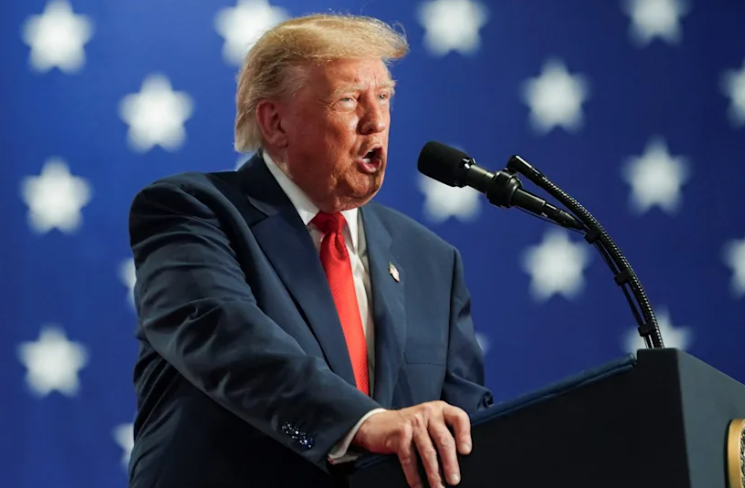
However, US President Donald Trump has expressed uncertainty over whether the execution would be broadcast publicly. Although he supports the death penalty in Hasan’s case, Trump said officials were still deciding how it would be carried out.
“They are making a determination about that, but he will be killed,” Trump said, adding that he did not care how the execution was conducted as long as it took place.
US Vice President JD Vance also cast doubt on the proposed livestream, telling reporters on Friday that he was unsure whether the broadcast would actually take place.
Vance described Hasan’s attack as one of the worst terrorist incidents on US soil outside the September 11 attacks. However, he said he would not watch the execution if it were broadcast live.
Democratic Senator Mark Kelly, a member of the Senate Armed Services Committee, said Hasan should face justice but questioned the idea of publicly broadcasting an execution.
Kelly compared the proposal to practices associated with Iran and the Taliban, asking whether the United States wanted to be associated with such actions.
Major technology companies, including YouTube, Meta and X, did not immediately respond to requests for comment on whether their platforms would permit the livestream.
TikTok referred to its policies prohibiting graphic incidents and violent content, including footage showing the shooting of an individual.
The United Nations human rights chief criticised the plan, warning that livestreaming an execution would amount to a public execution and breach the absolute prohibition of torture.
Archbishop Paul Coakley, president of the US Conference of Catholic Bishops, also condemned the proposal, describing it as a promotion of a culture of death and urging officials to reconsider.
Hegseth said the planned execution would mark the military’s first firing squad execution since World War II. In a video shared on official Pentagon social media accounts on Thursday, he stressed that serious consequences would follow such acts.
However, the last US military execution took place in 1961, when John Bennett was hanged after being convicted of rape and attempted murder.
According to the Death Penalty Information Centre, the US military has executed 135 service members since 1916.
Amnesty International reported that at least 17 public executions were known to have taken place in 2025, including six in Afghanistan and 11 in Iran.
Amnesty representative Justin Mazzola said on Friday that the death penalty violated human rights and warned that broadcasting Hasan’s execution would further intensify the cruelty.
Hasan killed 13 people and wounded 30 others during the 2009 attack at Fort Hood. Twelve of those killed and all 30 wounded were military personnel. A civilian police officer who responded to the shooting wounded Hasan, leaving him paralysed from the waist down.
During his trial, Hasan represented himself but called no witnesses and did not testify. He also made no attempt to deny the charges and was sentenced to death by a military jury in 2013.
Court-appointed defence lawyers raised concerns that Hasan was seeking execution.
The trial heard that Hasan opposed US military operations in Iraq and Afghanistan and had communicated online with Anwar al-Awlaki, an American-born radical cleric alleged to have links to Al-Qaeda. Al-Awlaki was later killed in a US drone strike in Yemen.
The proposed livestream has prompted renewed debate over capital punishment, public executions and the ethical implications of broadcasting state-administered executions.