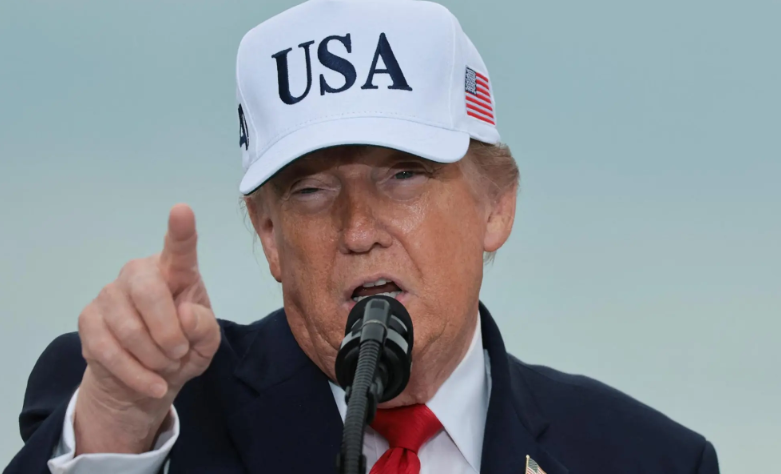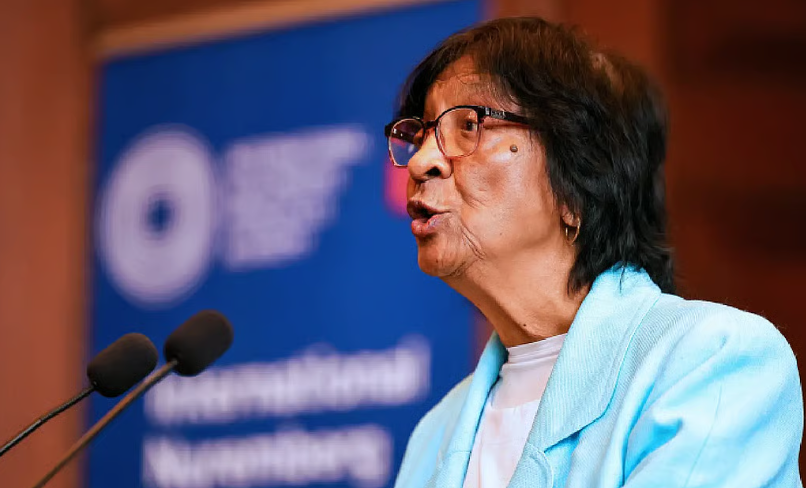
Nobel Peace Prize laureate Navi Pillay has criticised US President Donald Trump’s sanctions against the International Criminal Court (ICC), describing them as unlawful interference in an independent judicial institution.
In an interview with Agence France-Presse (AFP), Pillay suggested that the timing of the US sanctions, announced just hours after her Nobel Prize recognition, was linked to the award not being given to Trump.
Asked what message she would convey to the US president, the 85-year-old former judge urged him to consult legal advisers on international law and understand why interference in an independent international court was unlawful.
The United States announced sanctions on Friday aimed at disrupting the ICC’s day-to-day operations. The court prosecutes individuals accused of war crimes, crimes against humanity and genocide.
The Trump administration has vowed to dismantle the court over its decision to issue an arrest warrant for Israeli Prime Minister Benjamin Netanyahu over alleged crimes in Gaza. Netanyahu has rejected the accusations.
Pillay criticised what she described as double standards in Washington’s approach to international justice, noting that previous US administrations had welcomed the ICC’s arrest warrant for Russian President Vladimir Putin.
She said selectively supporting international justice in some cases while opposing it in others was wrong and risked establishing a dangerous precedent.
The sanctions, which are expected to affect the court’s technology and banking operations, are scheduled to take effect in six months. Dutch Prime Minister Rob Jetten has called for discussions with Washington during that period to address concerns about the court.
However, Pillay described proposals for ICC reforms as “euphemistic”, arguing that the US administration’s real objective was to secure assurances that American citizens would not face investigations.
She stressed that the court could not apply different standards to different individuals or selectively pursue cases based on nationality.
Pillay also criticised Israeli officials who reacted angrily to her Nobel recognition. She previously headed the United Nations Independent International Commission of Inquiry, which concluded last year that genocide was occurring in Gaza.
Israeli Prime Minister Benjamin Netanyahu called her a “bigot”, while Israel’s foreign ministry invoked Nazi propagandist Joseph Goebbels in its criticism of the award.
Pillay described the remarks as hurtful and insulting, pointing out the historical responsibility of Goebbels for the deaths of thousands of people, including Jews and people of colour.
Despite acknowledging the political obstacles to bringing Netanyahu before the ICC, she expressed confidence that he could eventually face the court over the allegations, which he denies.
Drawing on her decades of experience in international justice, Pillay said she believed people could find ways to overcome seemingly difficult obstacles.
Pillay said she was still coming to terms with receiving the Nobel Peace Prize, adding that the limited number of women recognised by the award reflected persistent inequality.
At 85, she acknowledged that her age could restrict her ability to travel and advocate for international justice as actively as she once did. During her tenure as UN High Commissioner for Human Rights, she visited 79 countries.
Pillay said she was consulting others on how best to use the 12 million Swedish kronor prize, worth approximately $1.2 million, and suggested that some of the funds could support initiatives in her native South Africa.
She expressed concern over the difficulties facing Africa and South Africa, particularly the challenges of raising funds for public initiatives.
Pillay also said she planned to consult the University of KwaZulu-Natal, which has established a unit in her name, about potential areas of cooperation. She emphasised her commitment to expanding educational opportunities for children and young people.