Oman and Pakistan have been working to ease regional tensions following US-Israeli strikes on Iran in late February, which triggered a conflict that has since spread across the Middle East.
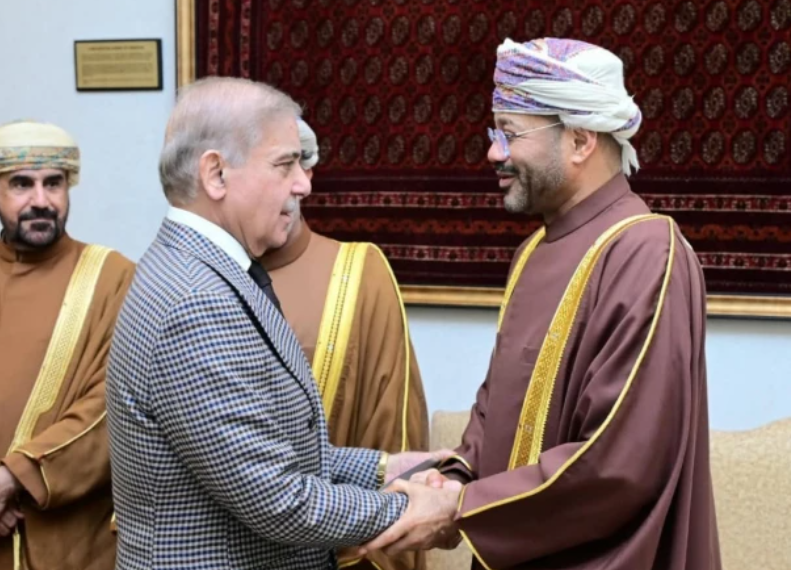
Omani Foreign Minister Badr Albusaidi met Prime Minister Shehbaz Sharif on the second day of his two-day visit to Pakistan. During his visit, Albusaidi also attended the eighth session of the Pakistan-Oman Joint Ministerial Commission (JMC) and held talks with Deputy Prime Minister and Foreign Minister Ishaq Dar.
According to a statement issued by the Prime Minister’s Office (PMO), Shehbaz highlighted the longstanding ties between Pakistan and Oman, rooted in shared faith, geography, history, culture and centuries of people-to-people exchanges.
The prime minister described Oman as a brotherly country, an important maritime neighbour and a valuable partner in a strategically significant region.
He expressed satisfaction over the successful conclusion of the eighth session of the Pakistan-Oman Joint Ministerial Commission, saying it would provide a strong foundation for expanding mutually beneficial cooperation and strengthening engagement between the two countries.
Shehbaz also welcomed the common positions held by Pakistan and Oman on regional and international issues and appreciated Muscat’s principled emphasis on dialogue and diplomacy to resolve disputes.
Albusaidi thanked the Pakistani government for its hospitality and expressed satisfaction over the outcome of the JMC session, saying it would pave the way for closer cooperation across various sectors.
The Omani foreign minister also commended Pakistan’s sustained diplomatic efforts to reduce tensions and promote peaceful solutions to regional challenges.
The prime minister witnessed the signing of the protocol of the eighth JMC session, alongside agreements and memoranda of understanding aimed at strengthening bilateral cooperation in media, news and information exchange, historical documentation, archival management, information and communication technology, and the facilitation of diplomatic and official exchanges.
Earlier, Albusaidi held a joint press conference with Deputy Prime Minister Ishaq Dar, who described Houthi attacks on Saudi Arabia as “totally unacceptable”.
Dar said the signing of the JMC protocol reflected the shared commitment of Pakistan and Oman to strengthening cooperation in areas of mutual interest.
He added that the two countries would also sign an agreement providing mutual visa exemptions for holders of diplomatic and official passports.
“Pakistan-Oman friendship remains strong and forward-looking,” Dar said, adding that the two sides had agreed to organise a business-to-business investment forum in Pakistan.
The two foreign ministers also discussed developments in the Gulf region. Dar reiterated Pakistan’s commitment to contributing constructively to diplomatic efforts aimed at promoting regional peace and stability.
He said he had conveyed Pakistan’s condemnation of the Houthi attacks on Saudi Arabia, stressing that attacks targeting civilians and civilian infrastructure were unacceptable.
Dar said Albusaidi shared this position, adding that violations of international law posed a serious threat to regional peace and security.
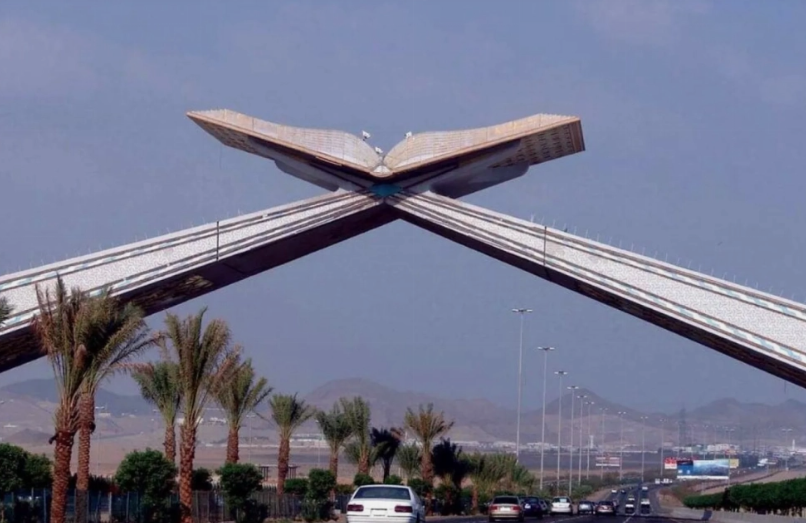
He reaffirmed Pakistan’s solidarity with Saudi Arabia and its commitment to protecting the kingdom’s sovereignty, territorial integrity and security in accordance with the Makkah Joint Defence Agreement.
The ministers also emphasised the urgent need to ensure the uninterrupted delivery of humanitarian assistance to the people of Gaza.
Dar further criticised India’s unilateral suspension of the Indus Waters Treaty, describing it as a material breach of international law. He warned that the move threatened Pakistan’s water, food and energy security, affecting approximately 250 million people.
Albusaidi said the JMC had provided an important opportunity to review bilateral relations and reaffirm the longstanding ties between the two countries.
He stressed that Pakistan and Oman regarded dialogue and diplomacy as essential tools for addressing regional challenges, reducing tensions and promoting peace and stability.
The Omani foreign minister also praised Pakistan’s diplomatic role in the US-Iran conflict and reaffirmed both countries’ commitment to strengthening their partnership and expanding cooperation in areas of mutual interest.
Responding to a question, Dar said both countries believed dialogue and diplomacy were the only viable ways to resolve regional conflicts.
Dar also said a proposed free trade agreement between Pakistan and the Gulf Cooperation Council (GCC) could help expand business activities. He noted that, according to the information available to him, all but one GCC member had agreed to the proposed arrangement.
Asked about the gap between high-level bilateral engagements, Dar explained that Albusaidi’s visit had previously been postponed because Pakistan was involved in mediation efforts between the United States and Iran.
Albusaidi said discussions between the two sides had continued behind the scenes.
On the Strait of Hormuz, the Omani foreign minister reaffirmed his country’s commitment to ensuring unhindered navigation through the strategic waterway, highlighting its importance to the regional and global economy.
The eighth session of the Pakistan-Oman Joint Ministerial Commission was co-chaired by Dar and Albusaidi.
According to Pakistan’s Foreign Office (FO), the two sides reaffirmed their close fraternal relationship and commitment to expanding cooperation in trade and investment, maritime and logistics connectivity, agriculture, industry, energy, workforce mobility, human resource development, education, information technology, media and climate change.
Both ministers stressed the importance of strengthening people-to-people contacts, facilitating workforce mobility and encouraging business delegations to explore new opportunities for trade, investment and institutional cooperation.
Dar called for the timely implementation of agreed initiatives through effective institutional coordination and sustained engagement between joint working group meetings.
The Foreign Office said Albusaidi appreciated Pakistan’s hospitality and its efforts to promote regional peace and security. He also reaffirmed Oman’s commitment to strengthening the longstanding partnership between the two countries.
At the beginning of the session, Dar said the two sides had identified areas of mutual interest and held detailed discussions on international and regional developments, including the US-Iran conflict, the Strait of Hormuz, Bab al-Mandab and the situation in Gaza.
The discussions also covered Jammu and Kashmir and other pressing regional issues.
Dar praised Albusaidi’s leadership and efforts to promote peace in the Middle East, acknowledging the work undertaken by Oman to address regional tensions.
He also highlighted Pakistan’s distinctive position in the Gulf region, noting its membership in the Organisation of Islamic Cooperation (OIC), the United Nations and other multilateral organisations.
The deputy prime minister stressed the need to avoid prolonged gaps between bilateral engagements, pointing to considerable opportunities for expanding trade, economic cooperation and investment.
He said he had committed to visiting Oman in 2027 for the next session of the Joint Ministerial Commission, which is expected to take place there.
Dar added that diplomatic relations between Pakistan and Oman had completed 55 years, although the historical and cultural connections between the two countries stretched back centuries.
He highlighted the longstanding bonds between Oman and Pakistan, particularly their historical links with Balochistan and Gwadar.
Referring to the regional situation, including developments involving the Houthis and Saudi Arabia, Dar said the two countries shared similar views on addressing regional challenges.
He also warned that regional tensions were affecting Pakistan’s energy supply chains and driving fuel prices higher, placing additional pressure on ordinary citizens.
Addressing the JMC session, Albusaidi expressed Oman’s commitment to strengthening bilateral engagement and expanding cooperation in sectors that could deliver greater benefits to the people of both countries.
He described Pakistan as a friendly and brotherly country with which Oman shared longstanding historical, cultural and traditional ties.
Albusaidi said the Joint Ministerial Commission was an important mechanism for identifying further avenues of cooperation. He also highlighted the role of the Pakistan-Oman business council and the political consultation mechanism between the two countries’ foreign ministers.
He said greater collaboration would help both countries fulfil the aspirations of their leaderships and people.
The Omani foreign minister praised Pakistan’s efforts to encourage engagement, mutual understanding and respect, particularly its role in facilitating dialogue between Iran and the United States.
He said significant potential existed for expanding economic cooperation between Pakistan and Oman, particularly in trade, logistics, port connectivity, energy and food security.
Albusaidi stressed that removing obstacles and creating a favourable environment for businesses would enable both countries to benefit more fully from these opportunities.
He also called for enhanced cooperation in tourism, education, academia and technology, alongside more frequent exchanges between the people of the two countries.
Following the session, Albusaidi described his engagements in Islamabad as constructive, saying the two sides had reviewed practical measures to deepen cooperation in trade, investment, energy, logistics and other priority sectors.
He added that both countries had agreed to strengthen follow-up mechanisms to translate identified opportunities into concrete outcomes.
Earlier, Dar had also held bilateral talks with Albusaidi ahead of the JMC session. The visiting foreign minister arrived in Pakistan on Tuesday for a two-day visit.
According to the Foreign Office, the two ministers reaffirmed their close fraternal ties and emphasised the importance of sustained high-level engagement to strengthen cooperation, particularly in trade, investment and people-to-people contacts.
They also exchanged views on regional developments and stressed the importance of dialogue and diplomacy in achieving lasting peace and stability.
Albusaidi commended Pakistan’s efforts to promote regional peace and security, while Dar appreciated Oman’s constructive role and its commitment to regional stability.
The Foreign Office had previously stated that the JMC session would review the full scope of Pakistan-Oman bilateral relations and identify opportunities to strengthen mutually beneficial cooperation. The visit is expected to further deepen the longstanding partnership between the two countries.