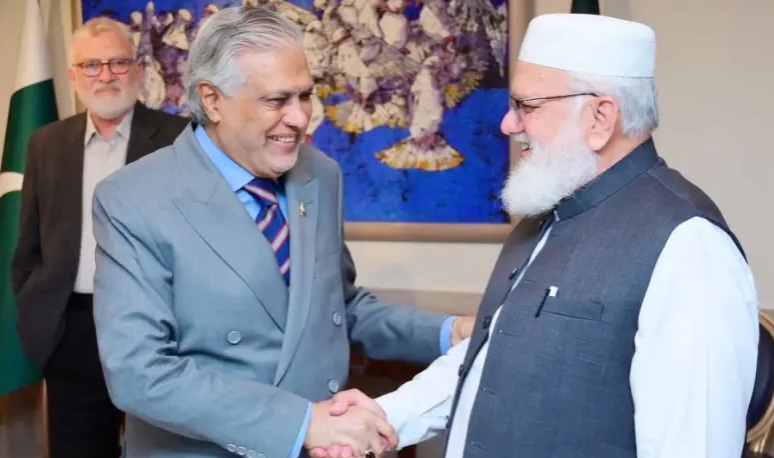
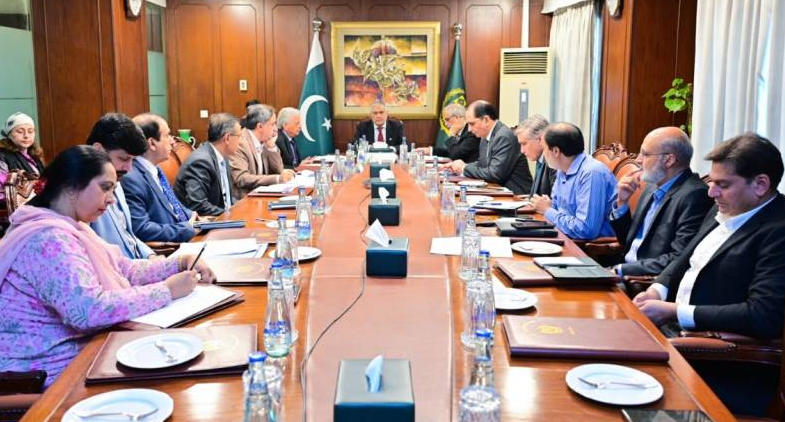
Deputy Prime Minister Ishaq Dar was informed that adequate stocks of essential commodities were available to meet domestic demand, with no shortages expected and prices showing signs of stabilisation.
Dar directed the relevant departments to closely monitor supply chains and commodity prices to facilitate consumers, in accordance with Prime Minister Shehbaz Sharif’s directives.
He also stressed that strict action would be taken against hoarding, the creation of artificial shortages and overpricing of essential commodities, according to a statement issued by the ministry.
The meeting was attended by National Food Security and Research Minister Rana Tanveer Hussain, Climate Change Minister Musadik Malik, Special Assistant to the Prime Minister Tariq Bajwa, Commerce Secretary Jawad Paul, and senior representatives from relevant federal and provincial ministries and departments.
Meanwhile, Pakistan’s short-term inflation rose to 11.97 per cent year-on-year in the week ending October 8, driven largely by higher food prices, particularly wheat flour, according to official data released by the Pakistan Bureau of Statistics.
Earlier this month, flour millers increased wheat flour prices by an average of Rs14 per kilogram. During the last week of September, they had reduced prices of various flour varieties by Rs3 per kilogram. However, consumers received no relief as retailers kept prices unchanged.
On October 7, Sindh Chief Minister Syed Murad Ali Shah approved the release of government wheat at Rs12,500 per 100-kilogram bag from October 15. The move was aimed at stabilising soaring flour prices and ensuring the commodity’s availability across the province.
However, flour millers refused to lift the government wheat on Thursday, claiming that the grain was of substandard quality and unfit for human consumption.
The International Monetary Fund has projected that Pakistan’s inflation will remain close to double digits for another year. Headline inflation is expected to rise to 9.9 per cent, compared with 7.1 per cent last year.