Albania has been gripped by days of violent protests as demonstrators demand political accountability over poor university conditions, high tuition fees and corruption, while Prime Minister Edi Rama has rejected calls for his resignation.
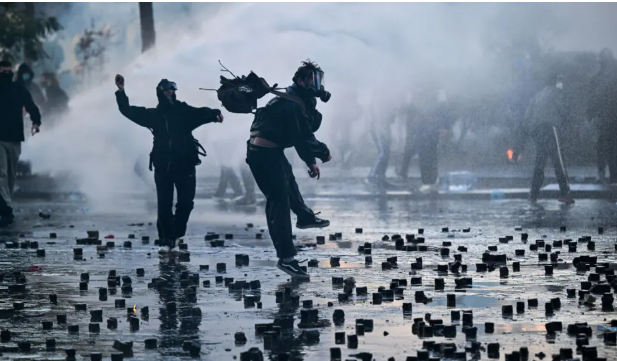
Hundreds of protesters gathered outside the Education Ministry in the capital, Tirana, chanting slogans demanding Rama step down. The demonstrations continued amid tense confrontations with police, who deployed water cannon and tear gas to disperse crowds and prevent them from advancing.
Violence spread through several streets as protesters set rubbish bins on fire, smashed windows and damaged buildings, including the headquarters of the ruling Socialist Party. Some demonstrators also threw rocks and Molotov cocktails at security personnel.
In a televised video address, Rama ruled out resigning and claimed the demonstrations were being driven by external interference.
The prime minister said the protests, which had entered their sixth consecutive day, posed a threat not only to his government but also to Albania’s aspirations to join the European Union.
His remarks came as public anger continued to mount over conditions in the education sector and allegations of corruption, with demonstrators demanding greater accountability from the authorities.
Saturday witnessed some of the most serious violence since the protests began. Demonstrators reportedly hurled rocks, metal objects, pyrotechnic devices and Molotov cocktails at police officers.
Several cars and rubbish bins were set ablaze, with some burning objects used to construct barricades as police attempted to push back the crowds.
The continuing unrest has raised concerns about public order in the Albanian capital, as tensions between protesters and security forces remain high.
The US Embassy in Tirana, reflecting Washington’s close ties with Albania, urged all sides to exercise restraint and remain calm amid the escalating demonstrations.
The protests present a growing challenge for Rama’s government as it faces mounting public pressure over education, corruption and the country’s broader political direction, including its ambition to secure EU membership.