Pakistan’s Interior Minister Mohsin Naqvi has highlighted Islamabad’s continued diplomatic efforts to ease tensions between the United States and Iran, saying Pakistan remained committed to dialogue despite periods of heightened regional uncertainty.
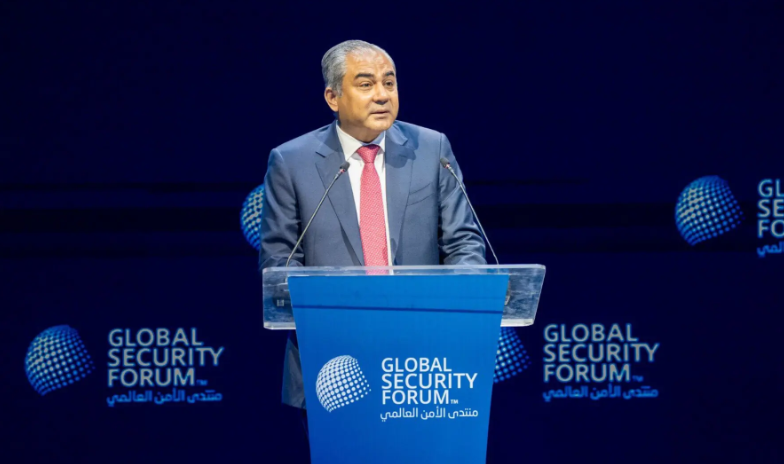
Addressing the 8th Global Security Forum in Doha, Qatar, on Monday, Naqvi said the conflict involving Washington and Tehran had created serious risks for the Middle East and the wider international community.
Held under the theme “The Future of Alliances”, the forum has brought together senior officials and dignitaries from more than 100 countries, according to the Qatar News Agency.
Naqvi said Pakistan had chosen diplomacy over confrontation and made every possible effort to prevent further escalation.
“Even when the situation became extremely tense, we never gave up,” he said, explaining that sustained communication, mutual understanding and trust were essential to resolving international disputes.
He stressed that peace could not be achieved through a single meeting, but required patience, confidence-building and continuous engagement.
The interior minister particularly praised Chief of Defence Forces and Chief of Army Staff Field Marshal Syed Asim Munir for his contribution to Pakistan’s diplomatic efforts to reduce regional tensions.
Munir and Naqvi travelled to Iran in August as part of Islamabad’s initiative to promote regional peace and stability. Naqvi subsequently visited Tehran in September, where Iranian officials acknowledged Pakistan’s role in facilitating diplomatic engagement.
Speaking at the forum, Naqvi recalled the signing of the Islamabad Memorandum of Understanding between Iran and the United States on June 18. The 14-point agreement, for which Pakistan acted as a mediator, was intended to provide a framework for ending the conflict that began with US-Israeli strikes on Iran on February 28.
He said the agreement was followed by the Lake Lucerne Summit in Switzerland, organised through the mediation efforts of Pakistan and Qatar.
Recalling the negotiations, Naqvi described the extensive efforts made by Qatar’s Prime Minister Mohammed bin Abdulrahman Al Thani and Field Marshal Munir, saying they worked for more than 16 hours without a break to keep the talks on track.
He said their priority was to prevent further fighting and protect civilian lives rather than seek public recognition for their diplomatic efforts.
Naqvi praised Qatar for maintaining diplomatic engagement during a period of heightened regional tensions, noting that Islamabad had closely observed and supported Doha’s efforts.
He said Pakistan and Qatar had worked together to keep communication channels open even when other parties were taking opposing positions.
The minister outlined three key lessons from recent diplomatic efforts: dialogue should never be abandoned, trust is essential for meaningful negotiations, and peace requires sincere contributions from all sides.
He emphasised that no country could secure lasting regional stability through unilateral efforts.
Naqvi reaffirmed Pakistan’s commitment to supporting negotiations, cooperation and peaceful conflict resolution, adding that securing peace was more important than achieving victory in war.
He said Pakistan was not seeking recognition for helping stop conflicts but wanted to contribute to a future in which wars could be prevented altogether.
The conflict between Washington and Tehran began in February following US-Israeli strikes on Iran, prompting retaliatory attacks by Tehran against targets in neighbouring Gulf countries.
Despite continued diplomatic engagement, negotiations to end the conflict have made limited progress in recent weeks.
After an interim ceasefire collapsed, Iran presented a proposal in September to reopen the Strait of Hormuz, a strategically important route for global oil shipments that has remained central to the dispute.
The United States rejected the proposal. Iran’s security chief subsequently said negotiations had stalled because Washington had not addressed all seven of Tehran’s conditions for reopening the waterway.
On Sunday, Iranian Foreign Minister Abbas Araghchi said Tehran’s offer to reopen the strait within seven days remained available.
Regional tensions have also increased following renewed attacks by Yemen’s Houthi rebels against Saudi Arabia, amid the breakdown of a truce in the country’s prolonged conflict.
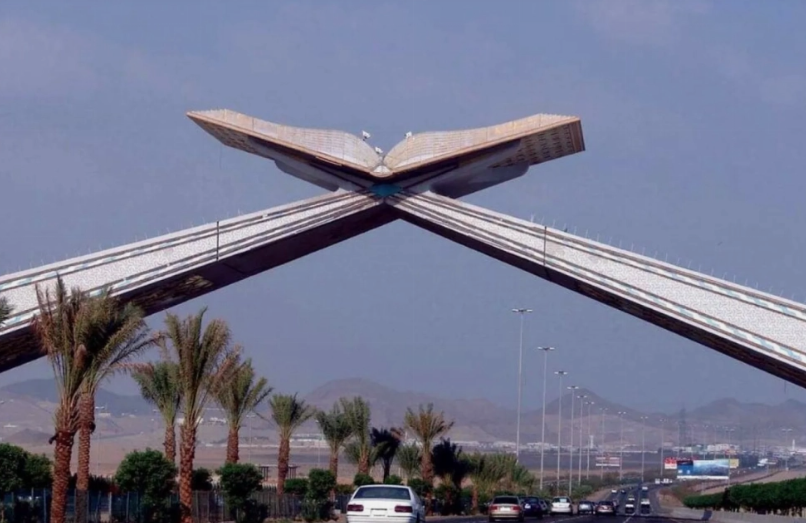
During his address, Naqvi referred to the Makkah Joint Defence Agreement signed by Pakistan, Saudi Arabia and Türkiye in August, describing it as an example of cooperation aimed at strengthening regional security.
He stressed that the agreement was designed for defence rather than aggression, arguing that lasting peace was impossible while neighbouring countries remained embroiled in conflict.
The pact established a framework for collective defence under which an attack against one signatory could be treated as an attack against all participating countries.
Naqvi also called for stronger international cooperation to address terrorism and other security threats.
Drawing on Pakistan’s experience, he said the country had paid a heavy price for terrorism, with thousands of civilians, soldiers and police personnel losing their lives. He added that Pakistan continued to confront security challenges.
Describing terrorism as a shared international threat, the minister called for improved intelligence-sharing, closer coordination and joint efforts to combat militant violence.
He said Pakistan had not only sought international counterterrorism cooperation but had also contributed to global security through its participation in United Nations peacekeeping missions.
Naqvi highlighted the work of Pakistani police peacekeepers in protecting civilians, supporting local law enforcement and helping restore stability in conflict-affected countries.
He said Pakistan remained proud of the sacrifices and services of its personnel deployed in international peacekeeping operations.