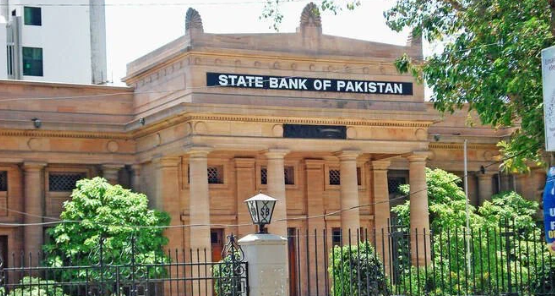
The State Bank of Pakistan (SBP) has increased its policy rate by 50 basis points to 12 per cent, citing growing inflationary pressures linked to escalating tensions in the Middle East and persistently high global energy prices.
In its monetary policy statement, the Monetary Policy Committee (MPC) said the decision was approved by nine of its 10 members. The committee noted that the intensifying Middle East conflict and limited prospects for an early resolution had kept international energy prices elevated, creating fresh challenges for Pakistan’s inflation outlook.
The MPC said the domestic impact of the global shock had remained manageable so far, supported by proactive monetary policy adjustments and continued fiscal discipline. However, geopolitical developments had increased inflation risks compared with previous assessments.
Although the outlook for economic growth and the external account remained broadly stable, the committee warned that uncertainties had intensified.
It said the rate increase was necessary to keep inflation expectations under control, limit the secondary effects of supply-side price shocks and bring inflation within the target range of 5 to 7 per cent. The move, it added, would help maintain macroeconomic stability and support sustainable economic growth.
The central bank reported that foreign exchange reserves had remained stable at around $21 billion. It also noted that Pakistan had reached a staff-level agreement with the International Monetary Fund (IMF), while the country’s real gross domestic product (GDP) growth estimate had been revised to 3.7 per cent, broadly unchanged from the initial projection.
The MPC further highlighted that the Federal Board of Revenue had exceeded its tax collection target during the first quarter of the current fiscal year. Meanwhile, several major central banks had raised interest rates amid growing inflationary pressures, and the IMF had revised its global inflation forecasts upward.
The committee stressed the need to strengthen the country’s fiscal and external buffers to improve its ability to withstand international economic shocks. It also emphasised that a prudent combination of monetary and fiscal policies, alongside timely structural reforms, remained essential for achieving stronger and sustainable growth.
Pakistan’s inflation rate eased to 10.3 per cent in September from 11 per cent in August. However, the MPC identified renewed conflict in the Middle East and domestic disruptions in wheat supplies as major factors keeping inflation elevated.
The committee warned that these pressures were likely to persist over the coming months, further worsening the inflation outlook. It also cautioned that rising food and energy prices could push inflation expectations higher and eventually contribute to an increase in core inflation.
According to the MPC, maintaining a sufficiently positive real policy rate based on the forward-looking inflation outlook was necessary to bring inflation within the target range over the medium term.
The committee identified several risks to its projections, including geopolitical tensions, fluctuations in global commodity prices, unexpected changes in energy tariffs, further increases in wheat and related product prices, and adverse weather conditions.
The MPC said Pakistan’s exports were showing signs of recovery, while remittances remained resilient and were expected to exceed earlier estimates.
The current account deficit for fiscal year 2026-27 is projected to remain within the previously estimated range of zero to one per cent of GDP. The central bank expects this position, combined with stronger financial inflows, to help increase foreign exchange reserves beyond their current level.
However, the outlook remains vulnerable to high international commodity prices, tighter global financial conditions and supply-side constraints.
The committee projected GDP growth to remain within the range of 3.5 to 4.5 per cent for FY2026-27. It cautioned that an escalation in the Middle East conflict and adverse climate conditions, including El Niño-related events, could affect economic performance.
Speaking at a press conference following the announcement, SBP Governor Jameel Ahmed said the decision was driven by several underlying factors, particularly the changing inflation outlook.
He pointed to the US-Israeli war involving Iran, its impact on international oil and energy prices, developments in domestic markets and the resulting pressure on inflation.
Ahmed confirmed that nine MPC members had supported the 50-basis-point increase, while one member held a different position and favoured a larger rate hike.
He said the committee had considered consumer expectations, forecasts from economic analysts and broader macroeconomic indicators, including global commodity prices, oil costs, remittance inflows and export performance.
The governor acknowledged that Pakistan’s current account position had deteriorated since the previous monetary policy meeting. However, he said the deficit was still expected to remain within the range of zero to one per cent of GDP.
Ahmed also announced that the central bank had revised its remittance forecast upward from $44 billion to $45 billion. Although exports were improving, he said their performance remained below the level needed to fully support the economy. Imports were estimated to reach nearly $71 billion.
The governor added that inflation would take longer than previously anticipated to return to the target range. The SBP also placed GDP growth at 3.7 per cent for the fiscal year ending June 30, 2027.
Topline Securities said the central bank’s decision to raise the policy rate was in line with its expectations.
Before the latest adjustment, the policy rate stood at 11.5 per cent. The SBP had kept it unchanged since April, when it increased the rate by 100 basis points in response to rising global energy prices and supply-chain risks. That move marked the first rate increase in nearly three years.
Since mid-2024, the central bank had reduced the policy rate by a cumulative 1,050 basis points as inflation eased significantly from its multi-decade highs. The rate had reached a record 22 per cent in June 2023.
Meanwhile, the IMF recently urged Pakistan to adopt a broader fiscal strategy that goes beyond meeting primary balance targets and maintaining debt sustainability. It called for stronger policy credibility, economic recovery and greater fiscal space for public investment and social spending to support long-term growth.