Iran has voiced support for regional initiatives aimed at strengthening security, cooperation and development as President Masoud Pezeshkian held talks with senior officials from Pakistan, Saudi Arabia and Turkiye, signalling a renewed diplomatic push to ease tensions across the region.
“The Islamic Republic of Iran supports any understanding aimed at strengthening the unity and cohesion of Islamic nations,” Pezeshkian said, according to an official statement. He added that regional countries could promote justice and development by combining their resources and capabilities.
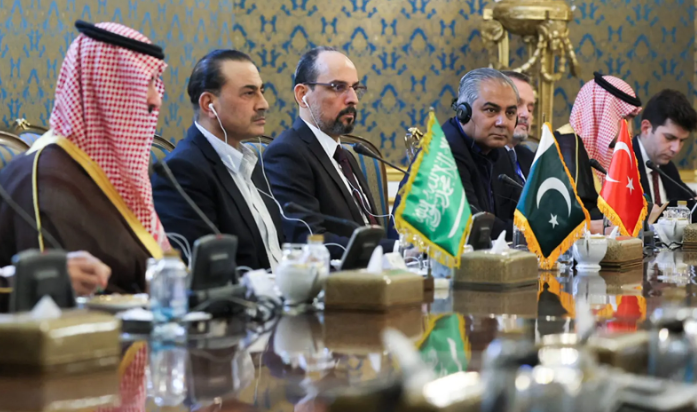
The meeting brought together Saudi Defence Minister Prince Khalid bin Salman, Pakistan’s Chief of Army Staff and Chief of Defence Forces Field Marshal Asim Munir, and Turkish intelligence chief Ibrahim Kalin. Iran was represented by senior officials, including Foreign Minister Abbas Araghchi and Supreme National Security Council Secretary Mohsen Rezaei.
Before meeting the Iranian president, the visiting officials held separate discussions with Rezaei. The preliminary talks resulted in an understanding to continue dialogue aimed at expanding cooperation among the four regional countries, particularly on peace and security.
The diplomatic engagement followed Field Marshal Munir’s visit to Tehran the previous week, during which he proposed holding the meeting, according to Iranian Foreign Ministry spokesman Esmaeil Baghaei.
The discussions marked an important step towards combining regional defence coordination with diplomatic engagement. They reflected growing recognition among the participating countries that escalating tensions require dialogue alongside efforts to strengthen collective security.
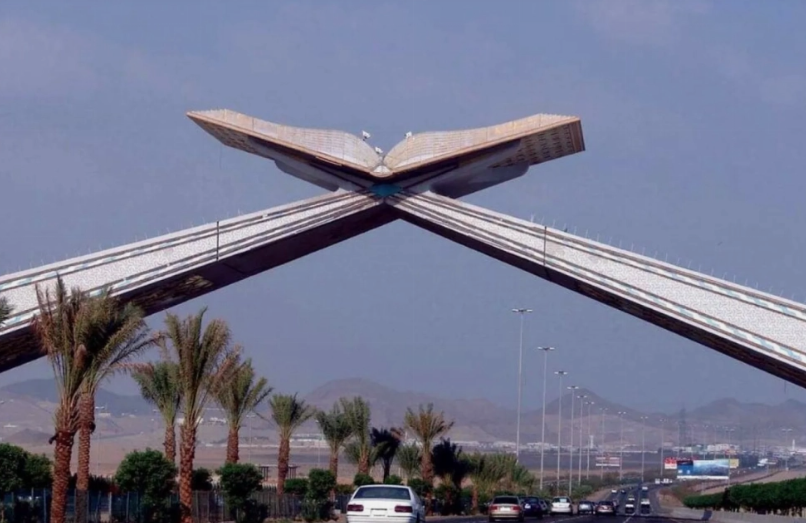
Saudi Arabia’s Foreign Ministry said the visit was part of ongoing efforts by the signatories of the Makkah defence pact to reduce regional tensions, encourage dialogue and pursue diplomatic solutions. It also highlighted support for mediation efforts led by Pakistan and Qatar.
Abdul Aziz Hamad Al-Uwaisheq, assistant secretary-general for political affairs and negotiations at the Gulf Cooperation Council, similarly identified de-escalation, dialogue and support for Pakistani and Qatari mediation as key objectives of the initiative.
A Qatari delegation had travelled to Tehran shortly before the Makkah pact representatives, pointing to parallel diplomatic efforts aimed at addressing regional disputes.
The talks took place amid mounting concerns over tensions involving Yemen’s Ansar Allah movement, threats to maritime security in the Strait of Hormuz and the possibility of renewed US and Israeli military action against Iran.
The diplomatic initiative also coincided with Egypt’s parliament authorising the president to provide defensive military assistance to Saudi Arabia amid escalating tensions involving the Houthis. At the same time, Cairo has maintained contacts with Iran, the United States and other regional partners to prevent the conflict from spreading.
Egypt’s engagement with Tehran, alongside the visits by Pakistani, Saudi and Turkish officials, forms part of wider efforts to explore diplomatic avenues for containing regional instability.
Iran has consistently maintained that regional security should be managed by countries in the region rather than external powers. The latest meeting provided Saudi Arabia, Pakistan and Turkiye with an opportunity to communicate their concerns directly to Iranian leadership and explore areas for cooperation to prevent a broader confrontation.
Media reports indicated that the discussions covered a possible regional non-aggression arrangement, prospects for restarting US-Iran negotiations, efforts to halt Ansar Allah attacks, the reopening of the Strait of Hormuz and the US naval blockade of Iranian ports.
The reported agenda also included the implications of US and Israeli military actions, as well as developments in Palestine and Lebanon. However, there was no immediate confirmation of any agreement on these issues following the approximately two-hour meeting.
Speaking to the media afterwards, Rezaei said the discussions had created a “new and positive atmosphere” in the region, reflected in dialogue with senior officials from Pakistan, Saudi Arabia and Turkiye.
For Pakistan, the initiative offers an opportunity to maintain its defence partnership with Saudi Arabia while preserving diplomatic engagement with neighbouring Iran. Islamabad has also sought to facilitate communication between Washington and Tehran, an effort that could become more challenging if regional hostilities intensify.
Saudi Arabia, meanwhile, faces continued security concerns over potential Houthi attacks and the wider consequences of the confrontation involving Iran, the United States and Israel. Riyadh’s participation in the talks indicates that closer defence coordination with Pakistan and Turkiye can proceed alongside diplomatic engagement with Tehran.
The outcome of the discussions remains uncertain, but the meeting underscores a regional effort to use diplomacy, alongside security cooperation, to reduce the risk of a wider conflict.