US Representative Haley Stevens has publicly endorsed Republican Senate candidate Mike Rogers after losing the Democratic Senate primary in Michigan to Abdul El-Sayed, intensifying divisions within the party ahead of a closely watched midterm election.
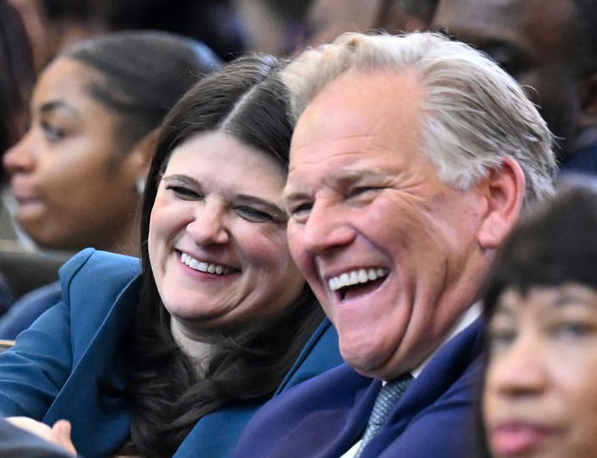
Stevens appeared alongside Rogers at a church in Detroit, a move that could further complicate Democratic efforts to reclaim control of the US Senate in a state considered critical to the party’s electoral prospects.
“I don’t belong in Abdul’s campaign,” Stevens said in a video shared on social media.
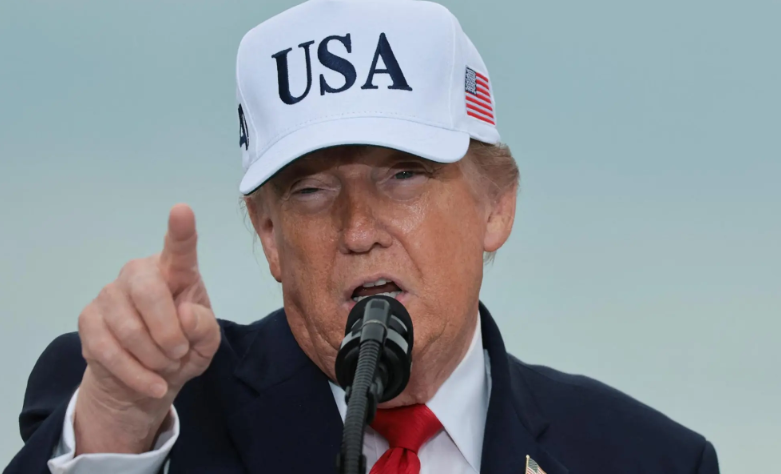
Later, at a political rally in Iowa, US President Donald Trump invited Stevens to join the Republican Party. Trump said he would contact her to thank her for the endorsement, describing it as a “smart thing to do” because he claimed El-Sayed would “destroy our country”.
Thirty-five Senate seats and all 435 seats in the House of Representatives are being contested on Tuesday. Republicans currently hold narrow majorities in both chambers, while opinion polls suggest Democrats are favoured to win control of the House and face a closely contested battle for the Senate.
The outcome of the Senate race is expected to depend on a handful of states, including Michigan and Alaska.
A Democratic victory in either chamber could obstruct Trump’s legislative agenda during the final two years of his presidency and pave the way for congressional investigations into his administration.
The White House has reportedly been preparing alternative ways to advance parts of Trump’s agenda without congressional approval, including maintaining tariff pressure on trading partners.
Stevens’ endorsement of Rogers came on the same day she was expected to appear alongside El-Sayed in a demonstration of party unity. However, the planned appearance fell apart after Stevens urged El-Sayed to condemn an advertisement by an outside group that she said blamed Israel for rising grocery prices.
“That ad was very painful,” Stevens said, arguing that the advertisement had made some Democratic voters feel unwelcome in the party and El-Sayed’s campaign.
El-Sayed’s campaign had recently asked Stevens to stay away from his campaign events through Election Day to avoid distracting from the main issues, according to a person familiar with the matter.
Republicans welcomed Stevens’ decision, with Rogers describing it as an act of political courage. He criticised elements within the Democratic Party, accusing them of promoting hostility towards a particular group of people.
At the Iowa rally, Trump repeated unsubstantiated claims describing El-Sayed as a “jihadist”. Such remarks reflect a wider pattern of inflammatory rhetoric by Trump and other Republicans targeting Arab Americans and Muslims.
Despite Stevens’ endorsement, polling indicated that El-Sayed remained ahead of Rogers. A survey released on Sunday showed the Democratic candidate leading by 53 per cent to 42 per cent.
An El-Sayed campaign spokesperson said the campaign raised $1.2 million within four hours of Stevens’ announcement, making it the campaign’s second-best fundraising day since the Democratic primary in August.
El-Sayed declined to directly criticise Stevens over her endorsement, saying the election was about the needs and concerns of Michigan residents rather than individual politicians.
Meanwhile, several members of Stevens’ congressional staff reportedly resigned following her endorsement, while some voters expressed anger over her decision.
“Haley Stevens is a traitor,” said Pamela Johnson, 72, after voting for El-Sayed in Warren, a Detroit suburb.
Separately, the Trump administration’s attempt to intervene in Alaska’s Senate election suffered a setback after a federal judge dismissed a Justice Department lawsuit seeking to prevent the certification of results if Republican incumbent Senator Dan S. Sullivan narrowly loses.
The Justice Department had argued that voters could be confused by the presence of another candidate, Daniel J. Sullivan Jr, whose name closely resembles that of the incumbent senator.
The controversy intensified after reports emerged that Democratic candidate Mary Peltola’s campaign had been involved in recruiting Sullivan Jr to enter the race as a potential spoiler.
The senator said on Sunday that he would accept the results of Tuesday’s election, despite the administration pursuing a criminal investigation into the matter.
However, Alaska Governor Mike Dunleavy, a Republican, has suggested he might refuse to certify a victory for Peltola. The incumbent senator declined to say whether he would support efforts to withhold certification.
Sullivan accused the other candidate of deliberately confusing voters through their similar names, urging Alaskans not to fall for what he described as an electoral trick.
Peltola has denied involvement in recruiting Sullivan Jr, while he has also rejected claims that he coordinated with her campaign.