Candidates backed by US President Donald Trump in South Carolina, North Carolina and Texas suffered defeats in the Senate elections, while his preferred contender in Michigan was trailing in early results. The setbacks helped Democrats secure control of the Senate and raised questions about the extent of Trump’s influence over the Republican Party.
For more than a decade, Trump has reshaped the Republican Party around his “Make America Great Again” (MAGA) movement, frequently intervening in primary contests and sidelining conservative politicians he considered insufficiently loyal to his agenda.
The president has consistently endorsed candidates aligned with his political views, often favouring loyalists over established Republicans with stronger electoral records and wider support networks. However, the latest election results indicated that his endorsements were not enough to secure broader voter support.
One of the most significant setbacks came in South Carolina, a traditionally Republican state that had not elected a Democratic senator since 1998. Trump won the state by an 18-percentage-point margin in the 2024 presidential election. Despite his backing of Darline Graham, sister of the late Republican senator Lindsey Graham, Democratic candidate Annie Andrews secured an unexpected victory.
In North Carolina, Trump’s endorsed candidate Michael Whatley, a former national Republican campaign official, suffered a decisive defeat against former Democratic governor Roy Cooper.
Trump also intervened in a contentious Republican primary in Texas, backing state Attorney General Ken Paxton over incumbent Senator John Cornyn. Some Republicans had considered Cornyn, despite his differences with the party’s leadership, a stronger candidate for the general election. Democrat James Talarico won the contest, securing a Senate seat that Democrats had not held since 1988.
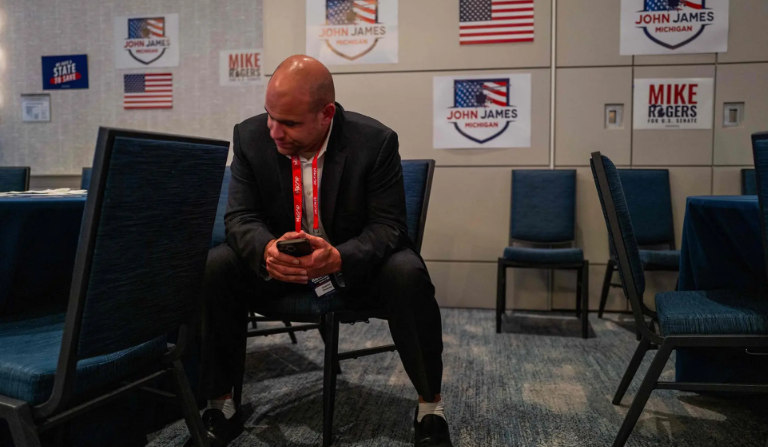
In Michigan, former US representative Mike Rogers, who had Trump’s endorsement, was trailing Democratic candidate Abdul El-Sayed in an election that had yet to be officially called. El-Sayed’s victory would make him the first Muslim to serve in the US Senate.
The Republican setbacks came amid declining approval ratings for Trump. According to Reuters/Ipsos polling, his popularity ahead of the elections was lower than it had been following the January 6, 2021, attack on the US Capitol. The decline fuelled concerns within the party that Trump had become an electoral liability.
Veteran Republican strategist Doug Heye described the results as a “Trump Quake”, citing public frustration over rising prices linked to tariffs and the conflict involving Iran.
“Trump spent the year telling voters what was important to him, not to them,” Heye said.
Trump, however, rejected suggestions that the results reflected a decline in his political standing. In a post on social media on Tuesday night, he argued that Republicans would have secured a sweeping victory had he been on the ballot.
A White House official, speaking anonymously, said Trump had done more to promote several Republican candidates than the candidates themselves. Another senior administration official told Reuters that internal polling conducted around six weeks before the elections had already indicated that Republicans were likely to lose control of both chambers of Congress. Trump subsequently launched a month-long nationwide campaign to improve the party’s electoral prospects.
Political analysts said Trump’s involvement in several Senate races had contributed directly to Republican losses.
Thomas Kahn, a professor at American University, argued that Trump’s intervention in the Texas Republican primary had cost the party a potentially secure Senate seat. He said Cornyn would have been a much stronger contender in the general election.
Kahn also pointed to North Carolina, where Republican Senator Thom Tillis announced last year that he would not seek re-election following a public disagreement with Trump. The dispute emerged after Tillis opposed proposed Medicaid cuts included in the president’s tax and spending legislation. Trump had threatened to support a primary challenger against him.
Kahn argued that Tillis’s decision not to contest the election had opened the door for Cooper’s victory.
Former North Carolina governor and Republican Pat McCrory also criticised Trump’s involvement in primary contests, saying his interventions had created divisions within the party across several states.
Referring to South Carolina, McCrory said Trump’s opposition to two local Republican congressmen had deepened internal divisions and weakened the party’s position.
McCrory further argued that Trump had lost touch with the working-class voters who had previously formed the foundation of his political support.
He said the president needed to reconnect with those voters, adding that regaining their confidence would be important for both the Republican Party and the country.