Farmer representatives have threatened to launch a protest march, accusing the Punjab government of pushing the agriculture sector towards crisis and demanding Chief Minister Maryam Nawaz’s resignation.
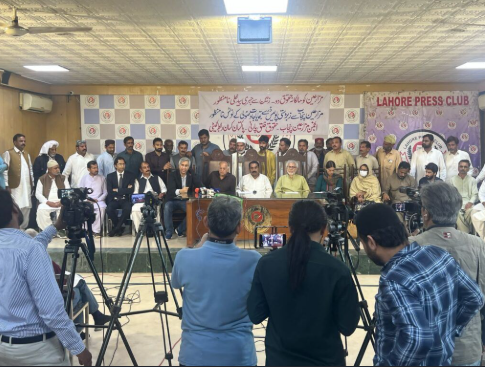
Speaking at a press conference alongside Pakistan Kissan Ittehad (PKI) President Mian Umair Masood and Chairman Khalid Hussain Batth, the farmer leaders said the farming community could face further losses if the chief minister remained in office for the next two and a half years.
They clarified that their opposition was directed at the chief minister rather than the ruling Pakistan Muslim League-Nawaz (PML-N), accusing her government of treating agricultural initiatives as projects benefiting selected groups.
The PKI leadership claimed farmers had suffered losses of around Rs2.2 trillion after the provincial government declined to procure wheat. They also criticised the federal government’s decision to import 3.5 million tonnes of wheat when the local crop was ready for harvest.
According to the farmers, potato growers were facing losses of around Rs250,000 per acre, while cotton production had declined from 60 maunds to about 12 maunds per acre.
They also raised concerns over rising input costs, saying DAP fertiliser prices had increased from Rs2,400 per bag in 2016 to Rs16,600, while urea had risen from Rs1,200 to Rs4,600. Tube-well electricity tariffs, they claimed, had also increased from Rs5 to Rs40 per unit.
PKI Chairman Khalid Hussain Batth criticised the provincial bureaucracy and government representatives over their handling of agricultural issues. He also disputed the Punjab government’s reported wheat production figure of 21.9 million tonnes, claiming actual output was no more than 15 million tonnes.
Batth further alleged that authorities were targeting small farmers through police action while failing to address outstanding payments owed to growers by major industrial groups.
PKI President Mian Umair warned that the government would face political consequences from rural voters, saying the farming community had lost confidence in the civilian leadership and was considering taking its grievances to the military leadership in Rawalpindi.