
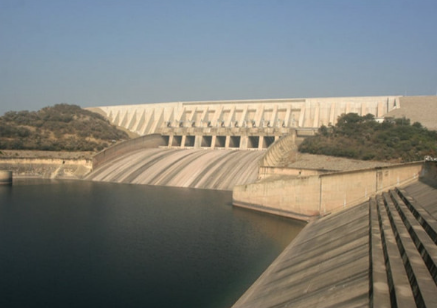
Heavy rainfall has pushed the water level at Mangla Dam higher, with the reservoir now around 29 feet below its maximum conservation level, according to Water and Power Development Authority (Wapda) data.
Wapda’s daily reports showed that the water level at Mangla stood at 1,199.35 feet on August 3 and rose to 1,212.80 feet by 6pm on Tuesday. The reservoir’s maximum conservation level is 1,242 feet.
A water expert said continued rainfall in the dam’s catchment area could enable Mangla to reach its maximum storage level within the next 30 days. The expert recalled that the reservoir reached its maximum level around October 8 or 9 last year.
Tarbela Dam, the country’s second-largest reservoir by storage capacity, has already reached its maximum conservation level of 1,550 feet and has maintained the level since August 10. Chashma Lake has also reached its maximum level of 649 feet.
The rising water levels in the country’s reservoirs are expected to support irrigation requirements and increase the availability of relatively cheaper hydel power.
Completed in 1967, Mangla Dam remains a key component of Pakistan’s water and energy infrastructure. It supports irrigation, helps mitigate floods and contributes hydropower to the national grid.
The dam originally had a live storage capacity of 5.88 million acre-feet (MAF), which declined to around 4.6 MAF by 2004 due to sedimentation.
Wapda launched the Mangla Dam Raising Project in 2004, which restored the lost capacity and increased total storage to 7.5 MAF. The reservoir currently has a power generation capacity of 1,000MW, which is being increased to 1,350MW through the phased Mangla Refurbishment Project.
Meanwhile, the Flood Forecasting Division (FFD) has warned that several rivers and barrages could experience low-level flooding over the next 48 hours.
The division also cautioned about possible flash floods in hill torrents and urban flooding in several major cities of Punjab.
On the Indus, Sukkur Barrage is expected to reach the low-flood level, while Kalabagh, Chashma, Taunsa and Guddu are likely to remain at low-flood levels.
On the Chenab, Head Marala and Khanki are also expected to reach the low-flood level, while Shahdara, Sidhnai and Balloki on the Ravi could also experience similar conditions.
The FFD said Mangla on the River Jhelum could reach the low-flood level within the next 48 hours.
It also warned of possible flash flooding in streams adjoining the Kabul River and hill torrents in the Dera Ghazi Khan division. Urban flooding was forecast for Rawalpindi, Lahore, Gujranwala, Sialkot, Faisalabad and Gujrat.
According to Wapda data, the Indus at Tarbela recorded inflows of 233,200 cusecs and outflows of 232,600 cusecs at 6am on Tuesday. The Kabul River at Nowshera had inflows and outflows of 31,500 cusecs each.
The Jhelum at Mangla recorded inflows of 29,800 cusecs and outflows of 7,000 cusecs, while the Chenab at Marala recorded inflows of 66,500 cusecs and outflows of 41,200 cusecs.
Tarbela Dam’s water level stood at 1,550 feet on Tuesday, matching its maximum conservation level, with live storage recorded at 5.580 MAF.
Mangla’s reservoir level stood at 1,212.50 feet at 6am on Tuesday, around 29 feet below its maximum level, with live storage recorded at 5.060 MAF.