Fifteen years before a guilty plea in New York implicated an Indian government employee in an alleged plot to assassinate a Sikh activist, the killing of a 15-year-old Bangladeshi girl at the India-Bangladesh border had already become a symbol of the challenges surrounding accountability across the two countries.
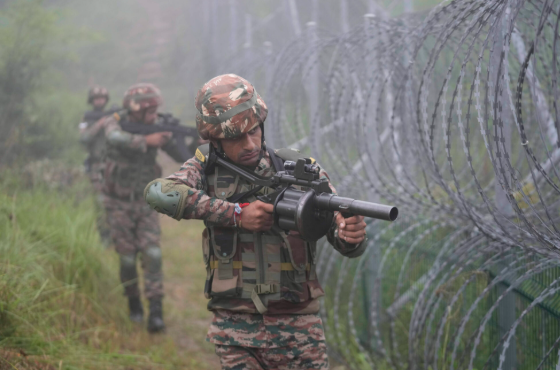
Felani Khatun was shot dead by India’s Border Security Force (BSF) on January 7, 2011, while attempting to cross the border with her father near Kurigram. Her body remained suspended from the border fence for hours, and images of the incident became one of the most enduring symbols of Bangladesh’s troubled relationship with its larger neighbour.
Despite years of demands for justice, the case failed to provide a conclusive sense of accountability for her family, while fatal incidents along the border continued.
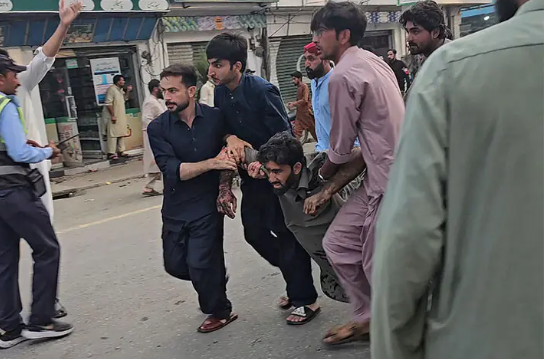
According to data from rights organisation Ain o Salish Kendra, BSF personnel shot and killed 285 Bangladeshi civilians between 2014 and February 2026, averaging nearly 24 deaths annually. A further 10 Bangladeshis were reportedly killed in BSF-linked border violence during the first half of 2026.
Bangladesh’s experience provides a different perspective on recent cases involving Sikh activists Hardeep Singh Nijjar in Canada and Gurpatwant Singh Pannun in the United States. While the cases in North America have fuelled debate over alleged Indian transnational repression, Bangladesh has faced questions over border killings for years.
The central issue remains whether individuals whose rights are allegedly violated beyond India’s borders can obtain meaningful accountability when Indian security or state interests are involved.
In February 2026, Nikhil Gupta pleaded guilty in a Manhattan federal court to murder-for-hire and related charges connected to an alleged plot targeting Pannun, a US citizen and prominent advocate of a separate Sikh state.
According to the US Justice Department, Gupta acted at the direction of Vikash Yadav, who was employed by the Indian government through the Cabinet Secretariat, which houses the Research and Analysis Wing (RAW), India’s external intelligence agency.
Prosecutors alleged that Yadav provided information about the intended target and agreed to a payment of $100,000. The person Gupta believed to be the hired assassin was actually an undercover US law-enforcement officer.
The guilty plea does not establish that Prime Minister Narendra Modi or his cabinet authorised the alleged operation, nor does it prove the outstanding allegations against Yadav, who has not been arrested. It does, however, establish Gupta’s criminal involvement and provides judicial backing for US allegations that an Indian government employee directed the plot.
India has rejected the broader allegations and described the incident as the actions of an individual operating outside official state policy.
The case involving Canadian Sikh activist Hardeep Singh Nijjar has developed differently. Nijjar was shot dead outside a gurdwara in British Columbia in June 2023. Canadian authorities subsequently raised allegations of Indian state involvement, which New Delhi denied.
In July 2026, US and Canadian authorities announced charges against Lawrence Bishnoi and members of an alleged transnational criminal network in connection with Nijjar’s killing and other offences. Canadian police said the charges did not establish a link between the alleged crimes and Indian government officials.
Bangladesh’s investigation into the killing of student leader Sharif Osman Hadi offers another example of the difficulties that can arise when suspects cross the border.
Hadi was shot in Dhaka in December 2025. Bangladeshi investigators said the main suspects fled to India and were later arrested there. There is no public evidence that the Indian state directed Hadi’s killing.
The issue instead centres on the extradition process. Bangladesh and India agreed in April 2026 that the suspects would be returned under their extradition treaty. However, by July, Bangladeshi authorities said they had completed the required legal and diplomatic procedures but were still awaiting India’s approval.
The case has therefore become another test of how effectively legal accountability can operate when suspects are located in a more powerful neighbouring country.
Rights groups say the issue of accountability extends beyond high-profile cases involving alleged transnational operations.
Ain o Salish Kendra recorded 34 Bangladeshis killed in BSF firing or alleged torture in 2025, including 24 who were reportedly shot and 10 whose deaths were attributed to physical abuse. Additional deaths were reported in 2026.
In September 2024, Bangladeshi teenager Swarna Das was shot near the Moulvibazar border. Her death, like that of Felani Khatun, triggered widespread public concern and renewed demands for greater accountability.
Repeated commitments by Indian and Bangladeshi border authorities to reduce killings to zero have so far failed to prevent further deaths.
Human Rights Watch Deputy Asia Director Meenakshi Ganguly said the BSF had been accused of using excessive force against people crossing the border, including individuals suspected of irregular migration, cattle smuggling and other offences.
She said investigations had found instances of disproportionate force and a failure by authorities to hold those responsible accountable.
The debate intensified in March 2026 after reports emerged of an internal BSF proposal to examine the possible use of venomous snakes and crocodiles in riverine areas where border fencing was difficult. The proposal was reportedly linked to directions from Indian Home Minister Amit Shah but had not been implemented.
Former BSF director general Prakash Singh criticised the idea, saying such measures could not distinguish between Bangladeshi nationals and Indians living near the border.
Human rights concerns over the use of lethal force are not limited to the Bangladesh border. In Manipur, petitioners approached India’s Supreme Court over allegations involving 1,528 extrajudicial killings. The court ruled that security forces operating under special powers could not claim immunity for excessive or retaliatory use of force.
In the 2010 Machil case in Kashmir, soldiers were convicted by a military court over the killing of three civilians who were allegedly presented as militants. The case was later followed by further legal developments that highlighted difficulties surrounding accountability for security personnel.
These cases do not establish responsibility for the deaths of Nijjar, Pannun or individual Bangladeshi citizens. They do, however, illustrate longstanding concerns over the use of lethal force and oversight of security institutions.
The contrast between the US and Bangladesh is significant. US authorities had the investigative capacity and political leverage to conduct an undercover operation, prosecute Gupta in federal court and secure a guilty plea.
Bangladesh has considerably fewer tools when dealing with alleged wrongdoing involving Indian security personnel. Its mechanisms largely consist of diplomatic protests, border-force meetings and requests for investigations, leaving outcomes heavily dependent on cooperation from India.
The unresolved extradition request for former Bangladesh prime minister Sheikh Hasina further illustrates the challenges.
India and Bangladesh signed an extradition treaty in 2013 and amended it in 2016. Dhaka has repeatedly requested Hasina’s return from India and renewed the request in April 2026 following her conviction and death sentence in absentia over the 2024 crackdown.
India has said it is examining the request under its legal procedures, while Bangladeshi authorities have said they are still awaiting a response.
The extradition treaty includes provisions allowing requests to be refused in certain circumstances, including where an offence is considered political or an accusation is not made in good faith. Therefore, the delay alone does not establish a treaty violation, but it demonstrates how political and legal considerations can affect accountability when suspects are outside the requesting country’s jurisdiction.
Analysts argue that Bangladesh should avoid treating every cross-border incident as evidence of a single conspiracy. Border shootings can involve allegations of smuggling, irregular crossings or other offences, but such allegations do not remove the need for independent investigations into deaths involving security forces.
Political scientist Ali Riaz said the continued killings reflected an unequal relationship between the two countries and raised concerns about how Bangladeshi lives were valued.
Human rights advocates have also called for greater involvement by Indian civil society and international organisations in scrutinising alleged abuses.
Bangladesh could strengthen its response by seeking transparent casualty data, prompt joint investigations, publicly available findings, compensation for victims’ families and clear protocols governing the use of firearms at the border.
The cases involving Nijjar and Pannun do not resolve all allegations of Indian transnational repression. However, they demonstrate how accountability can progress when the affected state has sufficient investigative and judicial leverage.
For Bangladesh, the challenge remains considerably greater. Years after Felani Khatun’s death, border communities continue to face fatal violence while families await meaningful accountability.
The broader issue is therefore not simply whether individual incidents are investigated, but whether the power imbalance between the two countries allows accountability to be applied consistently when lives are lost across the border.