The Khyber Pakhtunkhwa cabinet has approved tax relief measures for Malakand division and the erstwhile tribal areas, along with a range of education, welfare and development initiatives.
Under one notification, local service providers will be exempted from sales tax on services, while another exempts industrial undertakings operating in or established in the former tribal areas and Malakand division from withholding sales tax.
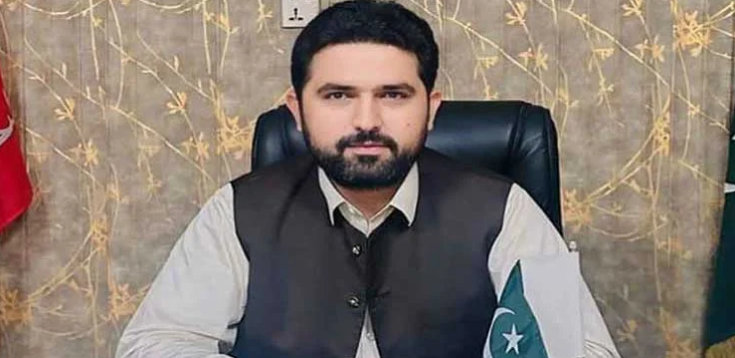
Speaking after the cabinet meeting on Wednesday, Chief Minister Sohail Afridi said the provincial government had set a revenue collection target of Rs180 billion for the current fiscal year and expressed confidence that it would be achieved through efforts to improve revenue mobilisation.
He praised cabinet members for visiting their respective constituencies and meeting residents, saying such interactions were essential for understanding ground realities, resolving public grievances and identifying shortcomings in service delivery.
Mr Afridi also criticised corruption and alleged that institutions had targeted those who opposed the establishment, while there was little discussion about reported corruption worth Rs5.3 trillion involving taxpayers’ money.
The chief minister also voiced concern over reports about the health of incarcerated PTI founder Imran Khan, accusing the federal government and prison authorities of failing to address the issue.
He claimed Imran had been “super fit” before his alleged abduction and said the public did not trust assurances from representatives of what he called the “fake” government regarding the former premier’s health.
Mr Afridi said that during his tenure as prime minister, Imran had allowed people with allegedly falsified platelet reports to travel abroad for medical treatment.
He demanded that the PTI founder be allowed to meet his personal doctors, family members, lawyers and friends, describing such access as his constitutional right.
Information and Public Relations Minister Shafi Jan later told reporters that the cabinet had increased the allocation for the Ehsaas Naujawan Programme from Rs3 billion to Rs5bn in response to growing public demand and a rising number of applications.
He said the programme was designed to promote youth entrepreneurship, self-employment, financial inclusion and sustainable livelihood opportunities across the province.
The cabinet also approved a one-time grant of Rs188.8 million for model schools in the merged districts for the current fiscal year, along with Rs60m in aid for Langlands School and College in Chitral.
It also approved an inter-departmental memorandum of understanding aimed at reducing the number of out-of-school children in the province.
As part of education reforms, the cabinet approved the introduction of semester-wise “jacketed” textbooks for students from KG to Grade V from the 2027-28 academic year, with the system to be extended to Grades VI to VIII later.
The cabinet also approved 100 per cent free textbooks for students from Grades IX to XII.
Under the jacketed textbook system proposed by the KP Textbook Board, two or more core-subject books will be bound under a single cover to reduce schoolbag weight and the curricular burden without changing the approved content.
The cabinet approved Rs66.6m in financial assistance for the medical treatment of 21 deserving patients and also approved the appointment of a chief executive officer for the Khyber Pakhtunkhwa Transmission and Grid System Company.
It further approved enhanced compensation for civilian victims of targeted militant attacks in Bajaur, with the legal heirs of each deceased victim to receive Rs10m and those suffering major or minor injuries to receive Rs2.5m.
Separately, the cabinet approved an increase in the standard compensation package for such incidents, raising payments to the legal heirs of deceased victims from Rs1m to Rs5m and compensation for victims suffering major injuries to Rs1.5m.