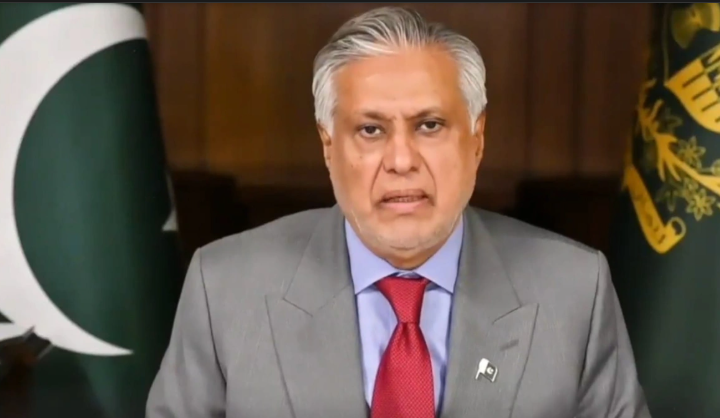
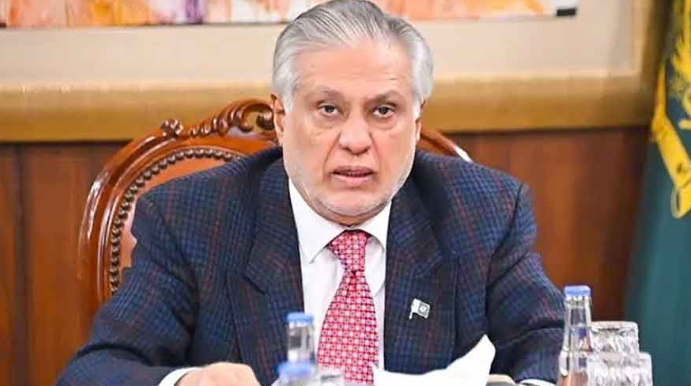
Deputy Prime Minister and Foreign Minister Ishaq Dar has said the Makkah Joint Defence Agreement between Pakistan, Saudi Arabia and Türkiye is open to other countries in the region, stressing that the pact is “purely defensive” and is not directed against any state.
The comments came a day after Turkish Foreign Minister Hakan Fidan said Egypt could join the alliance once outstanding technical matters were resolved.
The agreement, signed in Makkah on Friday, seeks to strengthen collective deterrence among the three countries. Under the pact, an armed attack on any one of the signatories would be treated as an attack on all three.
In a post on X, Dar described the agreement as the outcome of years of consultations and coordination aimed at deepening strategic cooperation and addressing regional peace and security challenges.
He said the accord did not replace or override any existing bilateral or multilateral agreements between the signatories or with other countries and international organisations.
Dar said the pact was consistent with the right to individual and collective self-defence under Article 51 of the UN Charter.
“The Makkah Accord is not targeted against any country,” Dar said, adding that its objective was to strengthen efforts for peace, stability and prosperity in the region.
He said the agreement remained open to any regional country willing to uphold its principles and resolve disputes through mutual respect, cooperation and peaceful means.
Dar later briefed Canadian Foreign Minister Anita Anand on the agreement and the three countries’ shared commitment to regional peace, stability and security, according to the Foreign Office.
Turkish Foreign Minister Hakan Fidan said Egypt could become part of the alliance after the resolution of several technical issues.
Speaking to Türkiye’s state-run Anadolu news agency, Fidan said Egypt was already a natural partner for Türkiye on regional matters and could join the alliance at a later stage.
He said other countries had also expressed interest in joining the agreement, although some had requested that their identities remain confidential.
According to Fidan, Türkiye, Saudi Arabia and Pakistan would remain the three founding members responsible for setting the alliance’s principles, standards and long-term framework, while other countries could join with the approval of the core members.
Fidan said the alliance should eventually expand beyond the three founding states, adding that Pakistan’s participation also gave the initiative a broader regional scope beyond the conventional definition of the Middle East.
Fidan compared the pact’s mutual defence principle with Article 5 of the North Atlantic Treaty Organisation (Nato), under which an attack on one member is considered an attack on all.
However, he said the Makkah agreement contained broad commitments, with the nature and extent of assistance to be determined through consultations among the members.
Assistance could include intelligence, logistics, ammunition or military personnel, depending on the nature and scale of a threat, he said.
Fidan reiterated that the alliance was not aimed at Iran or any other country and would only be activated in response to an attack on a member state.
He said the initiative had been under discussion before the current regional conflict and was designed as a defence-oriented arrangement among countries focused on protecting their own territories and contributing to regional stability.
Fidan said the alliance would function through a political and military committee comprising foreign and defence ministers as well as chiefs of general staff.
The committee would translate decisions taken by the leaders into practical measures, while a permanent secretariat would be established in Saudi Arabia to implement those decisions.
The alliance is expected to focus on joint training, military interoperability, logistics, intelligence sharing, threat assessments and defence industry cooperation.
Fidan said regular joint exercises would be required to ensure that the three countries’ weapons, communications and other military systems could operate effectively together.
Fidan said the agreement had received considerable support from countries across the Muslim world, including states that were not part of the alliance.
He also said some Western countries supported the initiative after understanding its objectives.
The agreement comes amid heightened tensions in the region and Pakistan’s efforts to maintain relations with both Middle Eastern and Western partners.
Analysts view the pact as a potential step towards greater regional responsibility for security, particularly as Gulf states seek to diversify their security partnerships.
Saudi Arabia has traditionally relied heavily on its strategic relationship with the United States for defence. Experts, however, say the new arrangement is not intended to replace Washington’s role but could provide an additional layer of regional security cooperation.