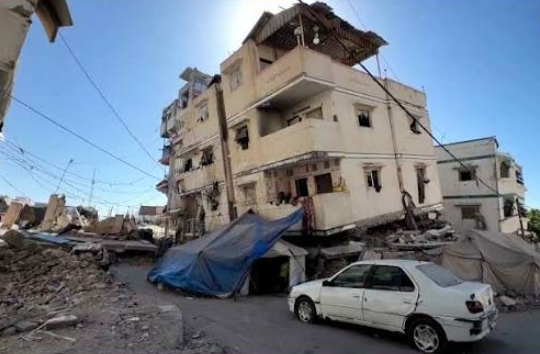
Thousands of Palestinians in Gaza are sheltering in buildings damaged during nearly three years of Israeli military operations, despite the risk of further collapses.
Many families have returned to partially damaged homes after losing their houses and having few safe alternatives. Some buildings have suffered structural damage, including collapsed sections and weakened foundations, leaving residents exposed to serious risks.
The United Nations estimates that 84 per cent of structures across Gaza had been damaged or destroyed by October 2025. Gaza’s civil defence authorities have also identified around 2,000 buildings across the territory as being at risk of collapse.
Last week, 21 people, including 12 children, were killed in Gaza City when a six-storey building collapsed after reportedly sustaining repeated damage during the conflict. Israel denied striking the building.
Many residents who returned to their homes following the October 2025 ceasefire found buildings severely damaged. In some areas, structures had partially collapsed, while windows and other sections were destroyed by blasts. Residents have resorted to makeshift coverings such as bedsheets to protect themselves from the elements and maintain privacy.
Humanitarian officials have warned that hundreds of damaged and unsafe shelters are currently being used by displaced Palestinians across Gaza.
Residents say they remain in damaged buildings because they have few alternatives. Many have expressed fears that weakened walls or roofs could collapse, particularly after reports of other buildings falling.
Municipal teams in Gaza City are inspecting streets and identifying structures considered at risk of collapse. Authorities have warned that such buildings pose a threat not only to people sheltering inside but also to nearby residents and displaced families.
Thousands of displaced Palestinians continue to seek refuge in damaged structures to avoid overcrowded displacement camps, which provide limited protection from extreme weather conditions.
Most of Gaza’s population has been displaced at least once during the conflict. Many people continue to live in large camps, tents provided by humanitarian organisations or makeshift shelters.
Poor sanitation, overcrowding and the spread of diseases in displacement camps have further encouraged some residents to move into damaged buildings despite the safety risks.
Gaza’s economy remains severely affected, leaving many families dependent on humanitarian assistance. The entry of reconstruction equipment and other supplies has also faced restrictions.
Equipment needed to remove rubble from destroyed buildings, along with spare parts and lubricants required to operate machinery, remains difficult to obtain. These restrictions have complicated efforts to clear damaged areas and begin large-scale rebuilding.
Reconstruction efforts planned under the ceasefire have yet to begin as the wider ceasefire process remains stalled.
A joint assessment by international institutions estimated that Gaza would require around $71.4 billion in recovery and reconstruction spending over the next decade.
For families living in damaged buildings, the immediate concern remains their safety, with residents fearing that weakened walls or roofs could collapse without warning.