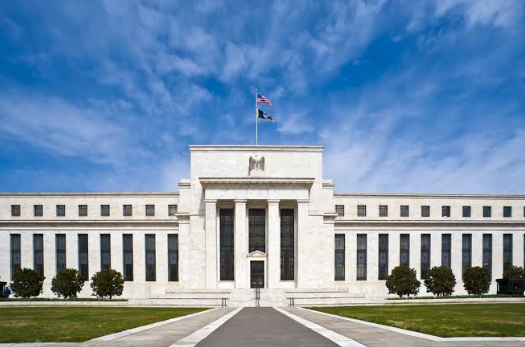
The US Federal Reserve raised interest rates on Wednesday for the first time since 2023, a widely anticipated move aimed at tackling inflation that remains above the central bank’s target, despite repeated public calls from President Donald Trump for lower rates.
The decision has created a new investment environment, with uncertainty over how high the Fed may take interest rates and how long it could maintain a restrictive monetary policy. Higher borrowing costs could weigh on rate-sensitive assets, including small-cap stocks.
The meeting was viewed by investors as a test of the central bank’s independence, particularly because Trump had selected Kevin Warsh as the new Fed chair.
Matthew Miskin, co-chief investment strategist at Manulife John Hancock Investments, said the decision demonstrated the Fed’s independence and could strengthen market confidence. However, he said the central bank may have adopted a more hawkish stance than expected, with investors now watching how the economy responds in the coming months.
Marta Norton, chief investment strategist at Empower, said investors could take away that economic considerations were outweighing political pressure at the Fed.
Higher interest rates are expected to slow economic activity by increasing borrowing costs for consumers and businesses, while potentially putting pressure on stocks and other risk assets.
Markets had entered 2026 expecting interest-rate cuts, but expectations shifted after the US-Israeli war with Iran in late February pushed up energy prices and inflation, raising the possibility of further rate increases.
The quarter-percentage-point increase brought the Fed’s benchmark interest rate to 3.75-4.00 per cent. The decision was unanimous, in contrast to the July meeting, when officials voted 9-3 to keep rates unchanged.
David Krakauer, vice president of portfolio management at Mercer Advisors, said the unanimous decision significantly increased the possibility of another rate hike before the end of the year and would require investors who had positioned themselves for monetary easing to reassess their strategies.
US stocks declined following the meeting, with the S&P 500 ending 0.45 per cent lower. Yields on two-year and 10-year US Treasury bonds increased, with the 10-year yield reaching 5.02 per cent late on Wednesday. The US dollar also strengthened sharply against a basket of major currencies.
Danny Zaid, portfolio manager at TwentyFour Asset Management, described the meeting as strongly hawkish, citing the Fed’s messaging and unanimous decision.
Projections released after the meeting showed that Fed officials expect one more rate increase this year and anticipate keeping rates unchanged in 2027.
Karen Manna, a fixed-income strategist at Federated Hermes, said much of the risk from further monetary tightening had already been reflected in markets, but investors were now focused on whether the latest increase would be the final move or the beginning of a broader tightening cycle.
Fed funds futures indicated roughly even odds of another rate hike at the Fed’s October meeting. The meeting is scheduled shortly before the US midterm elections, which will determine control of Congress. Markets were also pricing in additional rate increases for 2027.
Dustin Reid, chief strategist at Mackenzie Investments in Toronto, said another rate increase appeared possible this year, while the risks for 2027 appeared tilted towards further tightening.
Inflation has remained above the Fed’s annual 2 per cent target for several years. The latest core Personal Consumption Expenditures Price Index, a key measure used by Fed officials to assess underlying inflation, rose 3.3 per cent annually.
Warsh’s speech at the Fed’s Jackson Hole conference in Wyoming last month was viewed as hawkish by investors and increased expectations of a rate hike. Those expectations strengthened after inflation data released last week came in higher than anticipated.
At the same time, Warsh’s reluctance to provide clear forward guidance on the future path of interest rates has added uncertainty for investors. His remarks after the July meeting left some market participants unclear about his approach to inflation and were followed by higher long-term Treasury yields.
Collin Martin, head of fixed-income research and strategy at Schwab Centre for Financial Research, said recent Fed communication had provided bond investors with greater clarity that inflationary pressures remained elevated.
Investors are now reassessing their portfolios in preparation for a potentially prolonged period of higher interest rates.
Phil Blancato, chief market strategist at Osaic, cautioned against making major investment decisions based on a single Fed meeting. However, he said that if the latest decision marked the beginning of a new rate-hiking cycle, investors could consider reducing exposure to longer-duration assets and small-cap stocks.