For the first time, the ICC live-streamed select matches on YouTube and Facebook in key emerging markets. It registered more than 1.1 million views across the platforms in Japan. Of the non-English language feeds live-streamed on YouTube, which recorded 201,000 views across the two key territories — Japan and Indonesia — the Japanese feeds accounted for 58 per cent (118,000 views), with the remaining 42 per cent split between Hindi and Urdu. Of the non-English language feeds live-streamed on Facebook, which recorded 252,000 views across the two territories, the Japanese feeds contributed 70 per cent of the total views.
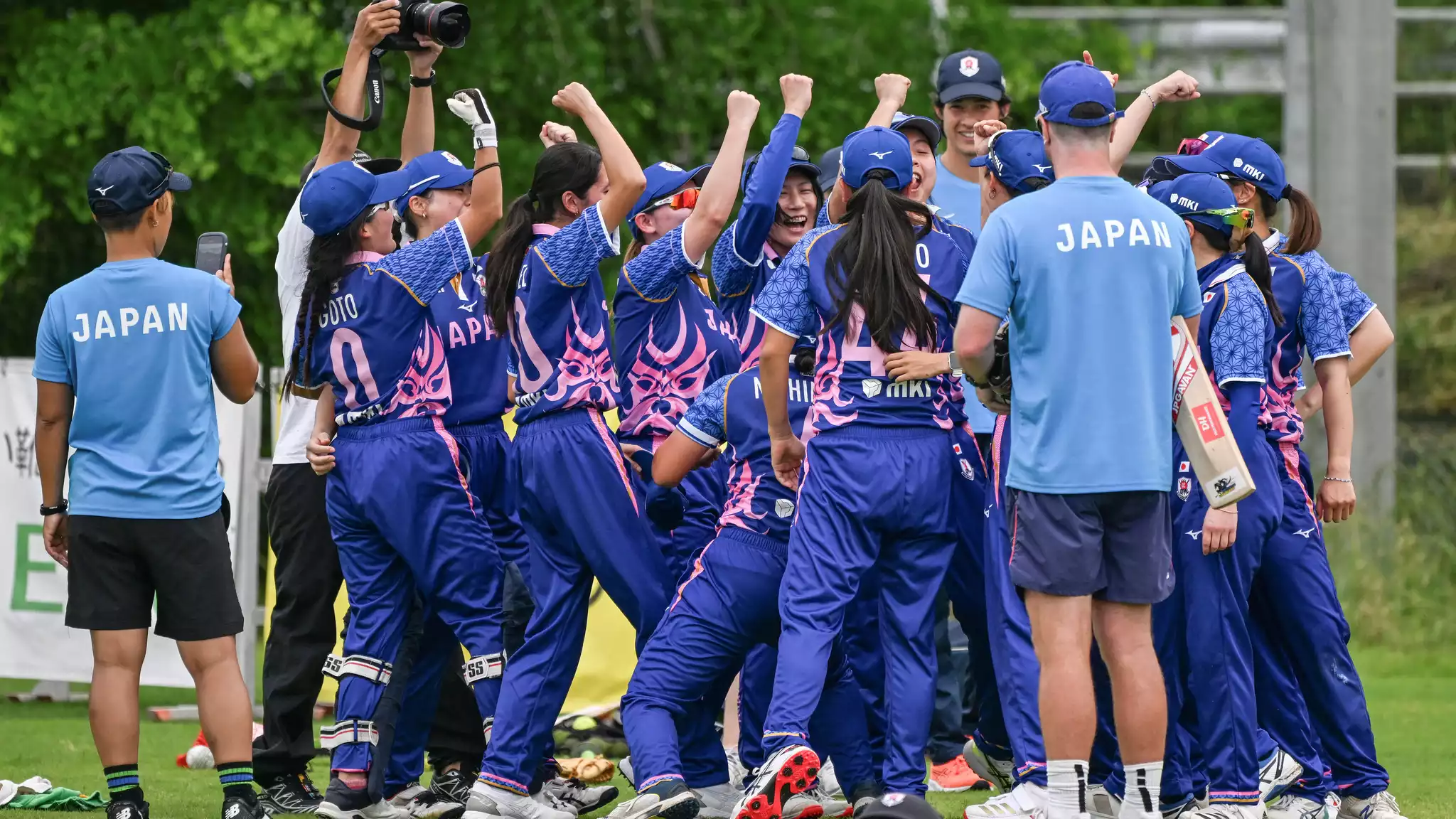
The stats and data above show that the Japanese teams are fast catching up with the game. Mai Yanagida, the captain of Japan’s women’s cricket team, agrees. “Yeah, Japan is not a cricket nation like India, but I think over the last few years, or 10 years, I think the awareness of cricketers and the popularity of cricketers has increased. So hopefully there’ll be a lot of crowd and people will watch us play. And hopefully, yeah, we’ll compete with one of the top nations,” Yanagida tells Cricbuzz in an exclusive interaction.
The Japanese women will open their Asian Games campaign against India on Friday morning (IST). Mai’s team followed the Indian women in the recent Asia Cup and have also been avid watchers of the WPL. The Japan captain says the team is looking forward to the clash.
“Facing India is just unreal. And it’s very exciting. Of course, we’ve never played against them before. They are one of the top nations. We were watching the Asia Cup, we were following them. They just won the tournament. I know that all the players are top-class players. It can be intimidating. But it’s more like an excitement to watch them and see them play and share the field with them,” Mai says.
The Asian Games are providing the ICC with an opportunity, and Glenwright outlines why they are important to the ICC’s development plans. “For a number of reasons,” he says. “Firstly, because the Olympic Games is limited in size, as it is for all sports, the Asian Games or the regional games allow more of our members to participate in a multi-sport event. And secondly, that unlocks all sorts of funding from governments, from Olympic committees and from sponsors, in addition to the increased competitive opportunities that it provides.”
He continues, “On account of the Asian Games, we now have, or Japan Cricket now has, a second international cricket ground available to them. So there’s one in Sano, and there’s now one in Nagoya. So that means we have two international-standard facilities in Japan, which means all of a sudden, the capability and potential for Japan to host major ICC events, where by and large you need at least two international facilities, changes now, and it brings Japan into the equation.
Asian Games come under the Asian Cricket Council (ACC) and there have been adverse reports about the ground. But the ICC official says concerns have been addressed. “The ground itself, we have no concerns with. We held a World Cup qualifier there earlier this year. The reports are that the pitch and the outfield are excellent. We wouldn’t have held a World Cup qualifier there if we weren’t confident in it. I know there have been some concerns expressed by the Asian Cricket Council, who manage the Asian Games, around athletes’ enclosures, like the changing rooms, the media areas, and the like.
“I believe they are being addressed. And the last update that we had is that they were being addressed. But in terms of the pitch itself and the outfield, the cricket facility, we’re very confident that it’s going to be a great facility that reflects the importance of this event and the members participating in it.