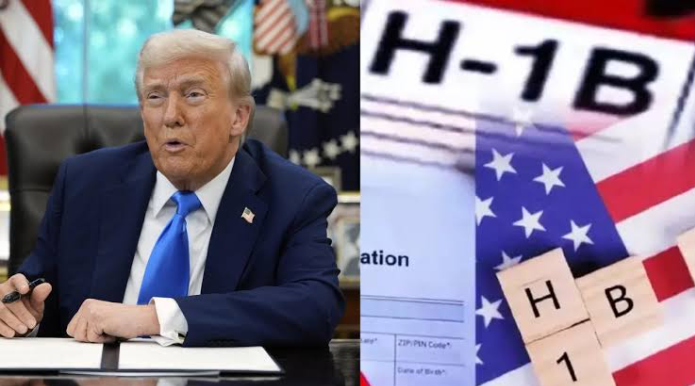
US President Donald Trump, who has pursued a wide-ranging crackdown on immigration since returning to office, has repeatedly criticised the H-1B visa programme. His administration is seeking to make a fee hike permanent, increasing the cost from the current range of $2,000 to $5,000 to more than $100,000.
The programme has also come under criticism from those who argue that some companies use H-1B visas to employ foreign workers at lower salaries than American employees. Businesses, however, maintain that the visas are essential for bringing highly skilled professionals to the US and filling shortages in sectors where qualified local workers are limited.
Created by Congress in 1990, the H-1B programme is particularly important for technology companies recruiting talent from countries such as India and China. Major consultancy firms including Deloitte, PwC and Ernst & Young, along with outsourcing companies such as Tata Consultancy Services, Infosys, HCL Tech and LTIMindtree, are among the programme’s leading users.
Trump’s administration last year increased the H-1B visa fee to $100,000, triggering a series of legal challenges. The temporary increase is due to expire in September, but the Department of Homeland Security has now proposed making the hike permanent at $103,265.
India’s technology industry has raised concerns over the proposed fee and said it is in discussions with US officials. The industry has urged the administration to consider the role H-1B visas play in helping companies temporarily fill gaps in their workforce.
Several major companies, including Tesla, Amazon and OpenAI, have also faced scrutiny over their use of H-1B workers, particularly as layoffs continue and competition for jobs among American workers intensifies.
A Boston appeals court is currently reviewing a June ruling by a federal judge who declared the $100,000 fee unlawful and prevented the Trump administration from collecting it. Another court is examining a separate challenge brought by the US Chamber of Commerce, the country’s largest business lobbying organisation.
Democratic-led states, unions and employer groups have also launched legal challenges against the fee. These cases could be expanded to include the newly proposed permanent fee once the rule is finalised.
Stricter screening and changes to the visa application process have also affected companies’ hiring and expansion plans. Some major H-1B users, including Google, have responded by expanding their operations in India.
The Trump administration announced in December that it would step up screening of H-1B applicants, with particular attention to issues it associates with censorship and free speech.
The State Department has instructed US consulates to review applicants’ LinkedIn profiles and resumes, as well as those of accompanying family members. The scrutiny is particularly focused on technology-sector H-1B applicants who may have been involved in what officials describe as the suppression of protected expression.
The H-1B programme provides 65,000 visas each year, with an additional 20,000 slots for workers holding advanced degrees. Visas are generally issued for three years and can be extended for up to six years.
Court documents show that by late February, around 70 employers had paid the $100,000 fee for a total of 85 visa applications.
Meanwhile, employers registered for roughly 344,000 H-1B visas last year, a decline of more than 25 per cent from 2024 and less than half the approximately 759,000 applications recorded in 2023, according to US Citizenship and Immigration Services data.