Rights activists have criticised prolonged loadshedding in several low-income areas of Karachi, saying extended power outages are worsening economic, social and health problems for residents.
They were speaking at a press conference organised by the Civil Society Collective for Clean Energy for Karachi at the Karachi Press Club.
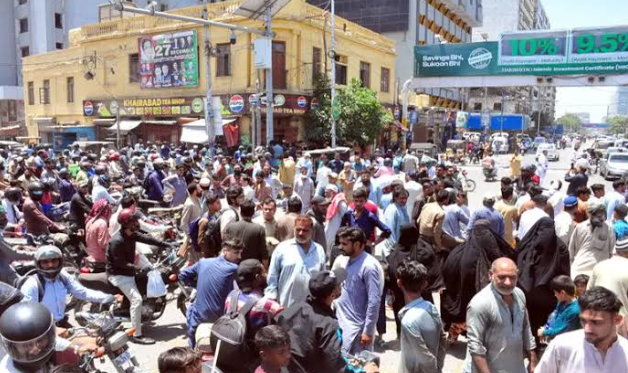
The speakers said Karachi witnessed widespread protests and traffic disruptions during the week beginning August 24, as residents of Lyari, the old city areas, Baldia, Orangi, Korangi, SITE and Sohrab Goth protested against what they described as excessive loadshedding.
They said residents in North Karachi, Nazimabad and parts of Gulistan-i-Jauhar had reported outages lasting between 16 and 24 hours.
The activists further claimed that the loadshedding schedule available on K-Electric’s website showed up to 12 hours of daily outages on more than 615 feeders, indicating that nearly one-third of the city’s feeders were affected.
Human Rights Commission of Pakistan representative Qazi Khizer highlighted the impact of prolonged outages on working-class communities, saying loadshedding was adding to the difficulties already faced by residents.
He also referred to recent reports describing Karachi as one of the cities experiencing high levels of mental stress, arguing that prolonged power outages were among the factors contributing to the situation.
“Electricity is not a luxury, it is a necessity,” he said.
Pakistan Institute of Labour Education and Research (Piler) representative Abbas Haider said prolonged loadshedding in Baldia, SITE, Korangi and other industrial areas was particularly affecting informal workers living in these neighbourhoods.
He said extended outages were depriving workers of sleep and rest, affecting their productivity and contributing to what he described as a rise in workplace accidents.
Karachi Union of Journalists President Tahir Hassan Khan questioned the benefits of K-Electric’s privatisation, saying that despite claims of improvements in its systems and greater digitisation, the utility had failed to ensure a reliable and consistent power supply to the city.
Lyari-based social activist Najma Maheshwari said women in the area were facing a disproportionate impact from prolonged power outages and inadequate water supplies.
She said residents were being forced to purchase water even for routine household activities, placing additional financial pressure on families. She added that women faced particular difficulties in maintaining household and personal hygiene, while water shortages were contributing to health problems among women and children.
The Knowledge Forum representative Zeenia Shaukat said public discussion about Karachi’s power crisis had focused excessively on electricity theft and recovery, with responsibility often being placed on consumers and neighbourhoods rather than the utility.
She noted that the National Electric Power Regulatory Authority (Nepra) had repeatedly directed K-Electric to end feeder-level loadshedding and, where necessary, adopt PMT-based loadshedding after exhausting measures to reduce commercial losses.
“The conversation should therefore move from ‘Who is stealing electricity?’ to ‘Who is accountable for the electricity system and for protecting customers?’” she said.