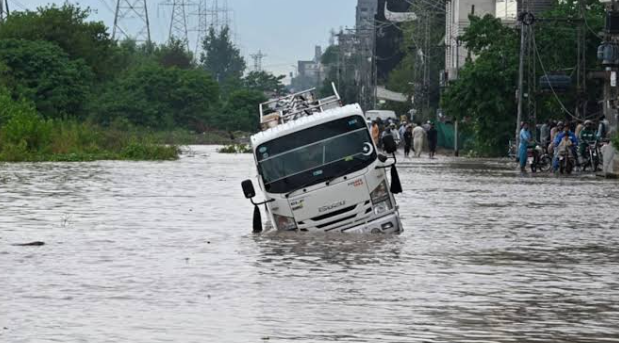
Heavy monsoon rain triggered urban flooding in Islamabad and Rawalpindi on Tuesday, inundating low-lying areas, disrupting traffic and prompting the evacuation of residents from vulnerable localities.
The Pakistan Meteorological Department (PMD) reported that the water level in Leh Nullah had risen to 29 feet at Kattarian and 23.5 feet at Gawalmandi. Around 200mm of rain was recorded in the catchment areas of Leh Nullah, prompting evacuation operations in Kattarian and Gawalmandi.
Planning Minister Ahsan Iqbal said the rising water levels had increased the risk of urban flooding in low-lying areas of the twin cities. He added that the Water and Sanitation Agency (Wasa), Rescue 1122 and district administrations were on high alert and working to manage drainage and protect residents.
According to PMD data recorded until 8:20am, Saidpur received 104mm of rain, Golra 157mm, Bokra 72mm, the PMD site near H-8/2 155mm, Kutchery 74mm, Shamsabad 201mm, Pir Widhai 86mm and New Kattarian 186mm.
The Rawalpindi district administration declared a public holiday for educational institutions and advised citizens to avoid unnecessary travel.
Rescue 1122 said its teams carried out operations in several parts of Rawalpindi and safely evacuated 60 people. It added that residents remained trapped in some areas and rescue efforts were continuing.
Islamabad Deputy Commissioner Irfan Nawaz Memon said torrential rain had pushed the water level in Rawal Dam beyond the prescribed limit, prompting authorities to open its spillways at 2pm. He urged citizens to stay away from nullahs and other waterways.
The deputy commissioner also said record rainfall in E-11 had caused drains to overflow, flooding roads and entering basements that had previously been sealed. He alleged that residents of Ghauri Town Phase 2 had blocked a drain with slabs, contributing to the flooding, and ordered action against those responsible.
Authorities were also directed to intensify dewatering operations using pumps. Rescue teams earlier responded to a wall collapse in D-12, with no casualties reported.
Islamabad traffic police advised motorists to avoid unnecessary travel, reduce speed, maintain a safe distance and allow additional time for journeys. Drivers were also advised to use fog lights during poor visibility and remain in designated lanes as accumulated water affected traffic flow on several roads.
Several vehicles were also reported stranded on flooded roads. Journalist Hamid Mir shared footage showing submerged vehicles and said parts of Islamabad Expressway had been inundated.
PPP Vice President Senator Sherry Rehman expressed concern over the flooding and called for improvements in disaster preparedness and urban flood management. She attributed recurring flooding to issues including unchecked construction, inadequate urban planning and insufficient climate-resilient infrastructure.
Rehman said emergency responses after heavy rainfall were no longer sufficient and called for permanent reforms, including modernised drainage systems, regular maintenance of storm-water channels, stronger flood management mechanisms and effective early warning systems.
She also urged authorities to accelerate relief operations, safely evacuate vulnerable residents and provide affected communities with food, clean drinking water and medical assistance.
The latest rainfall follows another spell of heavy rain that affected Islamabad and Rawalpindi on Monday, disrupting normal life and inundating low-lying areas.
The Met Office had earlier forecast further rainfall in the upper parts of the country until September 5, warning that heavy rain could cause urban flooding in low-lying areas of Islamabad and Rawalpindi as well as several other cities.