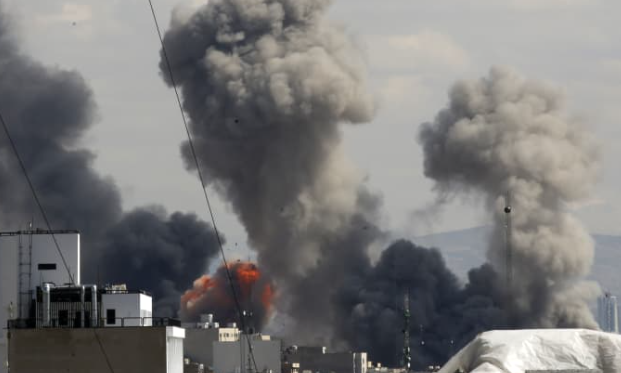
Fresh clashes between Iran and the United States have intensified the ongoing conflict, with Tehran maintaining pressure on the strategic Strait of Hormuz while Washington continues its counter-blockade of Iranian ports.
The latest escalation began after US raids on Sunday. US President Donald Trump subsequently warned that American forces were prepared to strike Iran “any time we want”.
Extensive US bombardment of targets across Iran between Tuesday and Wednesday reportedly killed at least 19 people.
Iran responded with attacks across the Middle East, saying it targeted US bases and forces in the United Arab Emirates, Kuwait, Bahrain, Jordan and Iraq’s Kurdistan region.
Iranian security chief Mohsen Rezaei warned Washington on Wednesday that Tehran had adopted a “new strategy” in the conflict that would “shatter your foundations”.
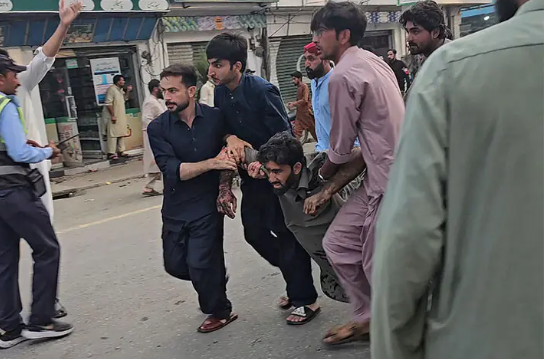
The Iranian attacks followed a US strike that hit a wedding in southern Iran, triggering anger in Tehran.
The Iranian Red Crescent said shrapnel from the missile strike in the coastal town of Kuhestak killed four people, including a child, and injured more than 50 others.
The US military did not directly comment on the reported attack. US Central Command spokesperson Tim Hawkins said the US military does not target civilians, accusing Iran’s Islamic Revolutionary Guard Corps of doing so.
Kuwait’s military said on Thursday that it had intercepted a missile and drone attack launched from Iran. Iran’s military said it had targeted the Ahmad al-Jaber Air Base in Kuwait with missiles and drones.
Iran also claimed to have struck Al Minhad Air Base in the UAE, although the Gulf state did not report such an attack.
Kuwait condemned the attacks as a direct threat to its security and stability and a serious violation of international law.
Beyond military action, Washington has pledged to intensify economic pressure on Tehran by imposing sanctions on countries and businesses that trade with Iran.
US Energy Secretary Chris Wright said on Wednesday that expanded sanctions targeting Iran’s economic partners would impose “absolutely maximum pressure” on the country.
Trump also floated the idea of renaming the Strait of Hormuz, a crucial global shipping route that Iran has effectively blocked for months, as the “Trump Strait”. He later appeared to suggest the remark was not serious.
Iran’s top negotiator Mohammad Bagher Ghalibaf strongly criticised Washington over the reported wedding strike, accusing the United States of acting like “Satan”.
Meanwhile, many Iranians have expressed concern over the renewed hostilities.
The conflict began on February 28 with US-Israeli attacks on Iran that killed Supreme Leader Ayatollah Ali Khamenei.
A fragile ceasefire later collapsed in July following attacks on commercial vessels in the Strait of Hormuz, a major shipping route that previously carried around one-fifth of global oil supplies.
Israel has also warned that it could respond with “great force” if Iran launches attacks during the Jewish high holiday season, which begins in mid-September.
Israeli Defence Minister Israel Katz said Iran was currently carrying out attacks across the region but had not targeted Israel.