The exchange of fire between the United States and Iran, which began with US strikes last week, has intensified as the two sides remain locked in a six-month conflict with no clear resolution in sight.
Iran has continued to restrict access to the strategically important Strait of Hormuz, while Washington maintains a counter-blockade of Iranian ports. The United States has also stepped up economic pressure on Tehran by imposing sanctions on entities accused of having financial links with Iran.
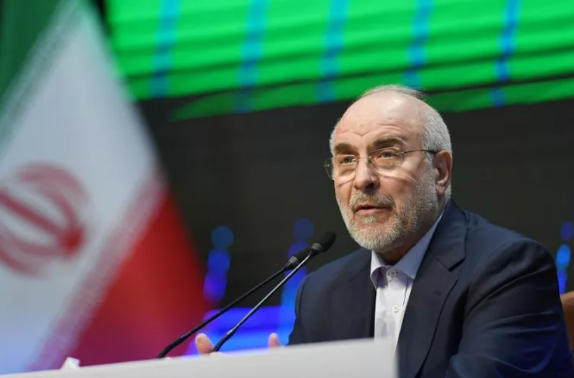
Iranian parliament speaker Mohammad Bagher Ghalibaf, who has played a leading role in negotiations aimed at ending the conflict, warned that Tehran would respond more forcefully to any further US attacks.
He said Iran would no longer limit itself to “proportionate responses” and warned that any attack on the country’s interests or security would trigger a faster, stronger and more painful retaliation.
On Saturday, US Central Command (Centcom) said Iran had unsuccessfully targeted two American warships, including an aircraft carrier and a destroyer. Iran’s Islamic Revolutionary Guard Corps (IRGC), however, claimed that the vessels had been forced to retreat after sustaining damage. Centcom rejected the claim, saying the ships successfully evaded the attacks.
The US military subsequently announced strikes on three oil tankers allegedly linked to Iran’s Revolutionary Guards.
Centcom said one vessel was “permanently disabled” off Kharg Island, another near Jask and a third was destroyed in the Gulf of Oman. The US military released footage showing explosions and large flames engulfing the vessels.
According to Centcom, the ships were part of a multibillion-dollar “shadow network” used to finance the IRGC and its regional allies.
Iran responded by claiming that its naval forces had targeted three oil tankers travelling through the Strait of Hormuz without Tehran’s authorisation, along with three other vessels it described as linked to the United States.
The Iranian military also warned commercial ships against using routes through the strategic waterway that had not been approved by Tehran.
Early Sunday, the IRGC claimed that it had attacked a US naval drone attempting to enter the Strait of Hormuz. Centcom spokesman Captain Tim Hawkins dismissed the claim as false, saying no US vessel had been attacked that day.
The latest escalation followed a warning from Centcom commander Admiral Brad Cooper, who said the United States would impose greater economic costs if Iran attacked American warships.
Iran’s foreign ministry condemned the US strikes on its oil tankers as “illegal and aggressive actions”.
Meanwhile, the administration of US President Donald Trump has sought to play down the significance of the six-month conflict, which has become increasingly unpopular in the United States ahead of the midterm elections.
US Vice President JD Vance has said he would not describe the confrontation as a war, while Trump has referred to the conflict as relatively insignificant for Washington.
Iranian officials have continued to adopt a defiant stance. US Energy Secretary Chris Wright, however, said Tehran was attempting to retain its grip on power, arguing that its nuclear programme and military capabilities had suffered major setbacks.
A fragile ceasefire between the two sides collapsed in July following attacks on commercial vessels in the Strait of Hormuz, a key global trade route that previously carried around one-fifth of the world’s oil supplies.
Trump has repeatedly threatened to assert US control over the strait and has even shared a map depicting it as “new US territory”.
Vance has maintained that Washington will not resume negotiations with Tehran until Iran stops attacks on commercial shipping in the strategic waterway.