Nepal observed a national day of mourning for victims of the devastating floods and glacial collapse that struck the China-Nepal border on August 26, as families continued to hope that some of those reported missing were still alive.
The disaster has killed at least 1,398 people, while more than 5,500 remain missing, including around 800 foreign nationals.
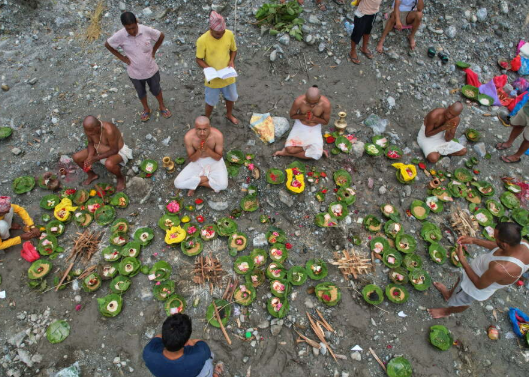
Flags were flown at half-mast across the country, while candlelight vigils were planned later in the day as part of traditional Hindu mourning practices marking the 13th day following a death.
Hundreds of hydropower workers are among those missing. Hopes of finding more survivors were raised after rescuers pulled three workers alive from deep inside tunnels — two Nepali nationals on Friday and a Chinese worker on Saturday.
Nepal Army spokesman Raja Ram Basnet said rescue operations were continuing at the same pace as they had on the first day.
“Our focus is on search and rescue at three levels — on ground, by air, and in the tunnels,” he said, adding that teams were working to ensure no one remained trapped.
Entire communities have been swept away by the disaster, while roads and homes have also been destroyed.
Families of missing workers who gathered in Kathmandu urged the government to accelerate rescue operations.
Reena Amatya Shrestha, whose brother remains missing, said families continued to have hope but wanted to see tangible results from the rescue efforts.
Australian tunnel rescue expert Arnold Dix, who is assisting Nepali rescue teams, described the operation as an unprecedented challenge.
Dix said rescuers were dealing with multiple possible rescue sites simultaneously, each presenting different risks and uncertainties, while stressing that lives could still be saved.
Rescue teams from China, India and South Korea are also assisting Nepal in the search and recovery operation.
Dix, who previously advised rescuers during the 2023 operation to free 41 workers trapped for 17 days inside the collapsed Silkyara tunnel in India, said the experience had taught him that unlikely outcomes should not be considered impossible.
With morgues overwhelmed, authorities have buried hundreds of bodies in mass graves after collecting DNA samples to facilitate identification at a later stage, according to police.
Only around 100 bodies have so far been identified and returned to their families.
While the precise cause of the glacial collapse remains unclear, scientists have warned that climate change is accelerating glacial melt worldwide, increasing the risk of such disasters.
Nepal, a largely rural country of around 30 million people that has contributed relatively little to global greenhouse gas emissions, estimates that rebuilding damaged communities and infrastructure could cost billions of dollars.
The disaster has placed additional pressure on an economy already facing limited resources and comes shortly before the anniversary of last year’s mass anti-corruption protests, which led to the fall of the government.
The United Nations has estimated that damage to buildings alone could reach $158 million, with overall losses expected to be significantly higher once damage to roads, bridges, farmland and humanitarian infrastructure is included.
The UN has appealed for $50 million in emergency assistance to support more than 84,000 people affected by the disaster.
UN country chief Lila Pieters Yahia called on the international community to provide immediate assistance to Nepal.
According to Nepal’s disaster agency, rescuers have recovered 1,355 bodies, while around 4,996 people remain missing. In China, state media reported 43 deaths and 519 missing people.