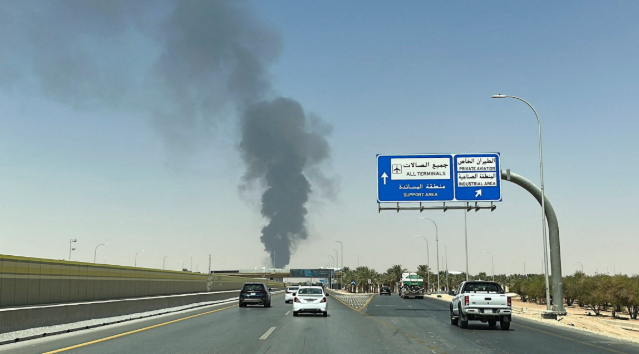
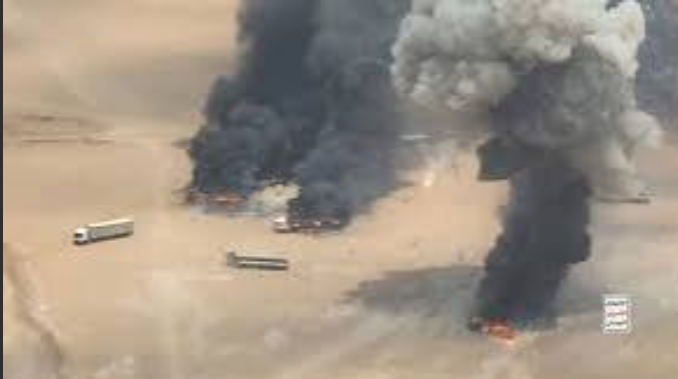
Operations at several energy facilities in southern Saudi Arabia were temporarily disrupted on Tuesday after attacks blamed on Yemen’s Houthi rebels, with 73 civilians, including women and children, reported injured.
Saudi Arabia’s Foreign Ministry condemned what it described as Houthi attacks on civilian and economic sites in Abha, Khamis Mushait, Jazan and Najran. Riyadh said the attacks represented a serious escalation and vowed to take measures to protect its territory and infrastructure.
The Saudi Energy Ministry said fires broke out at several sites following the attacks, prompting firefighting and emergency teams to respond and assess the damage. Authorities were also working to contain the impact and restore normal operations.
“The needed measures will be taken to ensure the safety of the facilities and workers and the continuation of work according to the approved operational plans,” the ministry said.
The Foreign Ministry said Saudi Arabia would take “all necessary measures” to defend its sovereignty and called for an immediate end to Houthi attacks, including strikes targeting commercial shipping in the Red Sea.
The escalation came amid heightened tensions across the region, with the conflict between the United States and Iran also disrupting energy markets. Brent crude rose to around $98 a barrel after news of the Saudi attacks, while US crude futures climbed above $93 a barrel.
The Financial Times reported that Saudi Aramco’s Jazan oil facilities had also been hit in the latest strikes and that the damage was being assessed. Reuters said it could not immediately independently verify the report, while Aramco had not commented.
The Houthi military spokesperson, Yahya Saree, said the group would announce a wider operation deep inside Saudi territory. He accused Riyadh of escalating the conflict through airstrikes on Yemen.
The Saudi-led coalition did not announce any recent strikes on Yemen, although the Saudi-backed Yemeni government has launched an offensive against the Houthis on several fronts in recent days.
Coalition spokesman Colonel Turki al-Malki described the latest attacks as a “dangerous” escalation and said the coalition would take measures to deter the Houthis and respond to what it called their hostile actions.
The Houthis, who control much of northern Yemen and the country’s most populated areas, have targeted Saudi Arabia since declaring a naval blockade against Riyadh in July. Their attacks have also targeted vessels in the Red Sea.
Pakistan has previously condemned Houthi threats against Saudi Arabia and maritime trade through the Red Sea, warning that it reserved the right to defend its maritime interests against hostile actions.
Saudi Arabia announced plans in July for a multinational maritime defence coalition aimed at protecting shipping and energy routes in the Red Sea. Pakistan was among 14 countries that expressed support for the initiative.
Pakistan, Saudi Arabia and Turkiye also signed a trilateral defence agreement last month under which an attack on one country would be treated as an attack on all three.
The latest attacks on Saudi energy infrastructure and shipping threats come alongside Iran’s restrictions on the Strait of Hormuz, another major energy route that has become a key flashpoint in the wider US-Iran conflict.